Runes have fascinated people for centuries.
Carved into stone monuments, engraved on weapons, inscribed on jewelry, and preserved in ancient manuscripts, runes provide a direct connection to the cultures of early Northern Europe. Their angular forms feel both simple and mysterious, inviting questions about their history, symbolism, and continued use.
Today, people encounter runes in many different contexts. Some study them as a historical writing system. Others explore their symbolic meanings. Some use them for meditation, journaling, or personal reflection. Still others encounter runes through mythology, literature, fantasy novels, or modern spiritual traditions.
Yet despite their popularity, many misconceptions surround runes.
Some people assume runes were always used for fortune-telling. Others believe they belong entirely to myth and legend. The reality is both more interesting and more complex.
Understanding what runes are requires examining their historical origins, cultural significance, symbolic meanings, and modern applications.
This guide introduces the runes from a beginner’s perspective and explores why they continue to capture the imagination of so many people today.
In This Guide
- What runes are
- The history of runic writing
- The Elder Futhark
- Runes and Norse mythology
- Symbolic meanings of the runes
- Historical uses of runes
- Modern rune study
- Common misconceptions
- Why people still work with runes today
- Frequently asked questions
What Are Runes?
At their most basic level, runes are letters.
They belong to a family of alphabets used by Germanic peoples throughout parts of Northern Europe.
Before becoming associated with divination or symbolism, runes served practical purposes.
People used them to write names, mark possessions, create memorial inscriptions, record messages, and commemorate important events.
The earliest known runic inscriptions date to approximately the second century CE.
Over time, various runic alphabets developed across different regions and historical periods.
Although runes functioned as letters, they also acquired symbolic and cultural significance.
This combination of practical and symbolic use helps explain their enduring appeal.
The Meaning of the Word Rune
The word rune comes from an ancient Germanic root associated with secrecy, mystery, whispering, or hidden knowledge.
This linguistic connection often contributes to the mystical reputation of runes.
However, it is important not to assume that every historical use of runes involved magic or divination.
Most surviving inscriptions appear practical and ordinary.
Even so, the association between runes and hidden knowledge became an important part of later traditions.
The Elder Futhark
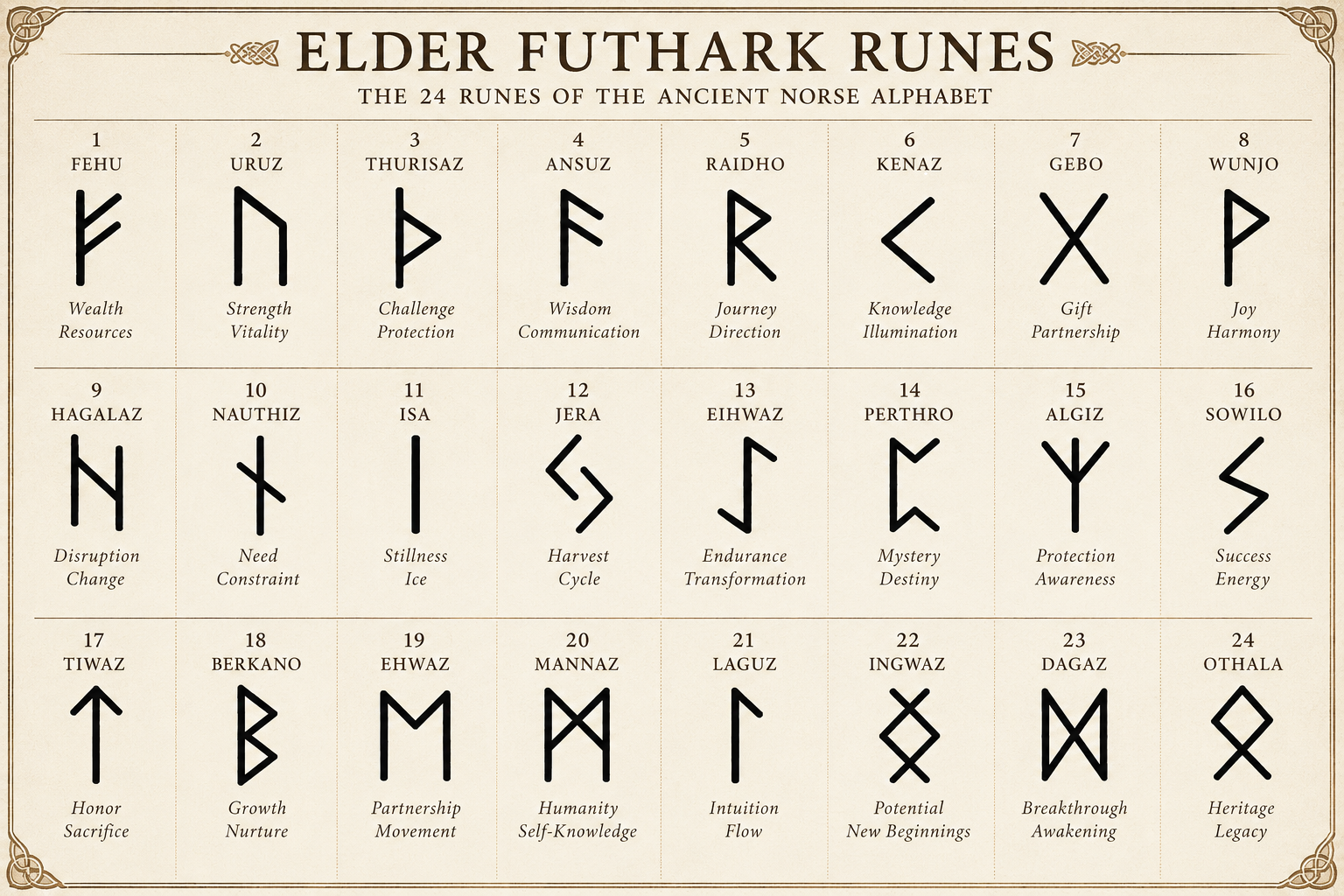
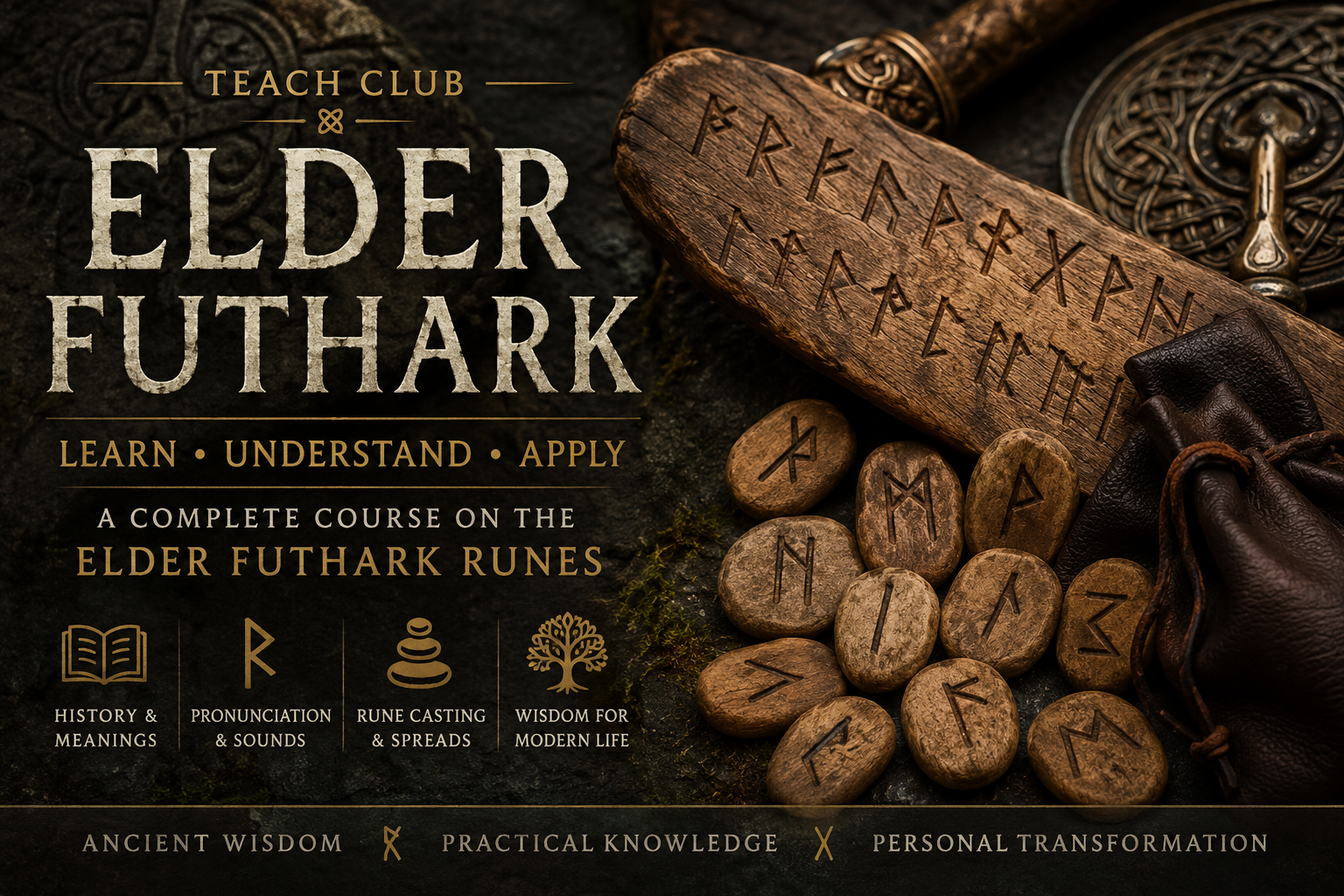
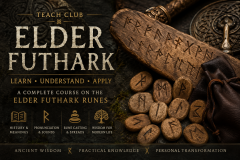
When most modern readers discuss runes, they are referring to the Elder Futhark.
The Elder Futhark is the oldest known runic alphabet.
It contains twenty-four characters.
Its name comes from the first six runes:
- Fehu
- Uruz
- Thurisaz
- Ansuz
- Raidho
- Kenaz
Together, these sounds form the word Futhark, much like the word alphabet derives from alpha and beta.
The Elder Futhark remained in use for several centuries before later runic systems developed.
Because of its historical importance and symbolic richness, it remains the most widely studied rune system today.
Explore Our Courses






Why Do Runes Look Angular?
One of the most distinctive features of runes is their appearance.
Unlike modern handwriting, runes consist primarily of straight lines.
This design was practical.
Many runic inscriptions were carved into:
- Wood
- Stone
- Bone
- Metal
Straight lines are easier to carve than curves.
The shape of the runes reflects the materials and tools used by the people who created them.
Runes and Norse Mythology
Many modern discussions of runes connect them with Norse mythology.
This connection stems largely from the poem known as the Hávamál, preserved within the Poetic Edda.
According to the story, the god Odin sacrificed himself by hanging upon the World Tree, Yggdrasil.
Through this ordeal, he gained knowledge of the runes.
The passage presents the runes as a form of wisdom acquired through sacrifice and insight.
Whether interpreted literally, symbolically, or mythologically, this story contributed significantly to the cultural significance of runes.
Readers interested in mythological themes may also enjoy:
The relationship between runes and mythology remains one of the most fascinating aspects of rune study.
Runes as Symbols
Each rune represents a sound.
Yet each rune also came to be associated with concepts, objects, and symbolic meanings.
For example:
Fehu is often associated with wealth and resources.
Raidho often relates to journeys and movement.
Berkano often relates to growth and development.
Dagaz often relates to transformation and breakthrough.
These symbolic associations developed through historical rune poems and later interpretive traditions.
Many modern practitioners focus heavily on these symbolic dimensions.
Symbolism and Rune Study
Understanding symbolism plays a major role in modern rune practice.
The runes function as more than letters.
They also serve as symbolic images that suggest themes, questions, and possibilities.
Readers interested in symbolic interpretation may enjoy:
What Is Symbolism? A Beginner’s Introduction
The study of symbolism often deepens one’s understanding of rune meanings.
Historical Uses of Runes
Historical evidence suggests that runes served several purposes.
Writing
The primary function of runes was communication.
Many inscriptions record names, ownership, dedications, and memorial messages.
Memorial Stones
Runestones became particularly important in Scandinavia.
Families commissioned stones to honor the dead, commemorate achievements, and preserve memories.
Decorative Purposes
Runes often appeared on jewelry, weapons, tools, and other objects.
Possible Magical Uses
Some historical sources suggest that runes occasionally appeared in ritual or magical contexts.
The evidence is complex and sometimes difficult to interpret.
Scholars continue debating the extent and nature of these practices.
Rune Meanings and Personal Reflection
Modern rune study often emphasizes reflection rather than historical reconstruction.
Many people use runes as prompts for contemplation.
A rune may encourage questions such as:
- What needs attention?
- What challenge am I facing?
- What opportunity is emerging?
- What lesson am I learning?
In this way, runes function similarly to other symbolic systems.
The emphasis shifts from prediction toward reflection.
Runes and Archetypes
Many rune meanings overlap with archetypal themes.
Growth.
Transformation.
Journey.
Sacrifice.
Wisdom.
Protection.
Renewal.
These themes appear throughout mythology, dreams, stories, and spiritual traditions.
Readers interested in archetypal psychology may enjoy:
What Is an Archetype? A Jungian Introduction
Archetypal thinking often enriches modern rune study.
Runes and Other Symbolic Systems
Many people who study runes also explore:
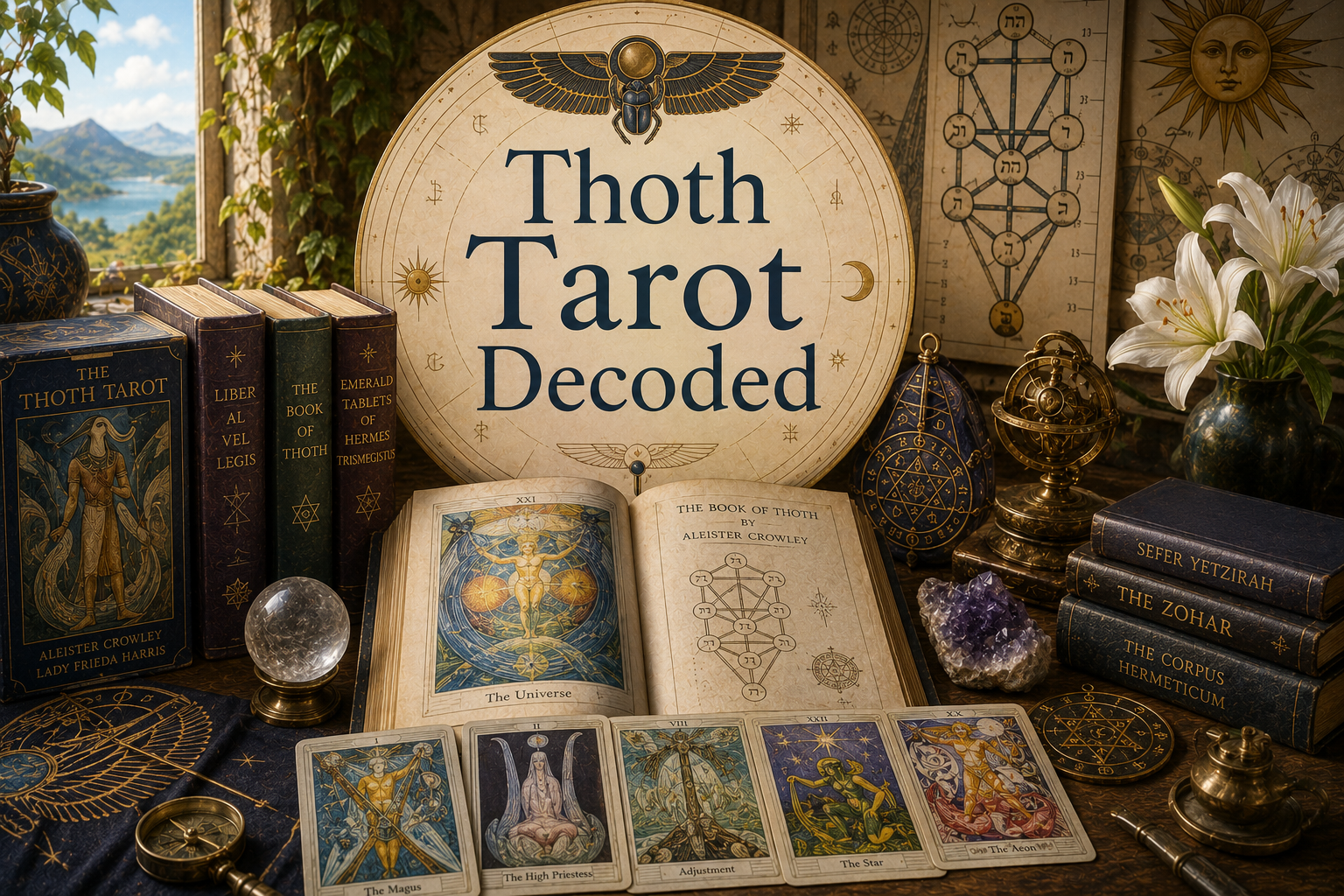
- Tarot
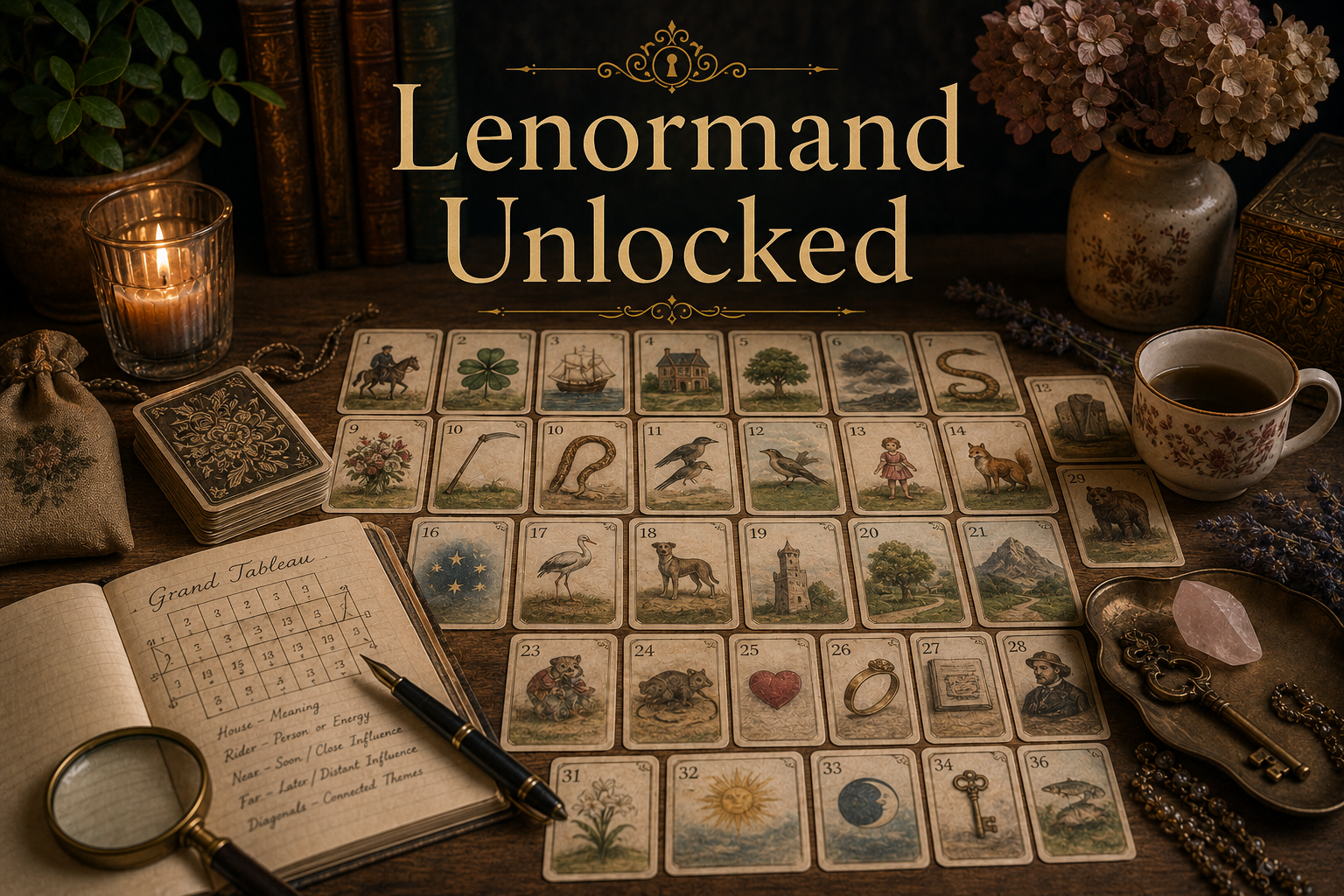
- Lenormand
- Dream symbolism
- Mythology
- Alchemy
Each system approaches meaning differently.
Readers interested in tarot may enjoy:
Those interested in card-based symbolic reading may also enjoy:
Although these systems differ substantially, they all rely on symbols and interpretation.
How Modern People Use Runes
Today, people engage with runes in many ways.
Some study runic history and linguistics.
Others focus on mythology.
Some use runes for journaling and self-reflection.
Others incorporate them into meditation practices.
Still others use rune casting as a form of symbolic exploration.
The diversity of modern approaches reflects the flexibility of the runes themselves.
Common Misconceptions About Runes
Runes Were Created for Fortune-Telling
Historically, runes functioned first as writing systems.
Their modern use in divination developed much later.
Every Rune Has One Fixed Meaning
Most runes possess a range of possible interpretations.
Context remains important.
Runes Belong Only to Norse Mythology
Although strongly associated with Norse culture, runes appeared throughout various Germanic societies.
Runes Are Inherently Magical
Historical evidence shows both practical and symbolic uses.
Reducing runes to magic alone oversimplifies their history.
Why Runes Still Matter
The continued popularity of runes reveals something important.
People remain drawn to symbols.
They seek meaningful ways to reflect on experience.
Runes offer:
- Simplicity
- Symbolism
- Historical depth
- Mythological richness
- Opportunities for reflection
Their combination of history and symbolism gives them a unique place among traditional systems of meaning.
Learning More About Runes
Readers interested in scholarly research can explore resources provided by the National Museum of Denmark and the Runes Database at Uppsala University.
These organizations provide valuable historical information about runic inscriptions, archaeology, and Scandinavian cultural history.
Frequently Asked Questions
What are runes?
Runes are letters from ancient Germanic alphabets that later acquired symbolic and cultural significance.
What is the Elder Futhark?
The Elder Futhark is the oldest known runic alphabet and contains twenty-four runes.
Did Vikings use runes?
Yes. Vikings used later runic alphabets for inscriptions, memorials, and communication.
Are runes a language?
No. Runes are an alphabet used to write languages.
Were runes used for divination historically?
The strongest historical evidence points to their use as writing systems. Modern divinatory practices developed much later.
Do runes have meanings beyond their sounds?
Yes. Historical rune poems and later traditions associate runes with symbolic themes and concepts.
Can beginners study runes?
Absolutely. Learning the basic runes, their history, and their symbolic meanings provides an excellent foundation.
Final Thoughts
Originally created as practical writing systems, runes evolved into powerful cultural symbols that continue to inspire people today. Their angular forms connect modern readers to ancient traditions, while their symbolic meanings encourage reflection on enduring themes such as growth, wisdom, transformation, and journey.
Whether approached historically, symbolically, spiritually, or academically, runes offer a rich field of study.
They remind us that even the simplest marks carved into stone can carry stories, meanings, and mysteries across centuries.
And perhaps that is part of their enduring appeal. They are at once letters, symbols, and invitations to deeper exploration.