
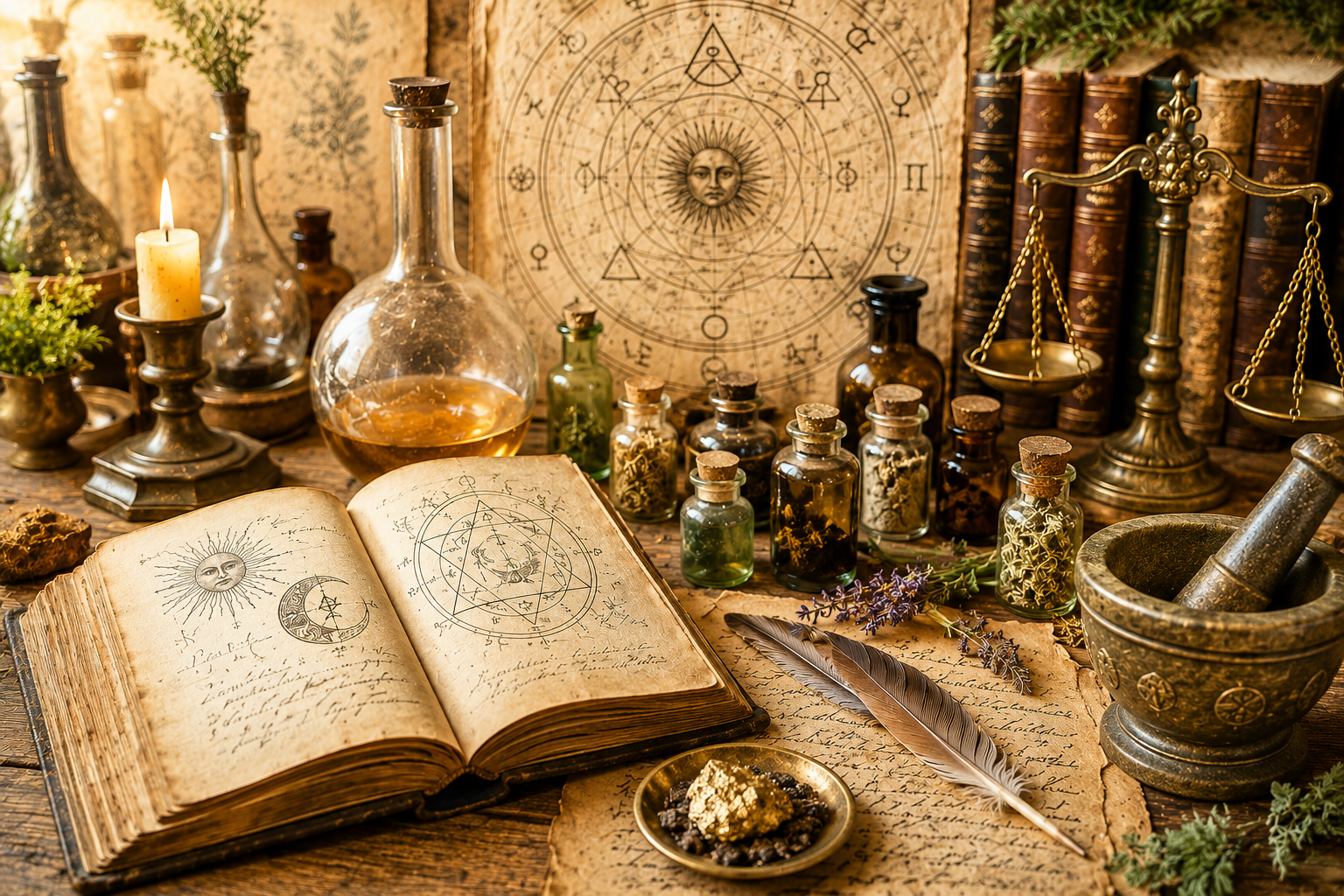
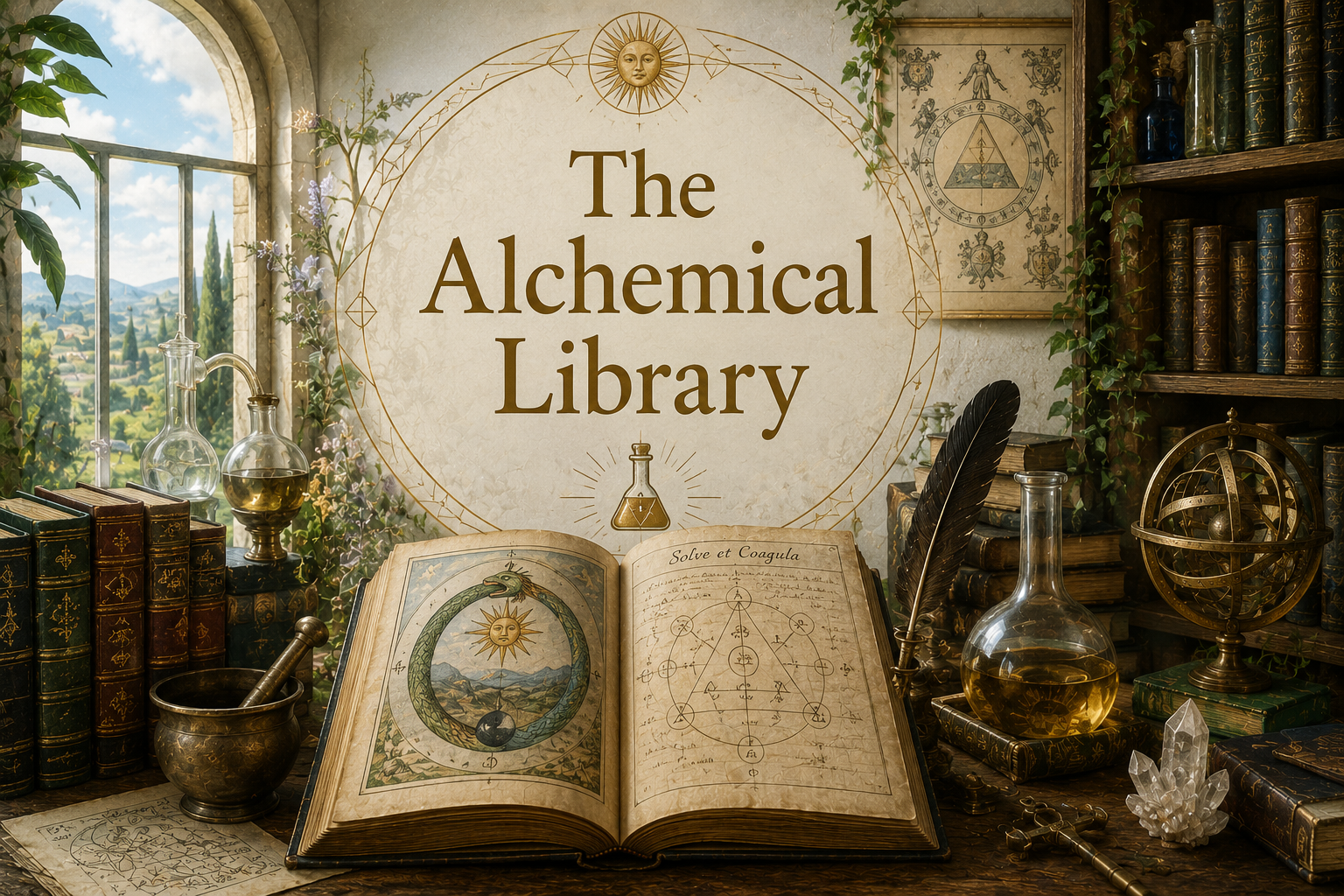
When most people hear the word alchemy, they imagine medieval practitioners trying to turn lead into gold. Popular culture often portrays alchemists as mysterious figures working in hidden laboratories, surrounded by strange symbols, bubbling flasks, and secret formulas.
While this image contains a grain of truth, it only tells part of the story.
Alchemy has fascinated historians, philosophers, psychologists, spiritual seekers, and students of symbolism for centuries. Alchemy is much more than an early form of chemistry. It is a rich tradition that combines science, philosophy, spirituality, mythology, symbolism, and the human search for transformation.
For some, alchemy represents a historical effort to understand the natural world. For others, it serves as a symbolic language for personal growth and spiritual development. Many modern readers encounter alchemy through the work of Carl Jung, who saw alchemical imagery as a powerful expression of psychological transformation.
In this guide, we will explore the origins of alchemy, its historical development, its spiritual dimensions, and why it continues to captivate people today.
This article contains affiliate links.
In This Guide
- What alchemy is
- The origins of alchemy
- Historical alchemy and the search for knowledge
- Common misconceptions about alchemy
- The spiritual side of alchemy
- Alchemy and symbolism
- Alchemy’s influence on modern thought
- Why alchemy still matters
- Frequently asked questions
What Is Alchemy?
At its simplest, alchemy was a historical tradition that sought to understand and transform matter.
Practitioners experimented with metals, minerals, plants, and chemical processes. They recorded observations, developed laboratory techniques, and sought deeper principles governing nature.
Yet alchemy was never purely scientific.
Many alchemists believed that physical transformation reflected larger truths about the universe. Matter, spirit, nature, and humanity formed an interconnected whole.
Because of this broader vision, alchemy often blended practical experimentation with philosophy, religion, symbolism, and spiritual reflection.
The Origins
Alchemy emerged from several cultural streams rather than a single point of origin.
Elements of alchemical thought appeared in:
- Ancient Egypt
- Greece
- Rome
- Persia
- India
- China
- The Islamic world
Many scholars trace Western alchemy to the cultural exchanges that occurred in Hellenistic Egypt, particularly in Alexandria. There, Egyptian traditions mixed with Greek philosophy and practical metallurgy.
Over time, alchemical ideas spread throughout the Mediterranean world and later flourished within Islamic civilization.
Islamic scholars preserved, translated, and expanded many earlier texts. Their work eventually influenced European alchemists during the Middle Ages and Renaissance.
The result was a complex tradition that evolved over centuries and across many cultures.
Why Was Gold So Important?
One reason alchemy remains associated with gold is that many historical texts discuss the transformation of base metals into precious metals.
Gold fascinated ancient and medieval thinkers because it appeared resistant to decay. Unlike iron, it did not rust. Unlike many other materials, it retained its beauty and stability over time.
Gold seemed perfect.
To many alchemists, this perfection suggested that gold represented a completed state of nature.
The search for gold therefore became more than a quest for wealth. It symbolized the possibility of transformation itself.
Could something ordinary become extraordinary?
Could something incomplete become perfected?
These questions shaped much of alchemical thought.
The Philosopher’s Stone
Perhaps no symbol is more famous than the Philosopher’s Stone.
According to many alchemical traditions, the Philosopher’s Stone could transform base metals into gold.
Stories also associated it with healing, longevity, wisdom, and spiritual enlightenment.
Whether the Stone existed as a literal substance remains a matter of debate and speculation.
What matters historically is that the Philosopher’s Stone became one of alchemy’s central symbols.
For many practitioners, it represented the ultimate goal of transformation.
Its meaning extended beyond metallurgy into philosophy and spirituality.
Explore Our Courses















Historical Alchemy as a Practical Discipline
Modern readers sometimes dismiss it as superstition.
This overlooks an important fact.
Many alchemists were serious observers of nature.
They conducted experiments.
They developed laboratory equipment.
And they refined methods of distillation, purification, extraction, and observation.
Although their theories differed from modern science, their work contributed to the development of chemistry.
In some respects, chemistry emerged from the practical side of alchemical experimentation.
Many laboratory techniques used today have roots in earlier alchemical practices.
Common Misconceptions About Alchemy
Alchemy Was Only About Making Gold
This is probably the most common misunderstanding.
While the transformation of metals played an important role, it addressed much broader questions about nature, change, knowledge, and perfection.
Alchemists Were Fraudsters
Some certainly were.
Others, however, were sincere researchers, philosophers, physicians, and scholars.
Like any field, it included both serious practitioners and opportunists.
Alchemy Was Purely Scientific
Alchemy involved experimentation, but it also included spiritual, philosophical, and symbolic dimensions.
Separating these elements completely would distort the historical tradition.
Alchemy Disappeared Long Ago
Although historical alchemy declined as modern science developed, its symbols and ideas continue to influence psychology, spirituality, literature, and art.
The Spiritual Side of Alchemy
As it developed, many practitioners began to view transformation as occurring not only within the individual but also within the laboratory.
Physical processes became symbols for inner change.
Transformation in matter reflected transformation in consciousness.
The purification of metals suggested the purification of the self.
This perspective became especially influential within mystical, Hermetic, and esoteric traditions.
The laboratory became a metaphor for personal development.
The alchemist became a seeker pursuing wisdom rather than merely material success.
This spiritual interpretation remains highly influential today.
Alchemy and Symbolism
One reason alchemy continues to attract modern readers is its remarkable symbolic language.
Alchemical texts often contain:
- Dragons
- Kings and queens
- Suns and moons
- Serpents
- Birds
- Gardens
- Vessels
- Crowns
To a modern reader, these images may seem strange or confusing.
Yet they function as symbols that communicate complex ideas.
Rather than explaining concepts directly, alchemists often expressed them through stories, images, and allegories.
This symbolic richness gives alchemy a timeless quality.
People continue discovering new meanings within its imagery.
Alchemy and Carl Jung
Few figures contributed more to the modern revival of alchemy than Carl Jung.
Jung believed that alchemical symbols reflected psychological processes occurring within the human psyche.
He saw alchemical imagery as expressions of archetypal patterns that appear in dreams, myths, religions, and personal development.
According to Jung, it provided a symbolic language for describing the process of becoming a more complete and integrated person.
His interpretation introduced the topic to many readers who had little interest in chemistry or medieval history.
Today, many students encounter alchemy through Jungian psychology before encountering it in historical texts.
Alchemy and the Western Mystery Tradition
Alchemy occupies an important place within the broader Western mystery tradition.
It intersects with:
- Hermeticism
- Mysticism
- Symbolism
- Astrology
- Philosophy
- Esoteric Christianity
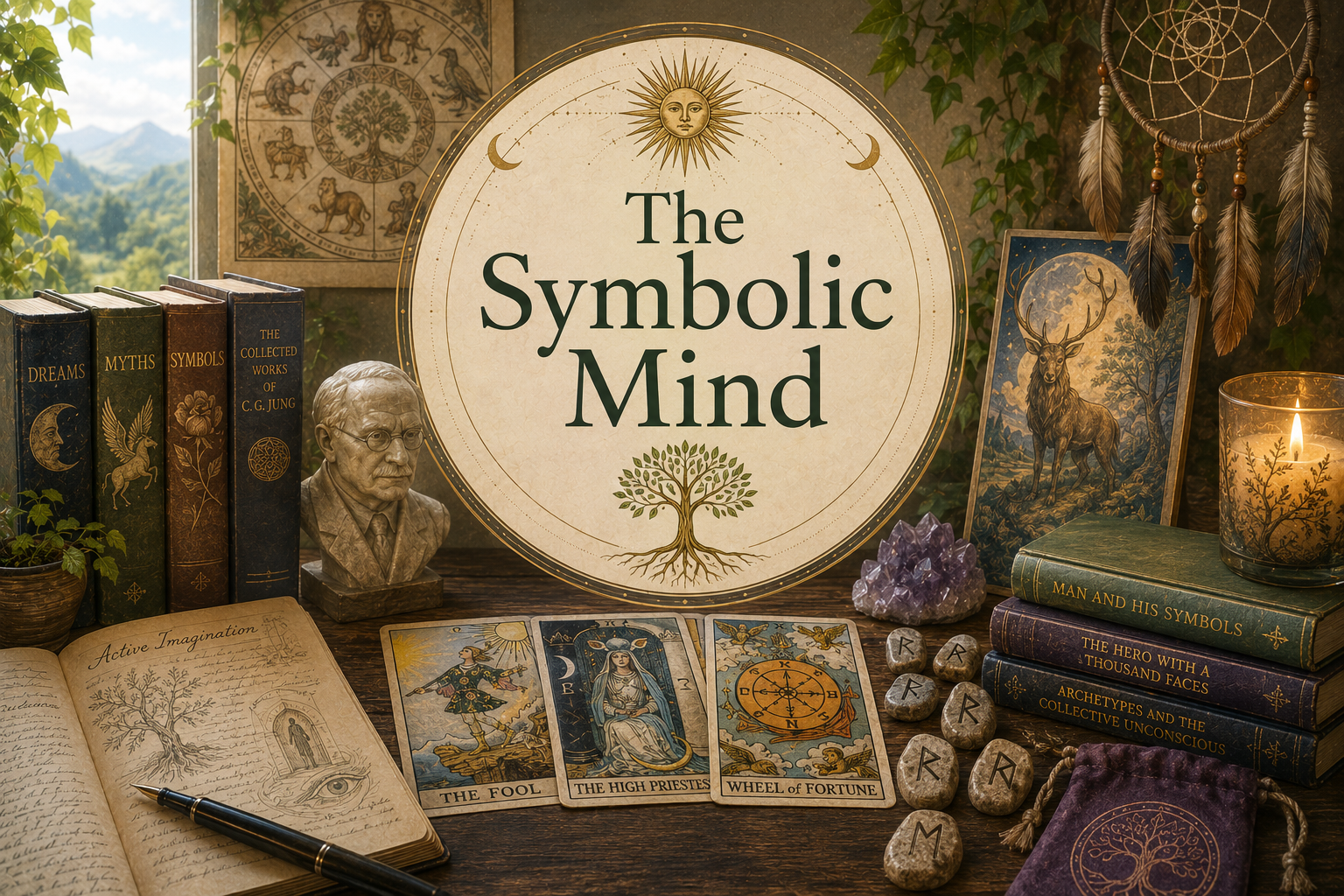
For this reason, many students who explore tarot, archetypes, or symbolic systems eventually encounter alchemical ideas.
Readers interested in symbolic traditions may also enjoy our introduction to tarot: Beginner’s Guide to Tarot.
Both systems rely heavily on symbolic imagery and the exploration of human experience through metaphor.
Why Alchemy Still Matters
Alchemy continues to resonate because transformation remains one of humanity’s central concerns.
People seek transformation in many forms:
- Personal growth
- Spiritual development
- Healing
- Creativity
- Wisdom
- Self-understanding
Alchemical language offers a way to think about these experiences.
The symbols may be ancient, but the questions remain contemporary.
How do people change?
How does growth occur?
What transforms an ordinary life into a meaningful one?
Alchemy provides a symbolic framework for exploring these questions.
How Should Beginners Approach Alchemy?
Start with curiosity.
Do not worry about mastering every symbol or understanding every historical text.
Begin by learning the broad outlines of the tradition.
Explore its history.
Study its symbols.
Read widely.
Pay attention to the ways different scholars and practitioners interpret it.
Most importantly, allow the tradition to unfold gradually.
Alchemy rewards patience.
Its symbols often reveal deeper meanings over time.
Learning More About Alchemy
Readers who want to explore the historical study of alchemy can find valuable educational resources through The University of Glasgow’s Alchemy Website Project, one of the most respected scholarly resources dedicated to the history of alchemy and alchemical texts.
This project provides access to manuscripts, historical research, biographies, and educational materials that help place it within its proper historical context.
Frequently Asked Questions
What is alchemy in simple terms?
Alchemy is a historical tradition that combined experimentation, philosophy, symbolism, and spiritual ideas to understand transformation in nature and human life.
Was alchemy a real science?
Alchemy contributed to the development of chemistry and included genuine experimentation. However, it also incorporated philosophical and spiritual concepts that fall outside modern scientific practice.
Did alchemists actually turn lead into gold?
There is no accepted historical evidence that alchemists succeeded in transforming lead into gold. The pursuit itself, however, played a major role in alchemical thought.
Is alchemy connected to spirituality?
For many practitioners, yes. Alchemy often served as a symbolic framework for spiritual growth, wisdom, and transformation.
What is the Philosopher’s Stone?
The Philosopher’s Stone is a legendary substance associated with transformation, perfection, wisdom, and the transmutation of metals.
Is alchemy related to tarot?
Although they developed separately, both traditions use rich symbolic imagery and often appear together within the broader Western mystery tradition.
Can beginners study alchemy?
Absolutely. A strong foundation begins with understanding the historical background and symbolic language before moving into more advanced concepts.
Final Thoughts
Alchemy is a historical discipline, a symbolic language, a philosophical tradition, and for many people, a spiritual path.
It emerged from humanity’s desire to understand transformation. Ancient practitioners explored that transformation in metals, minerals, and natural processes. Later generations discovered that the same symbols could illuminate inner change, personal growth, and the search for meaning.
That combination of history and symbolism explains why it continues to fascinate readers centuries after its emergence.
In future articles, we will explore the symbols, ideas, and transformative language that make alchemy one of the most enduring traditions within the Western mystery tradition.