Many people first encounter tarot through fortune-telling.
They see spreads that promise answers about relationships, careers, finances, or the future. While predictive reading has long been part of tarot culture, it represents only one way of working with the cards.
Another approach has gained increasing attention over the past several decades.
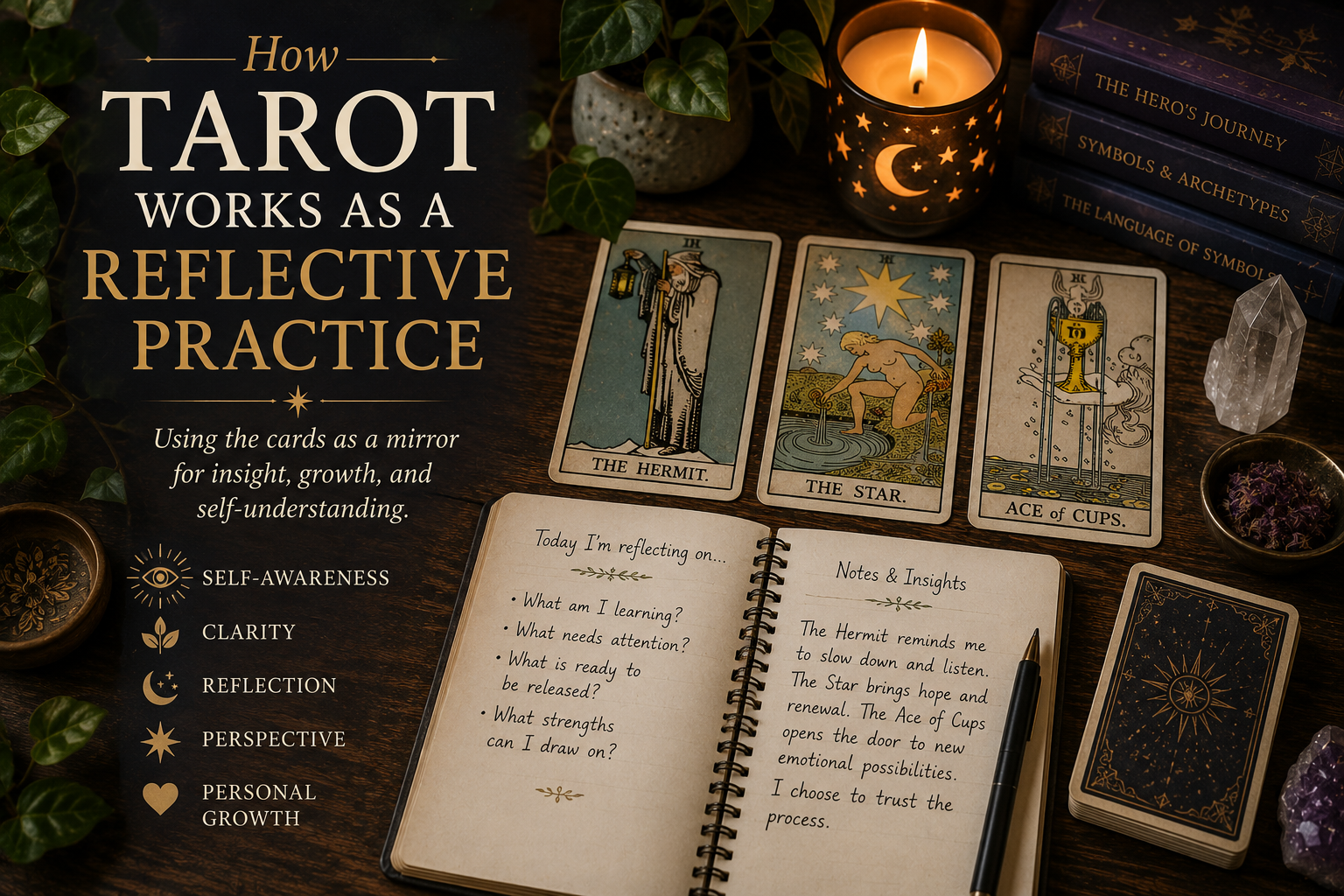
Rather than treating tarot as a tool for prediction, many people use it as a reflective practice.
In this approach, tarot serves as a way to explore thoughts, emotions, experiences, values, challenges, and possibilities. The cards function less like answers and more like mirrors. They help bring attention to patterns that might otherwise remain unnoticed.
This perspective has attracted psychologists, writers, artists, spiritual seekers, coaches, counselors, and ordinary readers looking for meaningful self-reflection.
Whether or not one believes tarot can predict future events, the cards can provide a powerful framework for contemplation and personal insight.
This guide explores how tarot practice can function as a reflective tool and why so many people find value in working with the cards in this way.
In This Guide
- What reflective tarot practice means
- How tarot differs from prediction
- Why symbols encourage reflection
- Tarot and self-awareness
- Tarot and journaling
- Tarot and personal growth
- Psychological perspectives on tarot
- Common misconceptions
- How to begin a reflective tarot practice
- Frequently asked questions
What Is a Reflective Tarot Practice?
A reflective tarot practice uses the cards as prompts for contemplation rather than sources of certainty.
Instead of asking:
“What will happen?”
The reader might ask:
- What am I overlooking?
- What perspective am I missing?
- What challenge am I currently facing?
- What strengths can I draw upon?
- What patterns are emerging in my life?
The cards become conversation partners.
They offer images, symbols, stories, and themes that stimulate reflection.
The goal is not necessarily prediction.
The goal is greater awareness.
Tarot as a Mirror
One of the most useful metaphors for tarot is the mirror.
A mirror does not create your reflection.
It reveals what is already present.
Similarly, tarot often reflects thoughts, emotions, assumptions, hopes, fears, and possibilities that may already exist within awareness or just beneath its surface.
A card may prompt questions such as:
Why does this image stand out?
Why does this symbol feel important?
And why am I reacting strongly to this card?
The answers often reveal as much about the reader as the cards themselves.
Why Symbols Encourage Reflection
Tarot works through symbolism.
Unlike direct advice, symbols invite interpretation.
A symbol creates space.
It allows multiple meanings to coexist.
Consider a card such as The Hermit.
Some readers may see solitude.
Others may see wisdom.
Others may see withdrawal, reflection, guidance, or spiritual seeking.
The image does not force a single answer.
Instead, it encourages exploration.
Readers interested in the broader language of symbols may enjoy:
What Is Symbolism? A Beginner’s Introduction
Understanding symbolism often deepens reflective tarot work considerably.
Why Reflection Matters
Modern life often moves quickly.
People solve problems, complete tasks, respond to messages, and move from one responsibility to the next.
Reflection can become easy to neglect.
Tarot provides a structured opportunity to pause.
A reading creates space to ask:
- What am I experiencing?
- What am I learning?
- What deserves attention?
- What needs reconsideration?
These questions support self-awareness regardless of one’s beliefs about divination.
Explore Our Courses














Tarot and Self-Awareness
One of the greatest strengths of reflective tarot practice is self-awareness.
Many people discover recurring themes within their readings.
Certain cards appear repeatedly.
Certain situations arise again and again.
And certain emotional responses become familiar.
These patterns can reveal:
- Habits
- Strengths
- Blind spots
- Motivations
- Concerns
The cards help illuminate experiences that might otherwise remain unexamined.
Tarot and Archetypes
The Major Arcana contains many archetypal figures.
Examples include:
- The Fool
- The Magician
- The High Priestess
- The Emperor
- The Hermit
- Death
These figures represent recurring patterns of human experience.
Carl Jung referred to such patterns as archetypes.
Readers interested in archetypal psychology may enjoy:
What Is an Archetype? A Jungian Introduction
Archetypal imagery gives tarot much of its reflective power.
The cards resonate because they depict experiences that feel familiar and meaningful.
Tarot and Storytelling
Human beings naturally think through stories.
Tarot cards often function like story fragments.
A spread becomes a narrative.
Characters appear.
Challenges emerge.
Transformation unfolds.
The reader pieces together meaning through relationships between cards.
This narrative process can reveal perspectives that logical analysis alone might miss.
Stories help people make sense of experience.
Tarot frequently supports that process.
Tarot and Journaling
Many readers combine tarot with journaling.
This practice can be remarkably effective.
After drawing a card, consider questions such as:
- What stands out immediately?
- What emotions arise?
- What associations come to mind?
- How might this card relate to my current situation?
Writing slows the process.
It encourages deeper reflection.
Over time, journal entries often reveal patterns that would otherwise remain invisible.
Tarot and Dream Work
Tarot and dream interpretation share many similarities.
Both involve:
- Symbols
- Images
- Stories
- Emotional responses
- Multiple layers of meaning
Neither system relies entirely on literal interpretation.
Both invite exploration.
Readers interested in dream symbolism may enjoy:
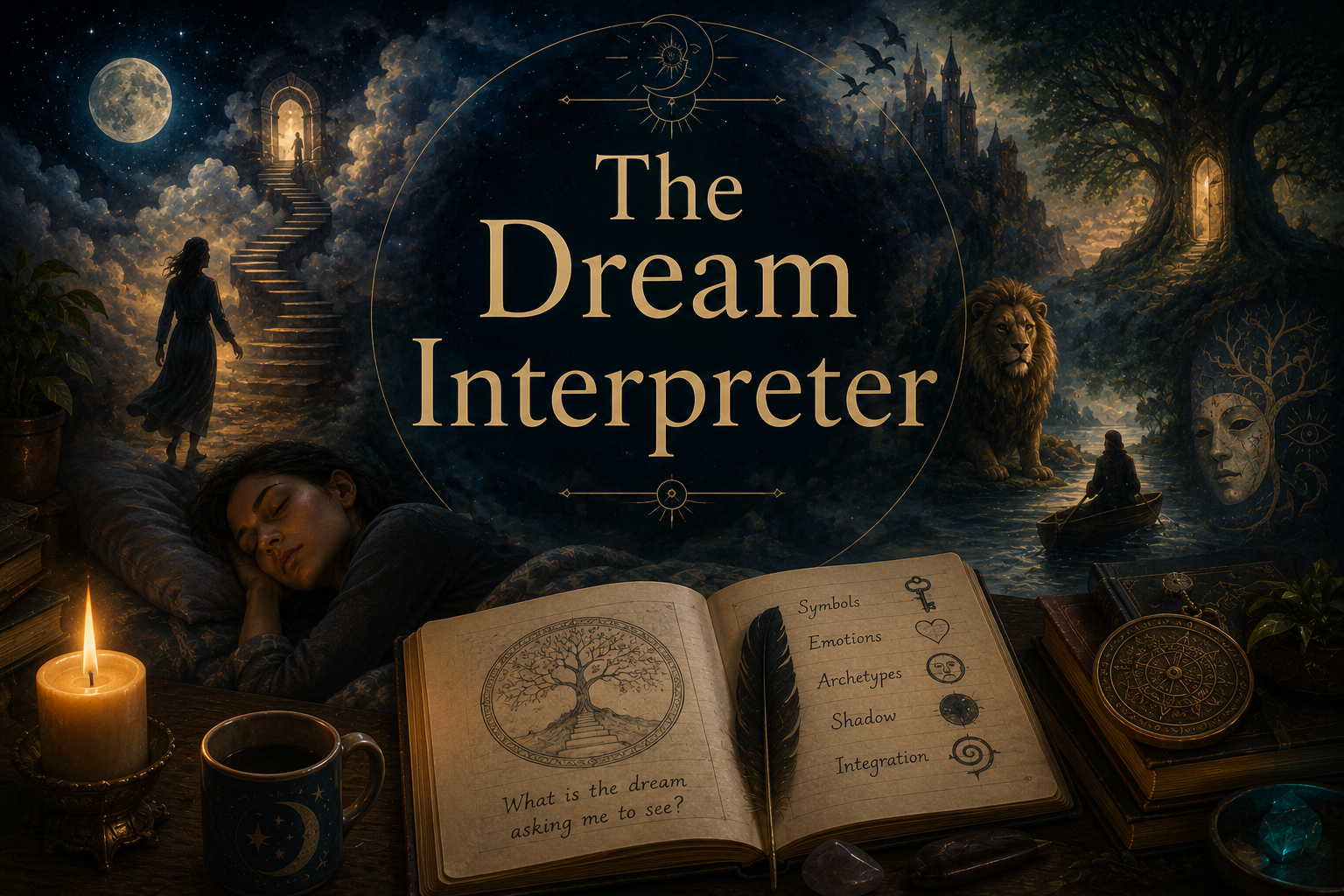
How to Start Reading Dream Symbols
Many people discover that dream work and tarot practice complement one another beautifully.
Tarot and Mythology
Tarot also shares deep connections with mythology.
The Hero’s journey.
The Wise Elder.
Transformation through challenge.
Death and rebirth.
These mythological themes appear throughout the cards.
Readers interested in mythic patterns may enjoy:
Mythological understanding often enriches reflective tarot practice by providing larger symbolic contexts.
Tarot and Personal Growth
Reflective tarot does not promise instant transformation.
What it offers is attention.
Attention often leads to awareness.
Awareness often supports change.
The cards cannot make decisions for us.
They cannot eliminate uncertainty.
They can, however, encourage thoughtful engagement with our experiences.
This makes tarot a valuable companion for personal growth.
Reflective Tarot and Spiritual Practice
Many people incorporate tarot into broader spiritual practices.
The cards may accompany:
- Meditation
- Prayer
- Contemplation
- Journaling
- Retreats
- Personal reflection
In these contexts, tarot serves as a symbolic tool for exploring spiritual questions and experiences.
Readers interested in symbolic spirituality may enjoy:
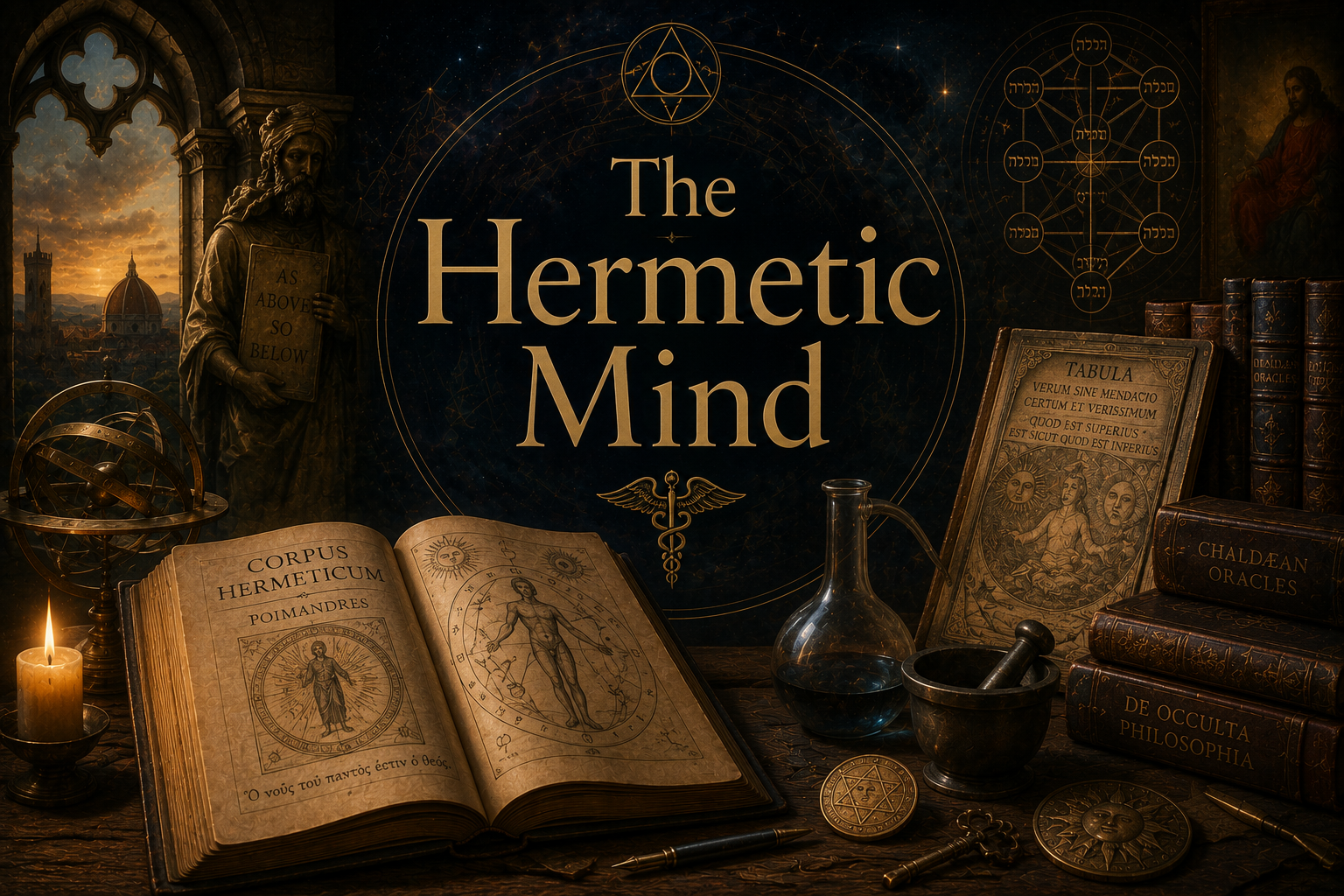
What Is Christian Hermeticism?
While traditions differ, many share an appreciation for symbols as pathways to reflection.
A Simple Daily Tarot Practice
One of the easiest ways to begin is with a single-card draw.
Each morning or evening:
- Draw one card.
- Observe the imagery.
- Notice emotional responses.
- Write a few reflections.
- Revisit the card later.
The goal is not perfect interpretation.
The goal is engagement.
Consistency often matters more than complexity.
Questions for Reflective Tarot Reading
Instead of predictive questions, consider asking:
- What deserves my attention today?
- What am I learning?
- What challenge am I currently facing?
- What perspective might help?
- What strength can I rely upon?
These questions often generate richer reflection than questions seeking certainty about future events.
Common Misconceptions About Reflective Tarot
Tarot Requires Psychic Ability
No.
Reflective tarot relies primarily on observation, symbolism, and contemplation.
There Is One Correct Interpretation
Most cards support multiple valid interpretations.
Context matters.
Personal experience matters.
Tarot Gives Absolute Answers
Reflective tarot encourages exploration rather than certainty.
Reflection Is Less Valuable Than Prediction
Many readers find that self-awareness ultimately proves more valuable than specific predictions.
Why Tarot Practice Continues to Grow
The popularity of reflective tarot has increased significantly in recent decades.
Part of this growth may reflect broader cultural interest in:
- Mindfulness
- Journaling
- Personal growth
- Symbolism
- Psychology
People increasingly seek tools that encourage reflection.
Tarot offers a flexible and accessible framework for doing so.
Learning More About Tarot
Readers interested in deepening their tarot practice may enjoy:
and
Recommended Books for Studying Tarot
Both resources provide helpful foundations for developing a thoughtful and sustainable tarot practice.
For scholarly perspectives on symbolism and psychological interpretation, readers may also find value in resources from the C.G. Jung Institute of San Francisco and the Joseph Campbell Foundation.
Frequently Asked Questions
What is a reflective tarot practice?
A reflective tarot practice uses the cards as tools for contemplation, self-awareness, and personal insight rather than focusing primarily on prediction.
Do I need to believe in fortune-telling to use tarot?
No. Many people use tarot purely as a reflective or symbolic practice.
Why are symbols important in tarot?
Symbols encourage interpretation and help reveal multiple layers of meaning within an experience.
Can tarot improve self-awareness?
Many readers find that tarot helps them recognize patterns, assumptions, emotions, and perspectives that deserve attention.
Is journaling necessary?
No, but journaling often deepens reflection and helps track recurring themes over time.
How often should I practice tarot?
Consistency matters more than frequency. Even a single card each day can support meaningful reflection.
Can tarot be part of a spiritual practice?
Yes. Many people incorporate tarot into meditation, contemplation, prayer, or personal reflection.
Final Thoughts
Tarot functions in many different ways for different people.
For some, it serves primarily as a divinatory tool.
For others, it becomes a reflective practice rooted in symbolism, self-awareness, and contemplation.
The cards do not simply provide answers.
They invite questions.
They encourage observation.
And they reveal possibilities.
Like a mirror, tarot reflects aspects of experience that may otherwise go unnoticed.
Whether approached through psychology, spirituality, mythology, symbolism, or personal growth, a thoughtful tarot practice offers something increasingly rare in modern life:
A reason to slow down, pay attention, and reflect.
And sometimes, that reflection becomes the most valuable insight of all.