Category: Symbolism

  • The Symbolic Mind

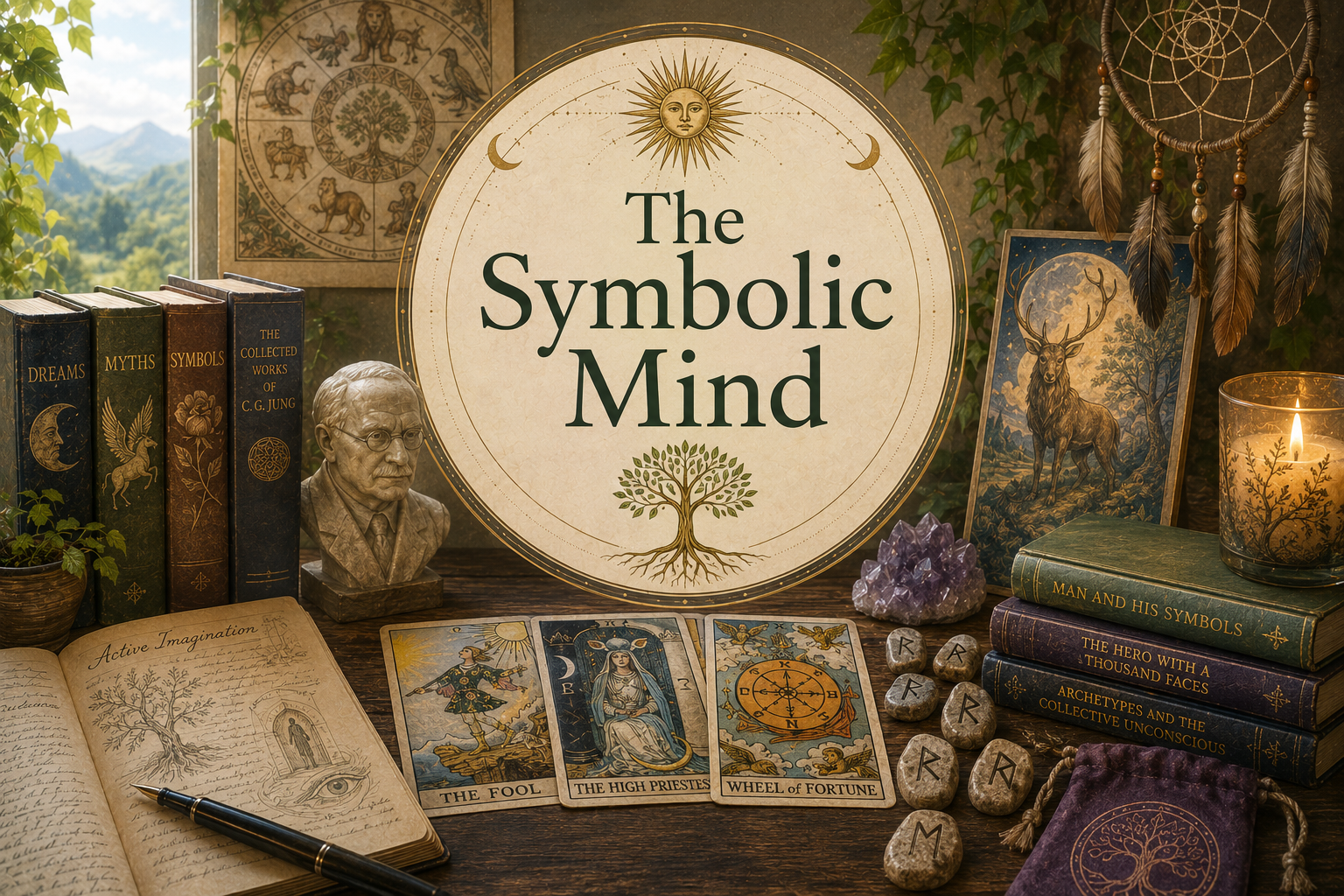
    The Symbolic Mind

    the symbolic mind

    Learn to read the hidden language the world is always speaking

    Unlock the hidden language of symbols — through tarot, dreams, runes, and myth — and learn to read meaning everywhere life speaks in images. A grounded, Jungian-inspired practice for curious beginners.

    Life is always speaking in symbols.

    Dreams. Tarot cards. Runes. Myths. Coincidences that seem to carry meaning.

    The Symbolic Mind is a beginner-friendly course that helps you learn the hidden language of symbols and develop a deeper relationship with your own imagination and intuition.

    What you’ll learn in the symbolic mind

    • Distinguish universal archetypes from personal symbols and explain why the difference matters in interpretation
    • Read a tarot card intuitively using observation and archetypal thinking — without rote memorisation
    • Keep a structured symbol journal that tracks dreams, images, and tarot draws as a living personal document
    • Decode the symbolism in a dream sequence using Jungian active-imagination techniques
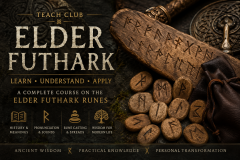
    • Interpret the core meanings of the Elder Futhark runes and apply them to reflective writing prompts
    • Assemble a personalized Symbol Dictionary that integrates tarot, runes, dreams, and mythology into a coherent lifelong practice
    the symbolic mind

    Most people move through life surrounded by symbols without realizing it. A dream image lingers long after waking. A tarot card seems strangely relevant. A myth told thousands of years ago still speaks to a modern struggle. A rune carved into stone carries meaning beyond its simple shape. The Symbolic Mind helps you learn how to approach these experiences with curiosity, insight, and discernment.

    This course does not require prior knowledge of psychology, tarot, mythology, or esoteric traditions. It provides a practical framework for understanding how symbols function across different systems and why they continue to appear in dreams, stories, spiritual traditions, and everyday life. Drawing inspiration from Jungian psychology, archetypal studies, and symbolic interpretation, you will learn how to observe symbols more carefully, recognize recurring patterns, and develop your own reflective practice.

    By the end of the course, you will have a deeper appreciation for the symbolic dimension of human experience and a set of tools you can continue using long after the lessons are complete. The goal is not to provide rigid answers but to help you ask better questions and engage more thoughtfully with the images and symbols that shape your inner and outer world.

    Explore All of Our Courses

    ChatGPT Image Jun 26, 2026, 04_57_25 PM
    PlayPause
    ChatGPT Image Jun 26, 2026, 04_57_25 PM
    image-slider-with-thumbnail1.jpeg
    image-slider-with-thumbnail2.jpeg
    ChatGPT Image Jun 26, 2026, 05_01_22 PM
    image-slider-with-thumbnail3.jpeg
    image-slider-with-thumbnail4.jpeg
    ChatGPT Image Jun 26, 2026, 04_51_54 PM
    image-slider-with-thumbnail5.jpeg
    image-slider-with-thumbnail6.jpeg
    ChatGPT Image Jun 27, 2026, 09_24_15 AM
    image-slider-with-thumbnail7.jpeg
    ChatGPT Image Jun 26, 2026, 04_54_23 PM
    ChatGPT Image Jun 26, 2026, 04_19_39 PM
    ChatGPT Image Jun 26, 2026, 04_28_19 PM
    ChatGPT Image Jun 26, 2026, 04_37_00 PM
    ChatGPT Image Jun 26, 2026, 05_04_59 PM
    ChatGPT Image Jun 26, 2026, 04_38_53 PM
    ChatGPT Image Jun 27, 2026, 09_13_22 AM
    ChatGPT Image Jun 26, 2026, 04_41_25 PM
    ChatGPT Image Jun 26, 2026, 04_44_22 PM
    ChatGPT Image Jun 30, 2026, 10_56_33 AM
    previous arrow
    next arrow
  • What Is an Archetype? A Jungian Introduction

    What Is an Archetype? A Jungian Introduction

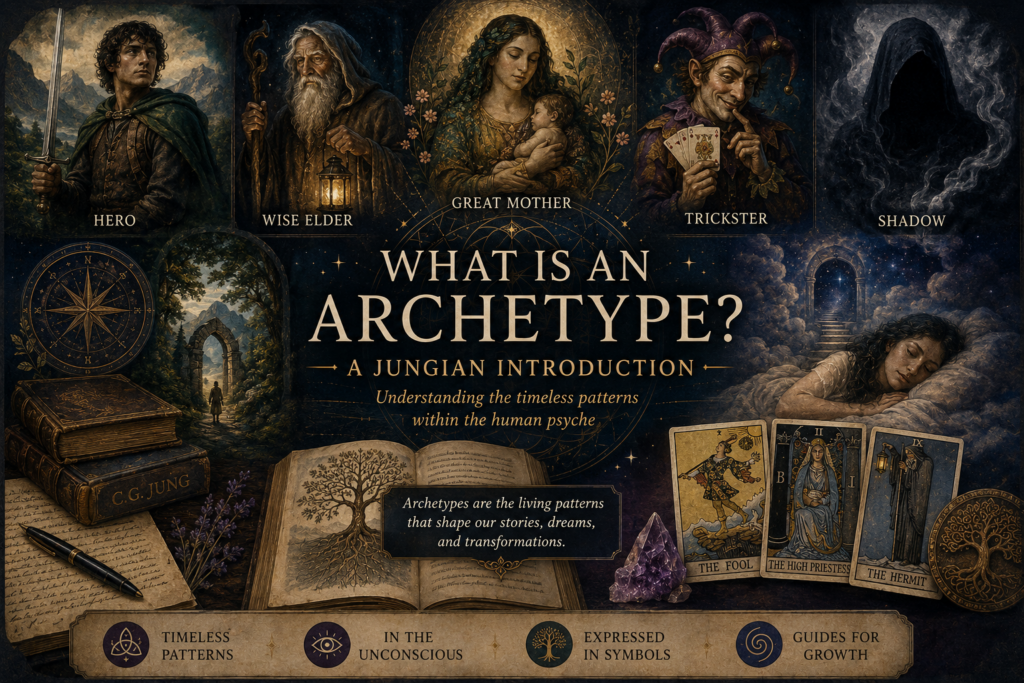
    Certain characters seem to appear everywhere.

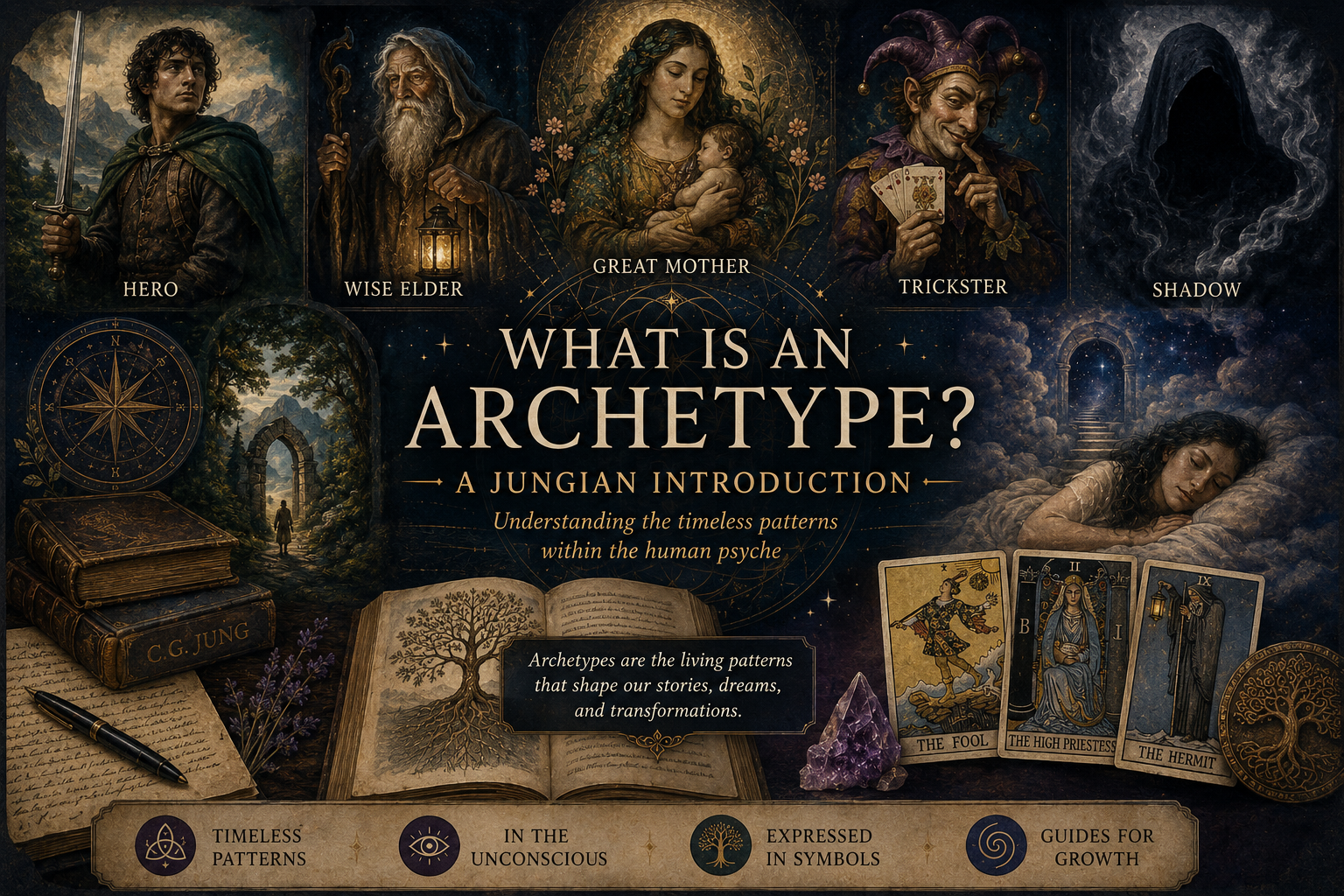
    The wise old mentor. The courageous hero. The trickster who disrupts the established order. The nurturing mother. The mysterious stranger. The shadowy adversary.

    These figures appear in myths, fairy tales, novels, films, dreams, religious traditions, and personal experiences. They emerge in stories separated by thousands of years and vast geographical distances. Yet they remain surprisingly familiar.

    Why?

    Swiss psychiatrist Carl Jung proposed an answer that would become one of the most influential ideas in modern psychology.

    He called these recurring patterns archetypes.

    The concept of the Jungian archetype continues to influence psychology, mythology, literature, religion, symbolism, dream interpretation, and spiritual traditions. Whether one fully accepts Jung’s theories or views them as symbolic models, archetypes offer a fascinating way of understanding recurring patterns within human experience.

    This guide introduces the concept of archetypes from a Jungian perspective and explores why they remain relevant today.

    This article contains affiliate links.

    archetype

    In This Guide

    • What an archetype is
    • Carl Jung’s theory of archetypes
    • The collective unconscious
    • Common archetypes
    • Archetypes in mythology and religion
    • Archetypes in dreams
    • Archetypes and symbolism
    • Misconceptions about archetypes
    • Why archetypes still matter
    • Frequently asked questions

    What Is a Jungian Archetype?

    A Jungian archetype is a recurring pattern, image, figure, or theme that appears across cultures, myths, dreams, stories, and human experiences.

    According to Jung, archetypes are not learned through culture alone.

    Instead, they arise from deeper structures within the human psyche.

    An archetype is not a specific person.

    It is a pattern.

    For example:

    The Hero is an archetype.

    Luke Skywalker, Frodo Baggins, King Arthur, and countless other characters are specific expressions of that pattern.

    Similarly:

    The Wise Elder is an archetype.

    Merlin, Gandalf, and many spiritual teachers represent variations of that pattern.

    The archetype remains constant.

    The expression changes.

    Carl Jung and the Origins of Archetype Theory

    Carl Jung developed the theory of archetypes during the early twentieth century.

    Originally a student and colleague of Sigmund Freud, Jung eventually developed his own approach to psychology.

    While Freud focused heavily on personal experiences and unconscious desires, Jung became increasingly interested in symbols, mythology, religion, dreams, and cultural patterns.

    As he studied myths and religious traditions from around the world, he noticed recurring images and themes.

    Cultures that had no apparent connection often produced remarkably similar stories.

    Jung believed these similarities pointed toward deeper structures within the human mind.

    This observation became one of the foundations of archetype theory.

    The Collective Unconscious

    To understand archetypes, it helps to understand another key Jungian concept.

    The collective unconscious.

    Jung proposed that the human psyche contains more than personal memories and experiences.

    Beneath the personal unconscious lies a deeper layer shared by humanity.

    He called this shared foundation the collective unconscious.

    According to Jung, archetypes emerge from this deeper level.

    Just as all humans share similar biological structures, Jung suggested that we may also share certain psychological patterns.

    Archetypes are expressions of these patterns.

    Whether interpreted literally or metaphorically, the concept remains one of Jung’s most influential contributions.

    Explore Our Courses

    ChatGPT Image Jun 26, 2026, 04_57_25 PM
    PlayPause
    ChatGPT Image Jun 26, 2026, 04_57_25 PM
    image-slider-with-thumbnail1.jpeg
    image-slider-with-thumbnail2.jpeg
    ChatGPT Image Jun 26, 2026, 05_01_22 PM
    image-slider-with-thumbnail3.jpeg
    image-slider-with-thumbnail4.jpeg
    ChatGPT Image Jun 26, 2026, 04_51_54 PM
    image-slider-with-thumbnail5.jpeg
    image-slider-with-thumbnail6.jpeg
    ChatGPT Image Jun 27, 2026, 09_24_15 AM
    image-slider-with-thumbnail7.jpeg
    ChatGPT Image Jun 26, 2026, 04_54_23 PM
    ChatGPT Image Jun 26, 2026, 04_19_39 PM
    ChatGPT Image Jun 26, 2026, 04_28_19 PM
    ChatGPT Image Jun 26, 2026, 04_37_00 PM
    ChatGPT Image Jun 26, 2026, 05_04_59 PM
    ChatGPT Image Jun 26, 2026, 04_38_53 PM
    ChatGPT Image Jun 27, 2026, 09_13_22 AM
    ChatGPT Image Jun 26, 2026, 04_41_25 PM
    ChatGPT Image Jun 26, 2026, 04_44_22 PM
    ChatGPT Image Jun 30, 2026, 10_56_33 AM
    previous arrow
    next arrow

    Archetypes Are Not Stereotypes

    A common misunderstanding occurs when people confuse archetypes with stereotypes.

    The two are very different.

    A stereotype reduces individuals to simplistic assumptions.

    An archetype describes recurring symbolic patterns.

    For example:

    The Mother archetype does not refer to every mother.

    Instead, it represents themes associated with nurturing, protection, fertility, care, and creation.

    Archetypes describe possibilities rather than fixed identities.

    They remain flexible and symbolic.

    The Hero Archetype

    The Hero is perhaps the most recognizable archetype.

    Hero stories appear throughout mythology, religion, literature, and popular culture.

    The Hero often:

    • Leaves the familiar world
    • Faces challenges
    • Encounters allies and enemies
    • Learns important lessons
    • Returns transformed

    This pattern appears in ancient myths and modern films alike.

    Many people connect with Hero stories because they mirror personal struggles and growth.

    The Hero’s journey becomes a symbolic map of transformation.

    The Wise Elder

    The Wise Elder appears as a guide, teacher, mentor, or spiritual advisor.

    This figure offers wisdom rather than direct action.

    Examples appear throughout mythology and literature:

    • Merlin
    • Gandalf
    • Tiresias
    • Various spiritual teachers

    The Wise Elder often represents insight, knowledge, and perspective gained through experience.

    The Trickster

    The Trickster disrupts order.

    This archetype breaks rules, challenges assumptions, and introduces change.

    Tricksters can be humorous.

    They can also be frustrating.

    Examples include:

    • Loki
    • Hermes
    • Coyote
    • Anansi

    The Trickster reminds us that growth often occurs when expectations are challenged.

    The Shadow

    The Shadow is one of Jung’s most important archetypes.

    It represents aspects of ourselves that we prefer not to acknowledge.

    The Shadow may contain:

    • Fear
    • Anger
    • Jealousy
    • Shame
    • Untapped potential

    Many stories externalize the Shadow through villains, monsters, or adversaries.

    Jung believed genuine personal growth requires confronting rather than avoiding the Shadow.

    The Great Mother

    The Great Mother appears throughout mythology and religion.

    This archetype often represents:

    • Nurturing
    • Protection
    • Fertility
    • Creation
    • Compassion

    Yet the Great Mother can also possess destructive aspects.

    Nature nourishes life.

    Nature can also bring storms and destruction.

    This duality often appears in mythological expressions of the archetype.

    The Child

    The Child archetype symbolizes beginnings, potential, renewal, and future possibilities.

    Also the Child often appears in myths involving miraculous births, divine children, or unexpected saviors.

    Psychologically, the archetype reminds us of growth, creativity, and emerging possibilities.

    Archetypes and Mythology

    Archetypes appear most clearly in mythology.

    Heroic quests.

    Wise guides.

    Sacred marriages.

    Descent into darkness.

    Death and rebirth.

    These themes appear repeatedly across cultures.

    Readers interested in these recurring patterns may enjoy:

    Why Mythology Matters

    Myths provide some of the richest expressions of archetypal imagery.

    Archetypes and Symbolism

    Archetypes often communicate through symbols.

    The Hero may appear through a sword.

    The Wise Elder through a lantern.

    The Shadow through darkness.

    The Child through a seed or a newborn.

    Because of this connection, the study of archetypes naturally overlaps with symbolism.

    Readers interested in symbolic interpretation may enjoy:

    What Is Symbolism? A Beginner’s Introduction

    Symbols provide visible forms for archetypal patterns that would otherwise remain abstract.

    Archetypes and Dreams

    Jung believed dreams frequently express archetypal material.

    Dream figures sometimes embody archetypal roles.

    A stranger may function as the Shadow.

    A teacher may appear as the Wise Elder.

    A journey may reflect the Hero’s path.

    Dreams rarely announce these meanings directly.

    Instead, they communicate through symbols and stories.

    Readers interested in dream interpretation may enjoy:

    How to Start Reading Dream Symbols

    Dream work often provides opportunities to observe archetypes in action.

    Archetypes and Tarot

    Many tarot readers encounter archetypes through the cards.

    The Major Arcana contains numerous archetypal figures.

    Examples include:

    • The Fool
    • The Magician
    • The High Priestess
    • The Hermit
    • The Emperor
    • Death

    These figures function as symbolic patterns rather than literal individuals.

    Readers interested in tarot symbolism may enjoy:

    Beginner’s Guide to Tarot

    Tarot provides a rich visual language for exploring archetypal themes.

    Archetypes and Christian Hermeticism

    Archetypal thinking also appears within mystical traditions.

    Christian Hermeticism often explores recurring symbolic patterns through scripture, symbolism, contemplation, and spiritual reflection.

    Readers interested in these themes may enjoy:

    What Is Christian Hermeticism?

    While Jung and Christian Hermetic thinkers approached these subjects differently, both traditions recognize the importance of symbolic patterns in human experience.

    Common Misconceptions About Archetypes

    Archetypes Are Literal Entities

    Jung generally described archetypes as psychological patterns rather than independent beings.

    Archetypes Predict Behavior

    Archetypes influence patterns of experience, but they do not determine individual choices.

    Everyone Fits Into One Archetype

    People express many archetypal patterns throughout life.

    No single archetype defines an entire person.

    Archetypes Are Only Found in Ancient Myths

    Modern films, novels, games, and personal experiences continue expressing archetypal themes.

    Why Archetypes Still Matter

    The enduring popularity of archetypes suggests that Jung identified something meaningful.

    People continue responding to archetypal stories because they reflect recurring human experiences.

    The Hero’s struggle.

    The Shadow’s challenge.

    The Wise Elder’s guidance.

    The Child’s potential.

    These patterns help people understand growth, conflict, transformation, and meaning.

    Even those who question Jung’s theories often find value in archetypal language as a tool for reflection.

    Learning More About Archetypes

    Readers interested in exploring Jung’s work further may find valuable resources through the C.G. Jung Institute of San Francisco and the C.G. Jung Foundation for Analytical Psychology.

    Both organizations provide educational resources related to Jungian psychology, archetypes, symbolism, dreams, and personal development.

    Frequently Asked Questions

    What is a Jungian archetype?

    A Jungian archetype is a recurring psychological pattern that appears in myths, dreams, stories, symbols, and human experiences.

    Did Carl Jung invent archetypes?

    Jung did not invent recurring symbolic patterns, but he developed one of the most influential modern theories explaining them.

    What is the collective unconscious?

    The collective unconscious is Jung’s concept of a shared psychological foundation from which archetypes emerge.

    Are archetypes real?

    Different people answer this question differently. Some view archetypes as psychological realities, while others see them as useful symbolic models.

    What is the most common archetype?

    The Hero is probably the most widely recognized archetype because Hero stories appear across many cultures.

    How do archetypes appear in dreams?

    Dream figures, journeys, symbols, and situations often express archetypal themes and patterns.

    Why are archetypes important?

    Archetypes help explain recurring patterns in stories, myths, religions, dreams, and personal experiences.

    Final Thoughts

    The concept of the Jungian archetype offers a fascinating lens through which to view human experience.

    Whether encountered in mythology, dreams, religion, literature, tarot, or personal reflection, archetypes reveal recurring patterns that seem woven into the fabric of human storytelling and imagination.

    The Hero continues to face challenges.

    The Wise Elder continues to offer guidance.

    The Shadow continues to demand attention.

    These patterns remain meaningful because they reflect enduring aspects of life itself.

    Carl Jung believed archetypes emerge from deep structures within the psyche. Whether one accepts that theory literally or approaches it symbolically, archetypes provide a powerful framework for understanding the stories we tell, the dreams we dream, and the symbols that continue to shape our lives.

    The more we study archetypes, the more we begin to recognize them everywhere. And once we see them, it becomes difficult not to notice how deeply they influence the ways human beings search for meaning.

  • What Is Symbolism? A Beginner’s Introduction

    What Is Symbolism? A Beginner’s Introduction

    Every day, people encounter symbols without giving them much thought.

    A wedding ring suggests commitment. A flag represents a nation. A dove may evoke peace. A crossroads can imply choice or uncertainty. Even simple objects can carry meanings that extend far beyond their physical form.

    This ability to communicate ideas through images, objects, stories, and patterns lies at the heart of symbolism.

    The question what is symbolism may seem straightforward at first, yet symbolism touches nearly every aspect of human experience. Religion, mythology, literature, art, dreams, psychology, folklore, and spiritual traditions all rely on symbols to communicate meaning.

    Throughout history, people have used symbols to express ideas that are difficult to explain through ordinary language alone. Symbols help us explore mystery, transformation, identity, purpose, and the deeper patterns that shape our lives.

    Whether you are interested in mythology, spirituality, tarot, dreams, alchemy, archetypes, or personal growth, learning how symbolism works provides a foundation for understanding many of the world’s most enduring traditions.

    This guide introduces symbolism from a beginner’s perspective and explores why symbols continue to matter in the modern world.

    what is symbolism

    In This Guide

    • What symbolism is
    • Why humans use symbols
    • The difference between signs and symbols
    • Symbolism in religion, mythology, and culture
    • Personal and universal symbols
    • Symbolism and psychology
    • Symbolism in spiritual traditions
    • Common misconceptions about symbols
    • Why symbolism still matters
    • Frequently asked questions

    What Is Symbolism?

    At its simplest, symbolism is the use of images, objects, stories, actions, or patterns to represent ideas beyond their literal meaning.

    A symbol points toward something larger than itself.

    A rose is a flower.

    At the same time, it may symbolize love, beauty, mystery, devotion, secrecy, or spiritual unfolding.

    A river is a body of water.

    Yet many cultures associate rivers with life, movement, change, cleansing, or the passage of time.

    Symbols function on multiple levels at once. They exist in the physical world while simultaneously communicating deeper meanings.

    A complete answer to the question what is symbolism must therefore recognize that symbols operate both externally and internally. They appear in the world around us and within the world of human imagination.

    Why Do Humans Use Symbols?

    Human beings naturally think through images and associations.

    Long before written language became widespread, people communicated ideas through stories, rituals, art, and symbolic objects.

    Symbols allow us to express complex concepts quickly.

    Consider the image of a crown.

    Without a lengthy explanation, many people associate a crown with authority, leadership, responsibility, power, or sovereignty.

    Symbols condense meaning.

    They create connections between visible images and invisible ideas.

    Because of this, symbolism appears in every culture throughout history.

    Signs and Symbols: What Is the Difference?

    People often use the words sign and symbol interchangeably, but they are not exactly the same.

    A sign usually has a specific and direct meaning.

    A stop sign tells drivers to stop.

    A restroom sign indicates a location.

    The meaning remains relatively fixed.

    Symbols are different.

    A symbol invites interpretation.

    Its meaning may expand depending on context.

    For example, a tree might symbolize:

    • Growth
    • Wisdom
    • Family lineage
    • Stability
    • Life itself

    The symbol remains open to deeper reflection.

    This openness gives symbols much of their power.

    Explore Our Courses

    ChatGPT Image Jun 26, 2026, 04_57_25 PM
    PlayPause
    ChatGPT Image Jun 26, 2026, 04_57_25 PM
    image-slider-with-thumbnail1.jpeg
    image-slider-with-thumbnail2.jpeg
    ChatGPT Image Jun 26, 2026, 05_01_22 PM
    image-slider-with-thumbnail3.jpeg
    image-slider-with-thumbnail4.jpeg
    ChatGPT Image Jun 26, 2026, 04_51_54 PM
    image-slider-with-thumbnail5.jpeg
    image-slider-with-thumbnail6.jpeg
    ChatGPT Image Jun 27, 2026, 09_24_15 AM
    image-slider-with-thumbnail7.jpeg
    ChatGPT Image Jun 26, 2026, 04_54_23 PM
    ChatGPT Image Jun 26, 2026, 04_19_39 PM
    ChatGPT Image Jun 26, 2026, 04_28_19 PM
    ChatGPT Image Jun 26, 2026, 04_37_00 PM
    ChatGPT Image Jun 26, 2026, 05_04_59 PM
    ChatGPT Image Jun 26, 2026, 04_38_53 PM
    ChatGPT Image Jun 27, 2026, 09_13_22 AM
    ChatGPT Image Jun 26, 2026, 04_41_25 PM
    ChatGPT Image Jun 26, 2026, 04_44_22 PM
    ChatGPT Image Jun 30, 2026, 10_56_33 AM
    previous arrow
    next arrow

    Symbolism in Ancient Cultures

    Symbolism appears throughout the ancient world.

    Egyptian temples featured symbolic imagery connected to creation, kingship, and divine order.

    Greek mythology used symbolic stories to explore human nature and the relationship between mortals and the gods.

    Many Indigenous traditions around the world use animals, natural features, and sacred objects as symbolic expressions of spiritual truths.

    Symbols helped people understand the cosmos and their place within it.

    Rather than viewing the world as random, many ancient cultures perceived layers of meaning woven throughout creation.

    Symbolism in Religion

    Religious traditions rely heavily on symbols.

    Christianity uses the cross, bread, wine, water, light, and the shepherd as powerful symbolic images.

    Judaism incorporates symbolic objects such as the menorah and the Torah scroll.

    Buddhism employs symbols including the lotus flower and the wheel.

    Islamic art often uses geometric patterns that reflect divine order and unity.

    Symbols help communicate spiritual truths that extend beyond literal description.

    They invite contemplation and reflection.

    For many believers, symbols serve as bridges between visible realities and invisible mysteries.

    Symbolism in Mythology

    Myths are filled with symbolic patterns.

    Heroes leave home and face trials.

    Dragons guard treasures.

    Wise guides appear at critical moments.

    Journeys lead to transformation.

    These recurring images often communicate deeper truths about human experience.

    Mythological symbolism remains influential because the themes continue to resonate across cultures and generations.

    The stories may change, but the underlying patterns often remain recognizable.

    Universal and Cultural Symbols

    Some symbols appear across many cultures.

    The sun often represents life, illumination, vitality, or divine presence.

    Water frequently symbolizes purification, emotion, renewal, or transformation.

    Mountains often suggest spiritual ascent, stability, or encounters with the sacred.

    At the same time, symbols can carry meanings specific to particular cultures.

    A symbol that communicates one idea in one tradition may carry a different meaning elsewhere.

    Understanding symbolism therefore requires attention to both universal patterns and cultural context.

    Personal Symbols

    Not all symbols are universal.

    Some become meaningful through personal experience.

    A particular song may remind someone of a loved one.

    A specific location may symbolize home, freedom, or loss.

    A family heirloom may carry emotional significance unavailable to outsiders.

    Personal symbols often emerge through memory, relationships, and life experiences.

    Because of this, symbolism operates at both collective and individual levels.

    Symbolism and Psychology

    The study of symbolism received renewed attention through psychology, particularly through the work of Carl Jung.

    Jung believed that symbols reveal important aspects of the human psyche.

    He argued that dreams, myths, religions, and stories often express recurring symbolic patterns.

    These patterns help people understand themselves and navigate life’s challenges.

    According to Jung, symbols can communicate insights that remain difficult to access through rational analysis alone.

    His work continues to influence modern discussions of symbolism, spirituality, creativity, and personal development.

    Symbolism and Archetypes

    Closely related to symbolism is the concept of archetypes.

    Archetypes are recurring patterns or figures that appear across cultures and stories.

    Examples include:

    • The Hero
    • The Wise Elder
    • The Trickster
    • The Shadow
    • The Caregiver

    These archetypal figures often appear through symbolic images and narratives.

    In a future article, we will explore archetypes in greater depth and examine their role within psychology, mythology, and spirituality.

    Symbolism in Spiritual Traditions

    Many spiritual traditions rely on symbolic language.

    Rather than explaining everything directly, they use images, metaphors, rituals, and stories.

    Symbols create space for contemplation.

    They encourage reflection rather than simple answers.

    This symbolic approach appears throughout:

    • Mysticism
    • Alchemy
    • Hermeticism
    • Religious traditions
    • Meditation practices

    For example, readers interested in symbolic spiritual traditions may enjoy our introduction to:

    What Is Christian Hermeticism?

    Christian Hermetic thought places strong emphasis on symbolism as a means of exploring wisdom, creation, and spiritual understanding.

    Symbolism in Alchemy

    Alchemy provides one of the richest symbolic languages in Western history.

    Alchemical texts often feature:

    • Suns and moons
    • Kings and queens
    • Dragons
    • Birds
    • Vessels
    • Crowns
    • Gardens

    These images communicate ideas about transformation, wisdom, and the human search for wholeness.

    Rather than describing concepts directly, alchemists frequently expressed them through symbolic imagery.

    Readers interested in this tradition may wish to explore:

    What Is Alchemy? Historical and Spiritual Perspectives

    Alchemy demonstrates how symbols can communicate multiple layers of meaning simultaneously.

    Symbolism in Tarot and Runes

    Tarot and runes are also symbolic systems.

    Each card or rune functions as more than a simple image.

    The symbols invite reflection on experiences, relationships, choices, challenges, and opportunities.

    Readers interested in these traditions may find these beginner guides helpful:

    Beginner’s Guide to Tarot

    and

    Beginner’s Guide to Runes

    In both cases, symbolism provides the foundation for interpretation and reflection.

    Common Misconceptions About Symbolism

    Symbols Have Only One Meaning

    Most symbols possess multiple layers of meaning.

    Context matters.

    History matters.

    Personal experience matters.

    Every Symbol Is Universal

    Some symbols appear broadly across cultures, but many depend on specific historical and cultural settings.

    Symbols Are Merely Decorative

    Throughout history, symbols have carried profound religious, philosophical, psychological, and spiritual significance.

    Symbolism Is Irrational

    Symbols complement rational thought rather than replacing it.

    They help express dimensions of experience that logic alone may struggle to communicate.

    Why Symbolism Still Matters

    Modern society often emphasizes information and analysis.

    These tools are valuable.

    Yet human beings continue to respond to stories, images, rituals, and symbols.

    Symbols help us navigate experiences that resist simple explanations.

    Love.

    Loss.

    Purpose.

    Identity.

    Transformation.

    Faith.

    Hope.

    Symbols provide a language for exploring these realities.

    They connect personal experience with larger patterns of meaning.

    This enduring relevance explains why symbolism continues to appear in literature, psychology, religion, art, mythology, and spiritual practice.

    How Should Beginners Study Symbolism?

    Begin with observation.

    Pay attention to recurring images.

    Notice patterns across stories, myths, dreams, and traditions.

    Read widely.

    Study cultural contexts.

    Remain curious.

    Most importantly, avoid rushing toward definitive conclusions.

    Symbols often reveal their meanings gradually.

    A symbol that seems simple today may carry greater depth tomorrow.

    The study of symbolism rewards patience and reflection.

    Learning More About Symbolism

    Readers interested in the scholarly study of symbolism can explore the work of the The Joseph Campbell Foundation, which provides resources related to mythology, symbolism, and the recurring patterns found within stories and cultures around the world.

    Its educational materials offer valuable insight into the symbolic dimensions of myth and human experience.

    Frequently Asked Questions

    What is symbolism in simple terms?

    Symbolism is the use of images, objects, stories, or actions to represent ideas beyond their literal meaning.

    Why are symbols important?

    Symbols help communicate complex ideas, emotions, and spiritual concepts that may be difficult to express directly.

    Are symbols universal?

    Some symbols appear across many cultures, but others depend on specific cultural, historical, or personal contexts.

    Is symbolism connected to psychology?

    Yes. Psychologists such as Carl Jung explored how symbols appear in dreams, myths, and human development.

    How does symbolism relate to spirituality?

    Many spiritual traditions use symbols to communicate deeper truths and encourage contemplation.

    Do symbols have fixed meanings?

    Not always. Context often influences how symbols are interpreted.

    Can anyone learn symbolism?

    Absolutely. Studying symbolism begins with curiosity, observation, and a willingness to explore deeper layers of meaning.

    Final Thoughts

    The question what is symbolism opens the door to one of humanity’s oldest and most fascinating ways of understanding the world.

    Symbols appear wherever people seek meaning.

    They appear in myths and religions, dreams and stories, rituals and works of art. They help connect visible realities with invisible ideas.

    By learning the language of symbolism, we begin to notice patterns that might otherwise remain hidden. We become more attentive to the ways cultures communicate wisdom, how traditions preserve meaning, and how individuals make sense of their experiences.

    The study of symbolism is ultimately the study of meaning itself.

    And once you begin noticing symbols, you may discover that they have been speaking all along.
error

Enjoyed this article? Please spread the word :)

RSS
Follow by Email
Pinterest
fb-share-icon
Reddit
BLUESKY