Introduction
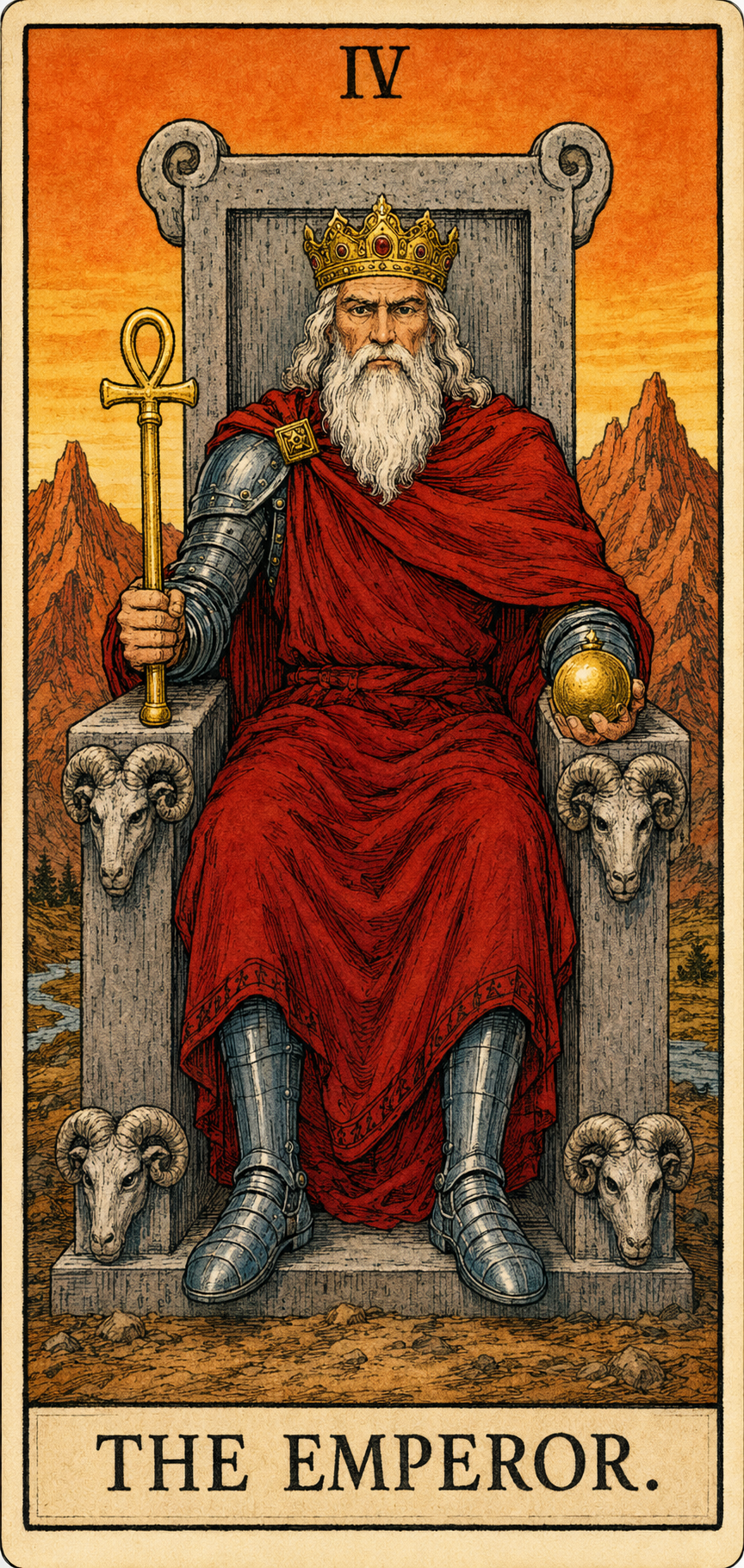
Among the Major Arcana, few cards provoke stronger reactions than The Emperor. Some readers meet him as a symbol of stability, order, and wise leadership. Others see rigidity, domination, or the burdens of authority. Both responses reveal something true. The Emperor stands at the point where structure enters the Fool’s journey in a decisive way. If The Empress suggests abundance, nurture, and generative life, The Emperor introduces boundary, law, form, and the disciplines that allow life to endure.
The Emperor tarot meaning remains important because the card addresses a permanent human question: how should power be used? That question belongs not only to rulers and institutions but also to parents, teachers, artists, spiritual seekers, and anyone responsible for shaping a life. Authority can protect or oppress. Order can support growth or suffocate it. The card therefore invites more than a simple positive or negative judgment. It asks readers to reflect on the relationship between strength and wisdom, will and restraint, command and service.
Within the deck, The Emperor follows The Empress and precedes The Hierophant. This placement is meaningful. After the fertile creativity of The Empress, the sequence turns toward pattern, governance, and continuity. Then it moves into inherited teaching, tradition, and communal meaning. The Emperor thus occupies a threshold between natural abundance and social order. He represents the principle that gives shape to what might otherwise remain diffuse. In practical terms, he concerns the building of systems, the keeping of promises, the creation of laws, and the cultivation of mature responsibility.
This article contains affiliate links.
Serious tarot study benefits from approaching this card through several lenses at once. Historically, The Emperor developed from early triumph imagery into a richly layered esoteric symbol. Artistically, the Rider-Waite-Smith and Thoth decks each reshaped the card in ways that still influence modern interpretation. Psychologically, the card speaks to the archetype of the father, ruler, lawgiver, and organizer. Mythologically, it resonates with gods and kings associated with sovereignty, sky power, justice, and civilization. Esoterically, it opens onto astrology, Qabalah, alchemy, and Christian Hermetic reflection.
For readers who want a deeper symbolic education, Rose and Rune also recommends The Hermetic Mirror, a course exploring esoteric symbolism, contemplative interpretation, and the inner logic of Western mystery traditions in an accessible way.
This guide follows a scholarly but accessible path. We will examine historical origins, Rider-Waite-Smith symbolism, Thoth symbolism, archetypal and Jungian themes, mythological parallels, alchemical and Christian Hermetic reflections, the Tree of Life, astrology, chakra correspondence, upright and reversed meanings, practical journaling prompts, meditation, related cards, and frequently asked questions. Along the way, we will draw on respected voices including Rachel Pollack, Mary K. Greer, Benebell Wen, Lon Milo DuQuette, Robert M. Place, Adam McLean, Arthur Edward Waite, Aleister Crowley, and other historians and interpreters where appropriate.
Rather than reducing the card to fortune-telling slogans, this article treats The Emperor as a symbolic teacher. His lesson is not merely about control. It is about rightful order, mature stewardship, and the difficult art of embodying strength without losing soul.
In This Guide
- Card Overview
- Historical Origins of the Card
- Rider-Waite-Smith Symbolism
- Thoth Tarot Symbolism
- The Card’s Archetypal Meaning
- Mythological Connections
- Alchemical Symbolism
- Christian Hermetic Reflections
- The Tree of Life and Hebrew Letter
- Astrological Correspondences
- Chakra Correspondence
- Upright Meaning
- Reversed Meaning
- Practical Reflection Questions
- Meditation Exercise
- Related Cards
- What Modern Readers Can Learn from The Emperor
- Frequently Asked Questions
- Further Reading
- Final Thoughts
Card Overview
- Traditional card number: IV
- Suit: Major Arcana
- Element: Fire
- Planet: Mars
- Zodiac sign: Aries
- Hebrew letter: Heh (ה) in the Golden Dawn system
- Path on the Tree of Life: Path 15, between Chokmah and Tiphareth in the Golden Dawn attributions
- Chakra correspondence: Solar Plexus Chakra, with secondary associations to Root Chakra in some modern systems
- Golden Dawn correspondence: Aries, Heh, Path 15
- Thoth correspondence: The Emperor, Aries, Heh, fiery rulership expressed through creative authority
- Keywords: authority, structure, discipline, sovereignty, protection, law, stability, responsibility, leadership, order
- Core themes: rightful power, the shaping of form, mature responsibility, boundaries that protect life, and the ethical use of will
The number four is central to understanding the card. In numerology, four suggests foundation, stability, structure, and material order. A square has four sides. Many sacred and philosophical systems organize reality through fours: four directions, four seasons, four elements, four evangelists, four rivers of paradise, and the four suits of tarot. The Emperor therefore represents a stabilizing principle. He does not generate life in the way The Empress does. Instead, he gives life durable form.
Historical Origins of the Card
To understand The Emperor tarot meaning, it helps to begin with tarot’s earliest history rather than with modern occult assumptions. Tarot emerged in fifteenth-century Italy as a card game, not as a fully developed esoteric system. Historians such as Michael Dummett, Ronald Decker, Thierry Depaulis, and Robert M. Place have shown that the earliest trump cards belonged to a cultural world shaped by courtly pageantry, civic symbolism, Christian moral imagination, and Renaissance political life rather than by a secret Egyptian priesthood or an ancient occult code (Dummett; Decker, Depaulis, and Dummett; Place).
Early Imperial Imagery
In the earliest surviving decks, the Emperor appears as a ruler seated on a throne, often holding orb, scepter, or shield. The image would have been legible to Renaissance viewers. It represented temporal authority, civic order, masculine sovereignty, and the visible structures of power. The card belonged to a sequence of trumps that dramatized hierarchy and human destiny. In that sequence, the Emperor stood below transcendent or ecclesiastical figures such as the Pope but above ordinary social roles. He symbolized worldly rule at its highest level.
The early Tarot de Marseille tradition preserved this broad idea. The Emperor remained a crowned ruler, usually shown in profile or near profile, seated in a posture of command. Compared with later decks, the image was simpler and less overtly esoteric. Yet even in these earlier forms, the card already suggested themes that would endure: authority, governance, law, and the ordering of human life through stable institutions.
From Political Figure to Symbolic Principle
As tarot moved into occult interpretation in the eighteenth and nineteenth centuries, readers began to see more than a literal emperor. Antoine Court de Gébelin and later occultists reimagined the trumps as carriers of hidden wisdom. By the time of Éliphas Lévi and the Hermetic Order of the Golden Dawn, the Emperor had become part of a larger symbolic network involving astrology, Hebrew letters, ceremonial magic, and Qabalah. This did not erase the older political meaning. Instead, it expanded it. The ruler on the throne became an image of cosmic order, disciplined will, and the shaping intelligence that gives law to life.
Robert M. Place is especially helpful here because he balances historical caution with symbolic sensitivity. He notes that tarot images often gained new meanings over time without losing earlier ones. The Emperor could remain a worldly ruler while also becoming an archetype of structure and authority in a broader spiritual sense (Place, The Tarot: History, Symbolism, and Divination).
Rider-Waite-Smith Changes
The Rider-Waite-Smith deck, published in 1909, transformed how modern readers understand the card. Arthur Edward Waite and Pamela Colman Smith retained the imperial throne and crown but intensified the symbolic atmosphere. The ruler now sits against a stark mountainous landscape. Rams decorate the throne. Red robes and armor emphasize fiery force. The image feels less like a portrait of a historical monarch and more like a distilled emblem of rulership itself. Waite’s brief notes in The Pictorial Key to the Tarot frame the card in terms of worldly power, authority, and realized thought, but Smith’s art gives it psychological and mythic depth.
Thoth Deck Changes
Aleister Crowley and Lady Frieda Harris took the card in a more overtly esoteric direction in the Thoth deck. Their Emperor is not merely a seated king. He is a fiery, symbolic concentration of Aries, Mars, creative potency, and imperial order. Crowley links the card to the Hebrew letter Heh and to a complex network of astrological and Qabalistic ideas in The Book of Thoth. The result is a card that feels less civic and more cosmic. Yet the central concern remains recognizable: power that imposes form.
Across these developments, the card evolved from a recognizable ruler into a multi-layered symbol of sovereignty, law, and disciplined creative force. That long history matters because it keeps modern interpretation grounded. The Emperor is not only a personality type. He is also a historical image of rulership, a philosophical emblem of order, and a spiritual question about how form should govern life.
The Hermetic Mirror Course
Rider-Waite-Smith Symbolism
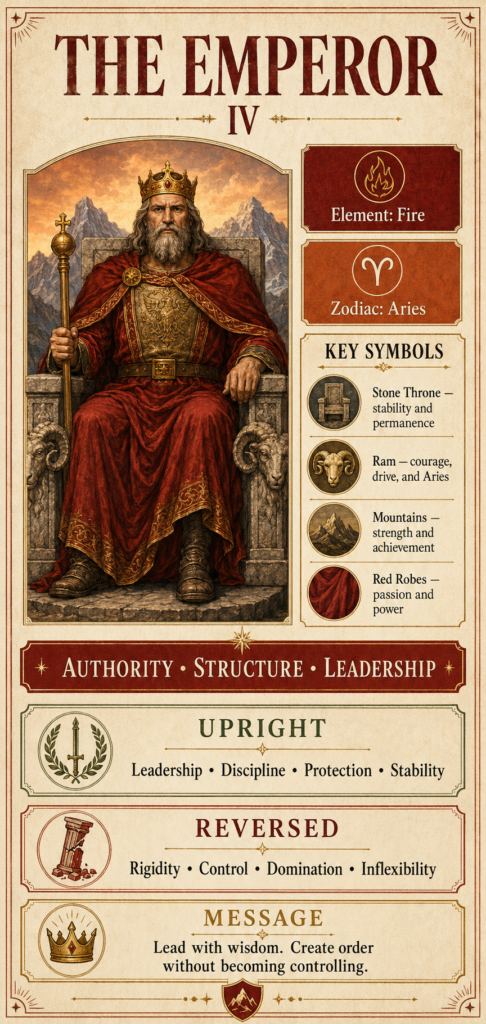
The Rider-Waite-Smith Emperor is one of the most recognizable images in modern tarot. Pamela Colman Smith presents a stern ruler seated on a stone throne adorned with ram heads. He wears a crown and red robes over armor. In one hand he holds an ankh-like scepter; in the other, an orb. Behind him rise barren mountains. A narrow river appears in the distance. Every element contributes to a symbolic language of command, structure, and disciplined force.
The Throne and Rams
The stone throne suggests permanence. This is not a temporary seat or a decorative chair. It implies law, institution, and the hard durability of structure. The ram heads immediately connect the card with Aries, the cardinal fire sign ruled by Mars. Aries brings initiative, courage, assertion, and the power to begin. Yet on the throne, that force is no longer raw impulse alone. It has become established authority.
Rachel Pollack often emphasizes that tarot symbols gain power through relationship. Here the ram is not charging across a field. It is carved into the throne. Fiery instinct has been fixed into order. That shift helps explain why The Emperor is not simply about aggression. He represents force that has become system, will that has become law, and initiative that has become governance (Pollack, Seventy-Eight Degrees of Wisdom).
Red Robes and Armor
The Emperor’s red robes reinforce the fiery, martial quality of the card. Red suggests vitality, blood, courage, passion, and action. Under the robes, however, lies armor. This combination matters. The card does not show unguarded emotional warmth. It shows protected power. Armor implies readiness, defense, and distance. The ruler is not merely expressive. He is fortified.
Mary K. Greer’s approach to tarot often invites readers to ask how a symbol feels in the body and in lived experience. The armor of The Emperor can feel reassuring when one needs boundaries, discipline, or protection. It can also feel intimidating when one longs for tenderness or flexibility. The card therefore contains a tension between safety and severity, which is one reason it remains psychologically rich (Greer, 21 Ways to Read a Tarot Card).
Scepter, Orb, and Crown
The scepter resembles an ankh, an Egyptian symbol of life, though Waite does not dwell on this detail. The orb suggests dominion over the world. Together they imply that rulership concerns both vitality and order. The crown marks legitimacy. This is not the power of a rebel or a usurper. It is sanctioned, visible authority. In symbolic reading, that can point to inner legitimacy as well. The Emperor asks whether one has claimed rightful responsibility rather than merely reacting to circumstances.
Mountains and River
The mountains in the background are barren and severe. They evoke endurance, height, and the difficulty of rule. This is not the lush garden world of The Empress. It is a landscape of stone and exposure. The small river in the distance is easy to miss, yet it matters. It hints that life still flows within the domain of structure. The Emperor is not meant to destroy vitality but to channel it. Benebell Wen’s integrative approach is useful here: the card often concerns the management of energy through systems, habits, and frameworks that make sustained growth possible (Wen, Holistic Tarot).
Numerology and Hidden Symbolism
As card IV, The Emperor belongs to the number of foundation. Four stabilizes the creative impulse of one, the polarity of two, and the synthesis of three. In many symbolic systems, four marks the point where energy becomes inhabitable. A house needs four walls. A city needs laws. A ritual needs form. A life needs discipline. Waite and Smith’s symbolic choice to emphasize stone, geometry, and seated command aligns perfectly with this numerological logic.
Seen through Pollack, Greer, and Wen together, the Rider-Waite-Smith Emperor becomes more than a stern father figure. He is the archetype of structure itself: necessary, powerful, potentially protective, and always in danger of hardening into rigidity if not balanced by wisdom and heart.
Thoth Tarot Symbolism
The Thoth Emperor, painted by Lady Frieda Harris under Aleister Crowley’s direction, intensifies the card’s astrological and esoteric dimensions. Crowley retains the title The Emperor, but the image is less naturalistic than the Rider-Waite-Smith version. It is a symbolic field of Aries, Mars, rulership, and generative command. The figure appears armored and enthroned, often with heraldic and geometric features that emphasize force organized into pattern.
Crowley’s Emphasis on Aries
In The Book of Thoth, Crowley links The Emperor to Aries and to the fiery initiating force of spring. This is crucial. The card is not only about established authority. It is also about the primal surge that begins a cycle. Aries is cardinal fire: the power to start, assert, penetrate, and define. Crowley’s Emperor therefore carries a more overtly sexual and creative charge than Waite’s more civic ruler. The card becomes an emblem of formative force entering manifestation.
Lon Milo DuQuette, in Understanding Aleister Crowley’s Thoth Tarot, helps modern readers navigate this symbolism by showing how Crowley’s attributions work together rather than in isolation. Aries, Mars, the ram, the scepter, and the geometry of the card all reinforce a single principle: energy that establishes order through decisive assertion.
Qabalistic and Esoteric Layers
Crowley assigns the card to the Hebrew letter Heh. In his broader system, Heh participates in a web of correspondences involving breath, revelation, and formative expression. The Emperor also stands in relationship to The Star through Crowley’s idiosyncratic treatment of the Tetragrammaton and the letters of the divine name. Even readers who do not adopt Crowley’s exact framework can see that the card is meant to express more than political command. It is a metaphysical principle of ordering fire.
Compared with the Rider-Waite-Smith deck, the Thoth Emperor feels less paternal in a social sense and more elemental in a cosmic sense. The card is not primarily about a father on a throne. It is about the fiery law by which form asserts itself. That shift can deepen interpretation. It reminds readers that structure is not merely cultural. It is also woven into the rhythms of nature, season, incarnation, and creative emergence.
How the Thoth Version Deepens Understanding
The Thoth deck broadens The Emperor tarot meaning by making the card less moralistic and more ontological. Instead of asking only whether authority is good or bad, it asks what authority is. It shows that every act of creation requires delimitation. To build is to choose. To govern is to define. To incarnate is to accept form. Crowley’s version can therefore help readers see The Emperor not only as a person but as a universal principle: the fiery architecture of
manifestation.
The Card’s Archetypal Meaning
From a Jungian and archetypal perspective, The Emperor belongs to the family of ruler, father, king, lawgiver, and organizer images. These are not merely social roles. They are recurring psychic patterns that shape how human beings imagine order, authority, protection, and responsibility. Carl Jung’s work on archetypes does not discuss tarot in a systematic way, yet his ideas offer a powerful lens for understanding why The Emperor continues to resonate. The card depicts a pattern of consciousness that seeks to establish stable form against chaos.
The Mature Ruler
In its mature expression, this archetype protects what is vulnerable, creates sustainable order, sets clear boundaries, and accepts responsibility for consequences. The mature Emperor does not dominate for the sake of ego. He governs in service of continuity. He understands that love without structure can become diffuse, while structure without love becomes sterile. Pollack often points out that the Major Arcana portray developmental energies. In that sense, The Emperor represents the stage at which life requires discipline, definition, and ethical command (Pollack).
The Shadow Ruler
Every archetype has a shadow. The shadow Emperor appears as tyranny, emotional repression, inflexibility, authoritarianism, domination, or fear disguised as control. Jungian thought is especially helpful here because it reminds us that shadow is not simply evil. It is often an exaggerated or distorted form of a genuine need. The desire for order can become obsession. The wish to protect can become possessiveness. The call to lead can become the need to command. The Emperor’s shadow asks readers to examine where structure has hardened into defense.
Stephan Hoeller’s Jungian and Gnostic reflections on symbolic life are useful in this context because they emphasize inner authority. The deepest task is not merely to obey outer structures or rebel against them, but to develop a conscious relationship to law within the self. The Emperor can therefore represent the formation of an inner governor: the part of the psyche that can choose principle over impulse.
Universal Human Experience
Most people encounter The Emperor archetype repeatedly across life. It appears in fathers and father figures, institutions, bosses, governments, teachers, traditions, and internalized standards. It also appears whenever a person must become more structured: setting boundaries, managing finances, building a practice, keeping vows, or taking responsibility for a community. The card’s enduring power lies in this universality. One need not be a king to wrestle with sovereignty. Every life eventually asks: what rules will govern me, and how will I govern what has been entrusted to me?
Mythological Connections
The Emperor gathers together motifs found across many mythologies: the sky father, the lawgiver, the warrior king, the founder of order, and the guardian of civilization. No single myth exhausts the card, but several traditions illuminate its symbolic range.
Greek Mythology
Greek mythology offers obvious parallels in Zeus, king of the gods, associated with sky power, law, and sovereignty. Yet Zeus is not a perfect Emperor figure in a moral sense. His myths also reveal excess, appetite, and instability. That complexity is instructive. The Emperor is not a sanitized ideal. He includes the danger that power may justify itself. A more civic parallel might be found in Athena’s political wisdom or in the lawgiving dimension of Apollo, but Zeus remains the clearest image of rulership backed by force.
Egyptian Mythology
In Egyptian symbolism, Osiris and Horus both contribute useful resonances. Osiris represents kingship, continuity, and sacred order, while Horus embodies rightful rule and the restoration of balance. Egyptian kingship was never merely political. It was cosmic, tied to ma’at, the principle of truth and order. This is close to one of The Emperor’s deepest meanings: authority is justified when it aligns with a larger order rather than serving private appetite.
Norse Mythology
Norse mythology offers Odin and Tyr as illuminating comparisons. Odin is a ruler associated with wisdom, sacrifice, and sovereignty, though he is more liminal and magical than The Emperor usually appears. Tyr, by contrast, is linked to law, oath, and the maintenance of order, especially through his sacrificial courage in the binding of Fenrir. Tyr’s willingness to lose a hand for the sake of cosmic stability reflects a key Emperor theme: real authority often requires cost, discipline, and duty.
Biblical Symbolism
Biblical parallels are more complex because scripture often treats kingship ambivalently. David and Solomon can illuminate aspects of The Emperor, especially in relation to rule, temple, law, and covenantal responsibility. Yet the Bible also repeatedly warns that kings can become corrupt, oppressive, and idolatrous. This tension is valuable. It prevents simplistic glorification of power. The Emperor, read through biblical symbolism, becomes a meditation on stewardship under judgment rather than absolute self-authorization.
Other Mythic Parallels
Roman images of Jupiter, medieval images of the rex justus or just king, and even Arthurian kingship all contribute to the card’s symbolic field. In each case, the central question remains the same: what makes rule legitimate? Myth answers in different ways, but most traditions agree that authority must be linked to justice, continuity, and service to something larger than the ruler’s ego.
Alchemical Symbolism
Alchemy may seem at first more naturally related to cards like Temperance, Death, or The Magician, yet The Emperor has an important alchemical role. Alchemy is not only about transformation through dissolution. It is also about containment, vessel, proportion, and the disciplined ordering of process. Without structure, the work fails. In that sense, The Emperor represents the principle that holds the opus together.
The Vessel and the Law of Process
Adam McLean’s work on alchemical symbolism repeatedly shows how images of kings, vessels, geometric forms, and ordered stages communicate inner development as much as laboratory procedure. The Emperor can be understood as the vessel principle: the containing form within which transformation becomes possible. Fire without a vessel destroys. Fire within a vessel refines. This is an elegant way to understand the card’s relationship to Aries and Mars. The Emperor does not eliminate fire. He gives it lawful direction.
Fixation and Coagulation
Alchemical texts often speak of processes by which the volatile becomes fixed and the subtle becomes embodied. The Emperor belongs to this logic of fixation. He is not the whole work, but he represents a necessary stage in which energy becomes stable enough to endure. In psychological terms, insight must become habit. In spiritual terms, inspiration must become discipline. In practical terms, vision must become structure. The Emperor is therefore allied with coagulation, establishment, and the architecture of transformation.
At the same time, alchemy warns against premature hardening. If matter is fixed too early, the work stagnates. This offers a subtle caution about the card. Structure is necessary, but excessive rigidity can arrest development. The alchemical Emperor must know when to contain and when to allow further change.
Christian Hermetic Reflections
For readers interested in Christian Hermetic interpretation, The Emperor invites reflection on authority, order, stewardship, and the relation between divine law and human rule. This need not become dogmatic. The card can be approached symbolically and contemplatively. Christian Hermetic thought often seeks correspondences between spiritual truth, cosmic order, and the moral life. In that framework, The Emperor represents the principle by which form serves wisdom.
Meditations on the Tarot
Valentin Tomberg’s Meditations on the Tarot is especially relevant because it treats the Major Arcana as contemplative gateways rather than predictive devices. Although Tomberg does not reduce the cards to one-to-one doctrinal statements, his method encourages readers to ask how each image reveals a spiritual lesson. In that spirit, The Emperor can be read as the mystery of authority purified by service. Power becomes legitimate when it protects life, establishes justice, and submits itself to truth.
Christian Symbolic Parallels
Christian symbolism offers several fruitful parallels: the righteous king, the wise steward, the builder who counts the cost, and the father who disciplines without cruelty. The card may also invite meditation on the tension between law and grace. Law gives form. Grace gives life. Without law, life can become chaotic. Without grace, law becomes dead letter. The Emperor, especially when balanced by The Empress, can symbolize the necessary marriage of order and living abundance.
From a Hermetic perspective, the card also reflects the macrocosmic principle that creation is ordered, intelligible, and patterned. Human beings participate rightly in that order when they cultivate self-command, truthful speech, and responsible action. The Emperor therefore becomes less a celebration of domination than a call to mature stewardship.
The Tree of Life and Hebrew Letter
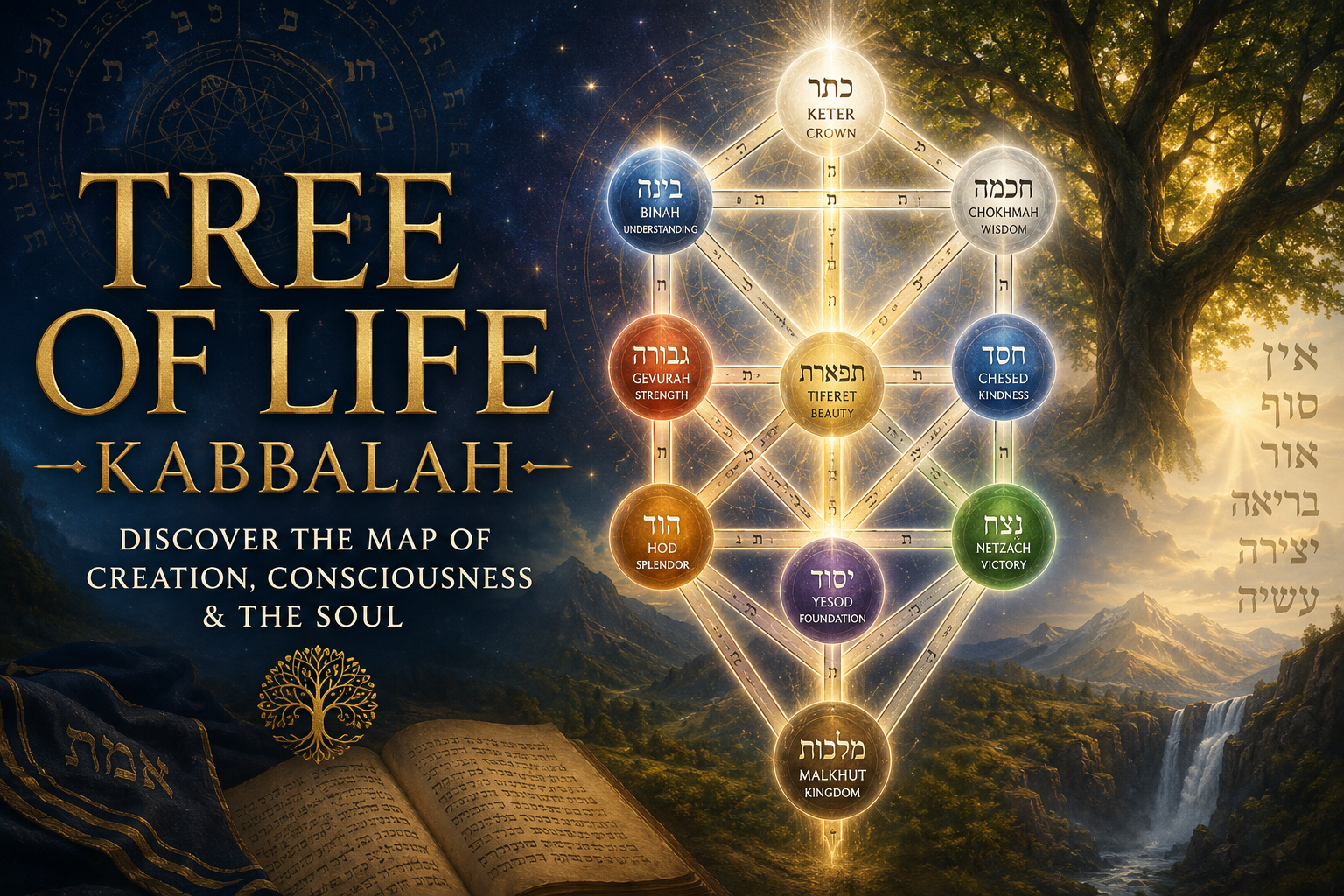
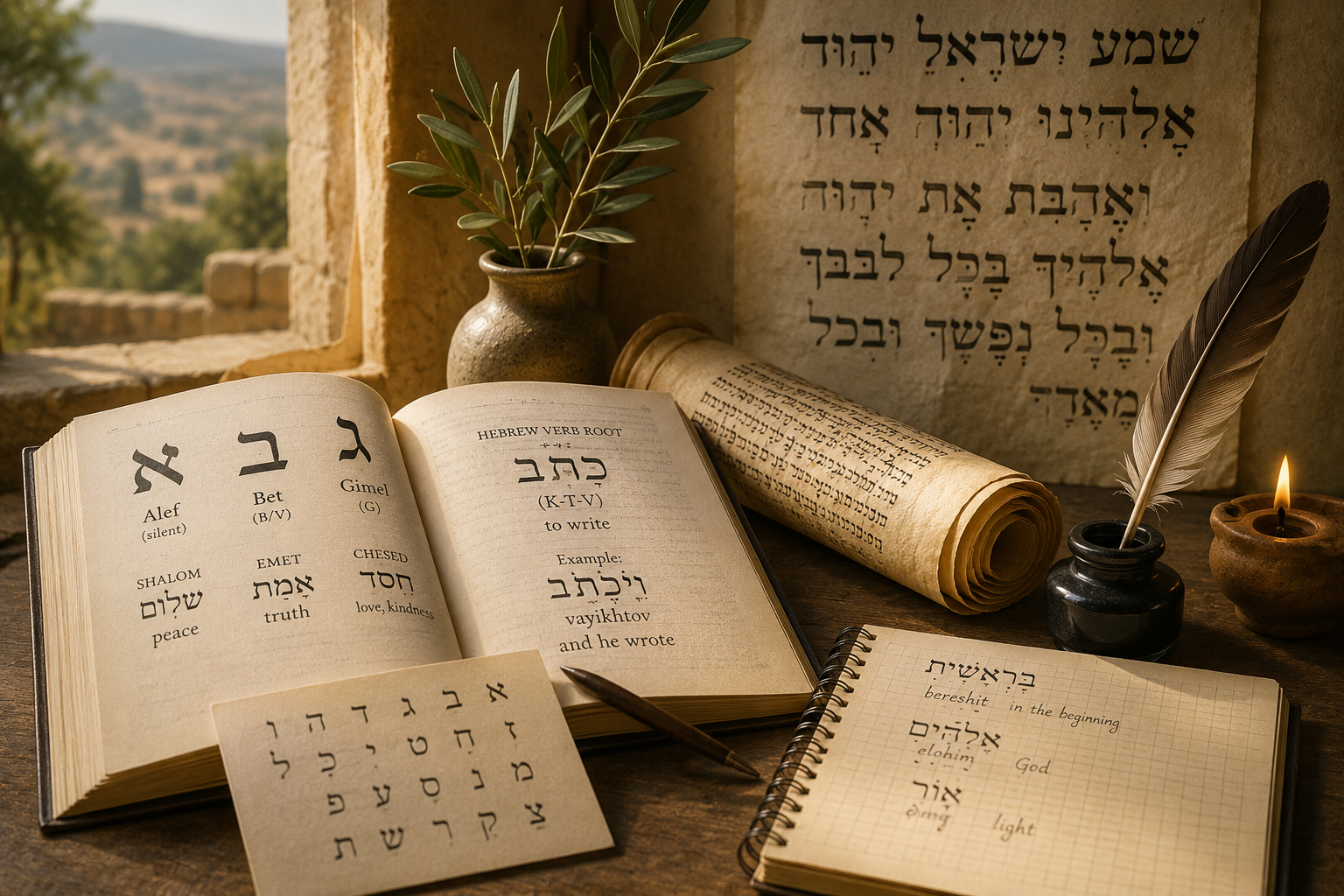
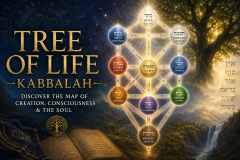
In the Golden Dawn system, The Emperor corresponds to the Hebrew letter Heh and to Path 15 on the Tree of Life, connecting Chokmah and Tiphareth. Heh is often associated with breath, revelation, and a window or opening. This may seem surprising for such a solid, martial card, yet the symbolism becomes clearer when one considers that true authority is not mere force. It is formative expression. Breath becomes word. Word becomes law. Law becomes order.
Heh and Formative Expression
Heh appears in the divine name YHVH and carries deep symbolic importance in Jewish and Hermetic traditions. As a letter associated with opening and manifestation, it fits The Emperor’s role in giving shape to power. The card is not only about holding authority. It is about expressing it in a way that becomes visible and effective. That expression can be just or unjust, wise or foolish, but it is always formative.
Chokmah, Tiphareth, and the Path
Chokmah is often associated with primal wisdom, dynamic force, and the outpouring of creative energy. Tiphareth concerns harmony, beauty, and the balanced center. A path between them suggests the movement by which raw power becomes ordered expression. The Emperor can therefore be understood as a mediator between force and harmony. He channels initiative toward form. In Golden Dawn terms, the Aries attribution reinforces this reading: cardinal fire becomes lawful direction.
These correspondences deepen interpretation by showing that The Emperor is not merely a social archetype. He is also a metaphysical principle within a larger map of manifestation. The card asks how power descends into form and whether that form reflects wisdom.
Astrological Correspondences
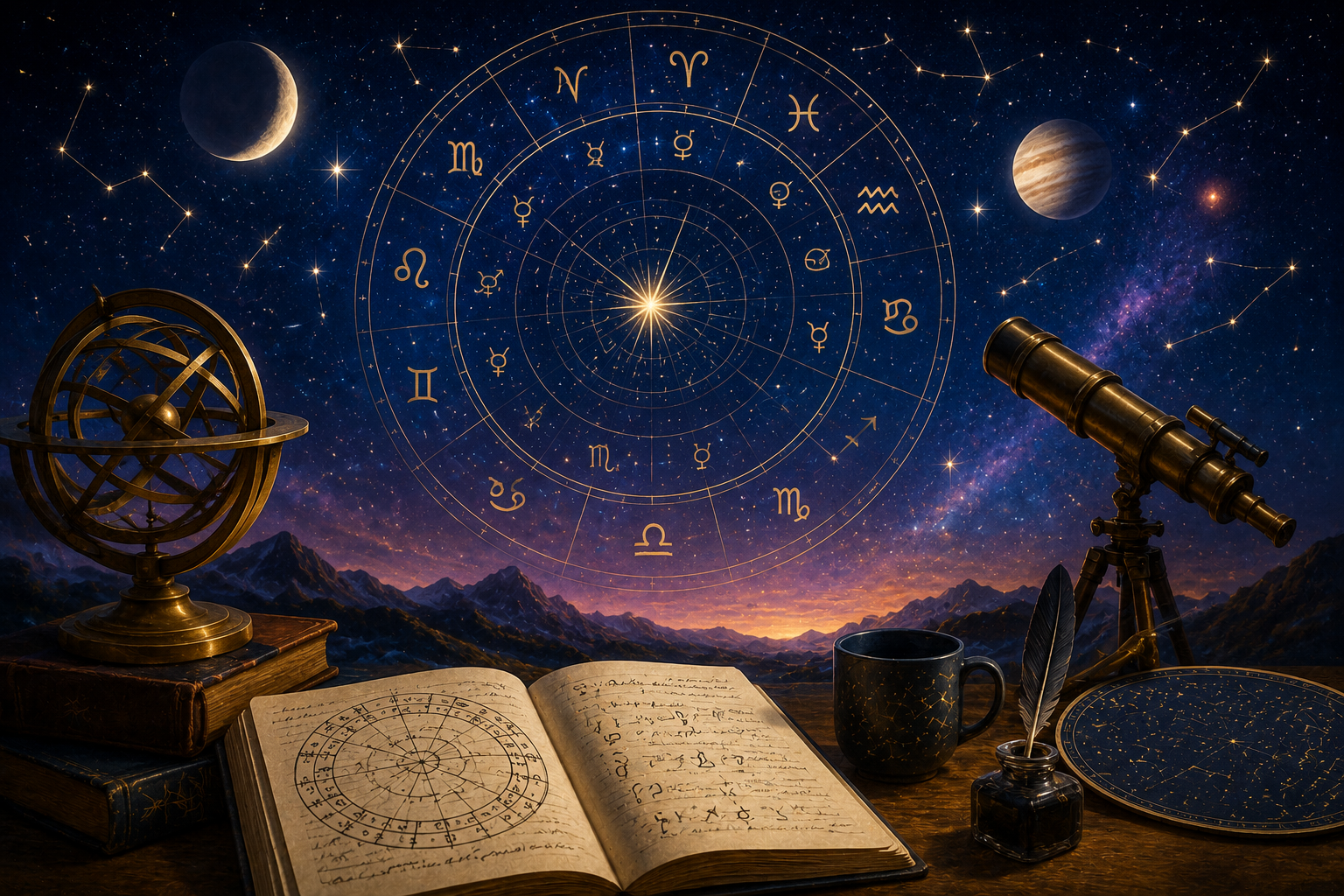
The Emperor is traditionally associated with Aries, ruled by Mars, and with the element of Fire. This triad is essential to the card. Aries is the first sign of the zodiac, a cardinal fire sign linked to initiative, assertion, courage, and the power to begin. Mars contributes force, drive, conflict, and decisive action. Fire adds vitality, will, and transformative energy.
Yet The Emperor is not simply impulsive Aries energy. The card shows what happens when that force becomes organized. It is fire under command. This is why the card can signify leadership, executive function, strategic action, and the ability to set direction. It also explains the shadow side. When Mars and Aries lose balance, they can become aggression, impatience, domination, or the inability to listen.
Traditional occult correspondences therefore enrich interpretation. They remind readers that The Emperor is not cold in essence. He is hot, active, and forceful. The stone throne and rigid posture are not signs of emotional emptiness alone. They are signs that fire has been disciplined into rulership.
Chakra Correspondence
Although chakras arise from Indian traditions rather than tarot’s historical roots, many contemporary readers find symbolic correspondences helpful. The Emperor most naturally aligns with the Solar Plexus Chakra, associated with will, agency, confidence, discipline, and self-governance. This chakra concerns the capacity to act in the world with coherence and purpose. That is very close to the card’s central energy.
Some readers also connect The Emperor with the Root Chakra because of its themes of stability, safety, and structural support. This secondary association makes sense, especially when the card appears in relation to home, finances, institutions, or the need for grounding. Still, the Solar Plexus remains the strongest symbolic fit because The Emperor is not only about being secure. He is about directing power.
Psychologically, a balanced Emperor reflects healthy confidence, clear boundaries, and the ability to make decisions without collapsing into fear or aggression. Spiritually, the card suggests disciplined embodiment: bringing intention into action through mature self-command.
Upright Meaning
Upright, The Emperor often signals a need for structure, responsibility, and principled leadership. This does not mean the card always points to a literal authority figure, though it can. More often, it asks what kind of order is now required. The moment may call for discipline, planning, boundaries, or the courage to take command of one’s own life. The card suggests that stability will not arise by accident. It must be built.
Personal Growth
In personal growth, The Emperor encourages self-mastery. It may appear when a person needs better routines, stronger boundaries, or greater accountability. The card can support the development of confidence, especially confidence rooted in competence rather than image. It asks whether one is willing to become reliable.
Relationships
In relationships, the card can point to commitment, protection, steadiness, and clear expectations. At its best, it suggests a bond strengthened by maturity and mutual respect. At times, however, it may indicate imbalance if one partner controls too much or struggles to express vulnerability. The card invites reflection on whether structure in the relationship is supportive or restrictive.
Career and Work
In career contexts, The Emperor often speaks clearly. It can signify leadership, management, entrepreneurship, institutional roles, administration, policy, long-term planning, or the building of systems. The card favors strategy over improvisation. It supports the work of creating frameworks that endure. For creative people, this may mean learning that inspiration alone is not enough. A practice needs schedule, budget, boundaries, and follow-through.
Creativity and Spiritual Development
Creatively, The Emperor asks how vision can be given form. Spiritually, it suggests discipline, rule of life, and the shaping power of practice. Prayer, study, ritual, journaling, and contemplation all benefit from structure. The card does not oppose mystery. It provides the container in which mystery can be approached faithfully.
Reversed Meaning
Reversed, The Emperor often points to distortion in the realm of authority and structure. That distortion may take the form of excess or deficiency. Sometimes the card suggests control, rigidity, domination, stubbornness, or authoritarian behavior. In other cases, it indicates the opposite problem: weak boundaries, lack of discipline, avoidance of responsibility, or difficulty establishing order.
Psychologically, the reversed card can reveal an unresolved relationship to power. A person may fear becoming controlling and therefore avoid leadership altogether. Another may cling to control because vulnerability feels unsafe. In either case, the invitation is not simplistic negativity. The card asks what a healthier expression of authority would look like.
In relationships, the reversal may signal imbalance around rules, expectations, or emotional expression. In work, it can point to poor management, burnout caused by over-control, or the collapse of needed systems. Spiritually, it may suggest legalism on one side or undisciplined drift on the other. Growth comes through recalibration: enough structure to support life, enough humility to keep structure from becoming an idol.
Practical Reflection Questions
- Where in my life do I need stronger boundaries?
- What responsibilities have I been postponing?
- How do I respond to authority, and why?
- When does discipline support my growth, and when does it become self-punishment?
- What systems would make my creative or spiritual life more sustainable?
- Do I confuse control with safety?
- Where am I being asked to lead with maturity?
- What kind of ruler is my inner voice: wise, harsh, absent, or inconsistent?
- How can I embody strength without becoming rigid?
- What commitments need clearer structure?
- Which habits are building the life I want, and which are undermining it?
- What does rightful authority mean to me?
- How do I hold power when others depend on me?
- What would mature self-governance look like in this season of life?
- Where do I need more courage to define, decide, or protect?
Meditation Exercise
Find a quiet place and sit upright. Breathe slowly until your attention settles. Imagine a stone throne before you on a high, clear mountain. The air is sharp, the horizon wide. Upon the throne sits The Emperor, not as a tyrant but as a presence of steady authority.
Notice the ram symbols, the red robes, the crown, the orb, and the scepter. Ask inwardly: What in my life needs order? Wait without forcing an answer. Then ask: What am I being asked to protect? Finally ask: Where has control replaced wisdom, or where has avoidance replaced responsibility?
Imagine the Emperor placing one object in your hands: a key, a staff, a stone, or a written law. Receive whatever appears. Let it symbolize the form of discipline now needed in your life. When you are ready, thank the figure and return your attention to the breath. End by writing one concrete action you will take in the next seven days to embody mature structure.
Related Cards
The Emperor becomes clearer when read in relationship to other cards.
The Empress
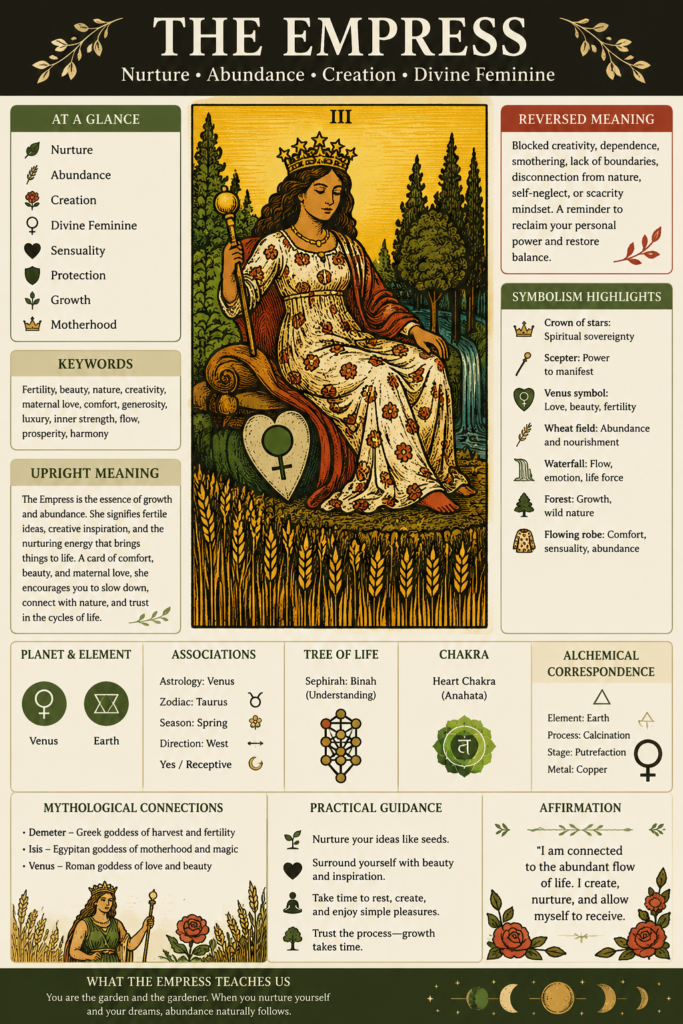
The most obvious counterpart is The Empress. If she represents fertility, abundance, and living growth, he represents structure, law, and the conditions that preserve growth. Together they form a symbolic polarity: nurture and boundary, creativity and order, body and institution.
The Fool, The High Priestess, and The Hierophant
The Fool begins the journey in openness. The High Priestess deepens it through inner knowing. The Emperor introduces outer order. The Hierophant then carries that order into tradition, teaching, and communal meaning. Seen this way, The Emperor is a bridge between private potential and public form.
Related Court and Minor Cards
The Kings, especially the King of Wands and King of Pentacles, can echo aspects of The Emperor. The King of Wands shares charisma, vision, and command, while the King of Pentacles shares stability and stewardship. Among the minors, the Fours often resonate strongly because they concern stability, pause, structure, and foundation. In the Thoth system, Aries and Mars also connect the card to fiery initiating energies found elsewhere in the deck.
What Modern Readers Can Learn from The Emperor
Modern culture often swings between two extremes: suspicion of all authority and fascination with strong personalities. The Emperor offers a more demanding lesson. He asks not whether power exists, but how it should be shaped, limited, and used. He reminds readers that freedom without structure can become drift, while structure without soul becomes oppression.
For contemporary readers, this can mean learning to build sustainable habits, take responsibility for one’s gifts, and create systems that support rather than suffocate life. It can also mean healing distorted relationships to authority, whether through rebellion, fear, dependency, or over-control. The card’s enduring wisdom lies in its insistence that maturity requires form. A meaningful life must eventually be governed, not merely imagined.
Readers who are new to tarot may also benefit from Rose and Rune’s broader context pieces, including Beginner’s Guide to Tarot, How Tarot Works as a Reflective Practice, and What Is an Archetype? A Jungian Introduction.
Frequently Asked Questions
What does The Emperor tarot card mean?
The Emperor generally signifies authority, structure, discipline, boundaries, leadership, and the responsible use of power. At a deeper level, it concerns the shaping of life through lawful form.
Is The Emperor a positive card?
It is often constructive, but not automatically comfortable. The card can be highly positive when stability, protection, and mature leadership are needed. It becomes difficult when authority turns rigid or controlling.
What zodiac sign is associated with The Emperor?
The Emperor is traditionally associated with Aries, the cardinal fire sign ruled by Mars.
What planet is associated with The Emperor?
Mars is the primary planetary correspondence, contributing force, courage, drive, and assertive energy.
What does The Emperor reversed mean?
Reversed, the card often points to distorted authority, over-control, rigidity, weak boundaries, avoidance of responsibility, or unhealthy relationships to power.
How is The Emperor different from The Hierophant?
The Emperor concerns rule, structure, and executive authority. The Hierophant concerns tradition, teaching, transmission, and communal belief. One governs order; the other interprets meaning within inherited systems.
How is The Emperor different from The Empress?
The Empress emphasizes fertility, nurture, sensual abundance, and generative life. The Emperor emphasizes law, boundary, discipline, and the structures that preserve and direct life.
Can The Emperor represent a person?
Yes. It can represent a father figure, leader, manager, mentor, or anyone embodying strong structure and authority. In reflective reading, it can also represent an inner mode of self-governance.
What is The Emperor’s spiritual lesson?
Its spiritual lesson is that power must be disciplined by wisdom. Form is necessary for growth, but form must remain in service to life rather than becoming an idol.
Further Reading
- Rachel Pollack, Seventy-Eight Degrees of Wisdom — https://amzn.to/4v9mobQ
- Mary K. Greer, 21 Ways to Read a Tarot Card — https://amzn.to/4vM1xfU
- Benebell Wen, Holistic Tarot — https://amzn.to/4valyvp
- Lon Milo DuQuette, Understanding Aleister Crowley’s Thoth Tarot — https://amzn.to/4aAqaDD
- Robert M. Place, The Tarot: History, Symbolism, and Divination — https://amzn.to/4v7I8ok
- Adam McLean, Study Course on Alchemical Symbolism — https://amzn.to/4gMtHTe
- Valentin Tomberg, Meditations on the Tarot — https://amzn.to/4b80tdR
- Arthur Edward Waite, The Original Rider Waite: The Pictorial Key To The Tarot: An Illustrated Guide — https://amzn.to/4p1DcQG
- Aleister Crowley, The Book of Thoth — https://amzn.to/4oWWYN2
For additional historical context, readers may also consult scholarly work on tarot history and Western esotericism, including studies by Michael Dummett, Ronald Decker, Thierry Depaulis, and Antoine Faivre.
Final Thoughts
The Emperor endures because it speaks to one of the central tasks of human life: giving shape to power. The card asks how we build, govern, protect, and commit. It reminds us that structure is not the enemy of spirit. At its best, structure makes spirit inhabitable. A practice needs rhythm. A promise needs form. A life needs principles sturdy enough to bear weight.
At the same time, the card warns against confusing hardness with wisdom. True authority does not merely dominate. It serves, steadies, and takes responsibility. In that sense, The Emperor tarot meaning is not finally about control. It is about mature stewardship. Read contemplatively, the card invites reflection, self-command, and the kind of spiritual insight that turns strength into service rather than prediction into certainty.
Works Cited
Crowley, Aleister. The Book of Thoth. Weiser Books, 1984.
Decker, Ronald, Thierry Depaulis, and Michael Dummett. A Wicked Pack of Cards. St. Martin’s Press, 1996.
Dummett, Michael. The Game of Tarot. Duckworth, 1980.
DuQuette, Lon Milo. Understanding Aleister Crowley’s Thoth Tarot. Weiser Books, 2003.
Faivre, Antoine. Access to Western Esotericism. SUNY Press, 1994.
Greer, Mary K. 21 Ways to Read a Tarot Card. Llewellyn, 2006.
Hanegraaff, Wouter J. Western Esotericism: A Guide for the Perplexed. Bloomsbury, 2013.
Hoeller, Stephan A. The Gnostic Jung and the Seven Sermons to the Dead. Quest Books, 1982.
Jung, C. G. The Archetypes and the Collective Unconscious. Princeton University Press, 1969.
McLean, Adam. Study Course on Alchemical Symbolism. Hermetic Journal Publications, 1984.
Place, Robert M. The Tarot: History, Symbolism, and Divination. TarcherPerigee, 2005.
Pollack, Rachel. Seventy-Eight Degrees of Wisdom. Weiser Books, 1997.
Tomberg, Valentin. Meditations on the Tarot. Tarcher, 2002.
Waite, Arthur Edward. The Pictorial Key to the Tarot. Rider, 1911.
Wen, Benebell. Holistic Tarot. North Atlantic Books, 2015.