
Dreams have fascinated humanity for thousands of years.
Ancient cultures viewed dreams as messages from the gods, glimpses into spiritual realities, or sources of wisdom. Philosophers debated their meaning. Mystics reflected upon them. Psychologists studied them. Artists and writers drew inspiration from them.
Even today, many people wake from a dream and wonder:
What did that mean?
Why was I back in my childhood home?
Why did I dream about water, animals, strangers, or places I have never seen?
The desire to understand dreams is deeply human. Yet many beginners quickly become frustrated when they search for simple answers. Dream dictionaries often promise fixed meanings, but real dreams rarely work that way.
The truth is that dream interpretation involves much more than looking up symbols in a list.
Dreams speak through images, emotions, stories, memories, and symbolic associations. Learning how to read dream symbols requires patience, curiosity, and a willingness to explore layers of meaning.
This guide introduces a thoughtful approach to dream symbolism and provides a foundation for deeper study.

In This Guide
- What dream symbols are
- Why dreams use symbols
- Common misconceptions about dream interpretation
- Personal versus universal symbolism
- How to begin reading dream symbols
- The importance of context
- Dream symbols and psychology
- Dream symbols and mythology
- Practical steps for beginners
- Frequently asked questions
What Are Dream Symbols?
A dream symbol is an image, object, person, place, action, or event that represents something beyond its literal appearance.
In dreams, symbols often communicate ideas indirectly.
A house may represent aspects of the self.
A journey may symbolize personal growth.
A storm may reflect emotional turbulence.
A locked door may suggest a challenge, opportunity, or mystery.
Dreams rarely communicate through direct explanations. Instead, they present symbolic stories that invite reflection.
Understanding dream symbols begins with recognizing that dreams often speak through metaphor rather than straightforward statements.
Why Do Dreams Use Symbols?
Dreams appear to communicate differently than ordinary waking thought.
During the day, people often think through language.
Dreams frequently think through images.
An image can communicate many ideas simultaneously.
A single symbol may evoke:
- Memory
- Emotion
- Desire
- Fear
- Hope
- Conflict
- Possibility
Because symbols can hold multiple layers of meaning, they become powerful tools for dream communication.
Rather than presenting a logical argument, dreams often create symbolic experiences.
The Problem with Dream Dictionaries
One of the first places many beginners turn is a dream dictionary.
These resources can sometimes be helpful.
They can also be misleading.
A typical dream dictionary might claim:
- Snakes mean betrayal.
- Water means emotions.
- Birds mean freedom.
While such interpretations occasionally prove useful, they often oversimplify the situation.
Dream symbols do not function like mathematical equations.
The same symbol may carry very different meanings depending on the dreamer, the context, and the emotional atmosphere of the dream.
A snake may represent fear for one person and healing for another.
The symbol itself is only part of the story.
Explore Our Courses









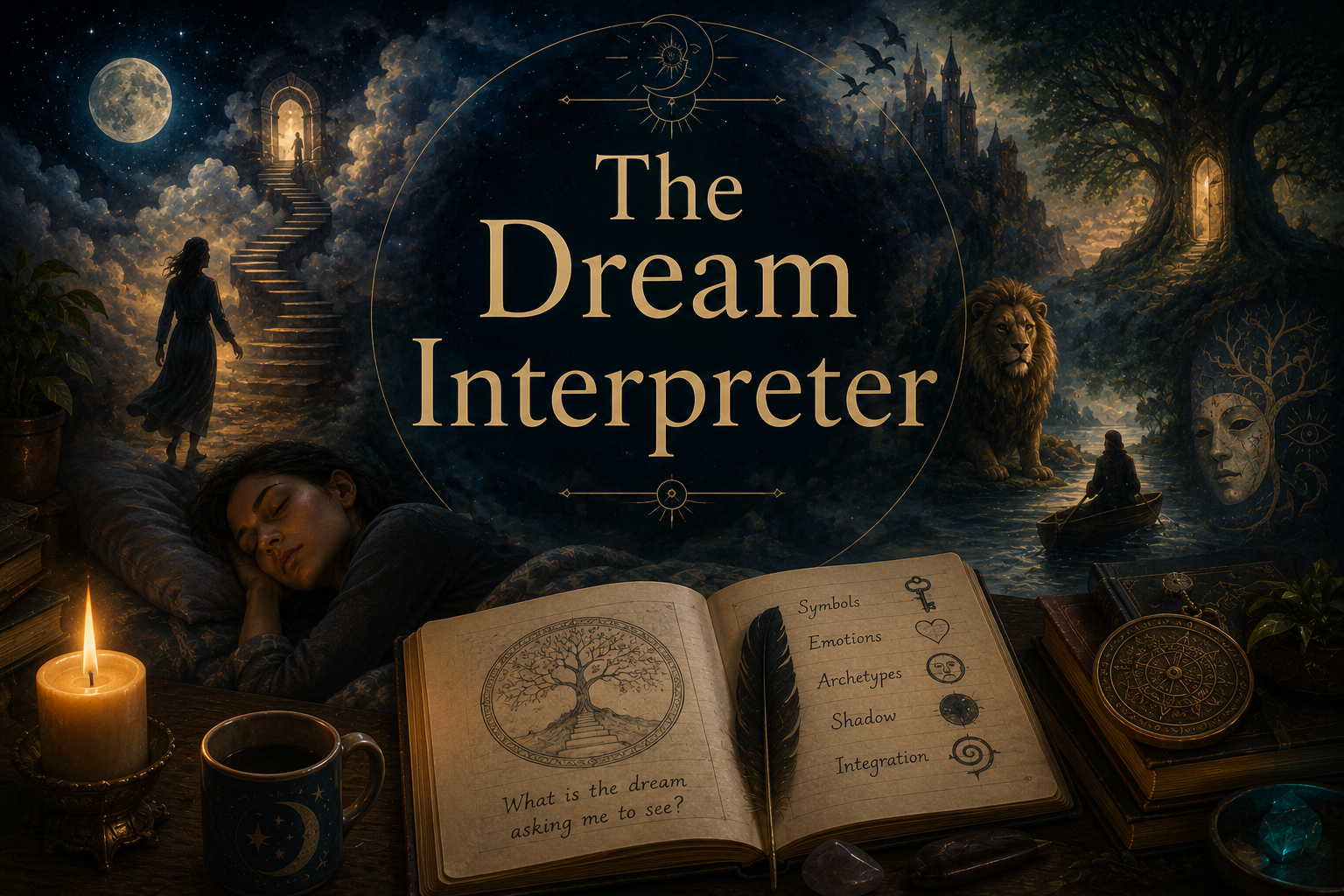


















Personal Symbols and Shared Symbols
When studying dream symbols, it helps to distinguish between personal and shared symbolism.
Personal Symbols
Personal symbols arise from individual experience.
For example:
If someone grew up near the ocean, water may evoke feelings of comfort and safety.
For another person, water may evoke danger or loss.
The same symbol carries different meanings because personal history shapes interpretation.
Shared Symbols
Some symbols appear across many cultures.
Examples include:
- Trees
- Mountains
- Rivers
- The sun
- The moon
- Animals
These recurring symbols often connect with broader human experiences.
Even here, however, context remains essential.
No symbol possesses a single universal meaning.
Why Context Matters
Context is one of the most important principles in dream interpretation.
Consider a dog.
A friendly dog may symbolize companionship, loyalty, protection, or affection.
An aggressive dog may symbolize fear, conflict, threat, or mistrust.
The symbol remains the same.
The context changes everything.
This principle applies to nearly every dream symbol.
Rather than asking:
“What does this symbol mean?”
A better question is:
“What does this symbol mean in this dream?”
Future articles in this series will explore this principle in much greater depth.
The Importance of Emotion
Dream symbols rarely exist apart from emotion.
Often, the feeling of a dream provides more insight than the images themselves.
Ask yourself:
- Was I afraid?
- Was I relieved?
- Was I curious?
- Was I joyful?
- Was I ashamed?
The emotional atmosphere frequently reveals how a symbol functions within the dream.
Two people may dream about the same image while experiencing entirely different emotional responses.
Those emotional differences often point toward different interpretations.
Dream Symbols and Psychology
Modern psychology has contributed significantly to the study of dreams.
Sigmund Freud emphasized hidden desires and unconscious motivations.
Carl Jung focused on symbolism, archetypes, and the deeper layers of the psyche.
Jung believed dreams often compensate for imbalances in conscious life.
They may reveal overlooked aspects of ourselves.
They may challenge assumptions.
And they may present symbolic images that encourage growth and self-understanding.
Many contemporary approaches to dream work continue building upon Jung’s insights.
Dream Symbols and Archetypes
Some dream symbols seem to appear repeatedly across cultures and historical periods.
Examples include:
- Wise elders
- Heroes
- Shadows
- Mothers
- Children
- Guides
- Sacred animals
Jung referred to these recurring patterns as archetypes.
Archetypal symbols often appear in dreams because they reflect enduring aspects of human experience.
Understanding archetypes can deepen dream interpretation, though beginners should focus first on observing the dream itself rather than forcing symbols into predefined categories.
Dream Symbols and Mythology
Dreams and myths share many similarities.
Both communicate through stories.
Both rely on symbols.
And both explore transformation, conflict, wisdom, and identity.
Because of these connections, mythology can provide valuable insight into dream symbolism.
Readers interested in mythic patterns may enjoy:
Many dream images resemble themes found in myths, legends, and sacred stories throughout history.
Dream Symbols and Spiritual Traditions
Various spiritual traditions have approached dreams as meaningful experiences.
Mystics, contemplatives, and spiritual practitioners often viewed dreams as opportunities for reflection.
Rather than treating dreams as predictions, many traditions approached them as invitations to deeper understanding.
This perspective appears within:
- Mysticism
- Symbolic theology
- Hermetic traditions
- Contemplative practices
Readers interested in symbolic spiritual traditions may also enjoy:
What Is Christian Hermeticism?
These traditions emphasize symbolic interpretation and the search for meaning beneath surface appearances.
Symbolism Beyond Dreams
Learning to interpret dreams often leads people toward broader studies of symbolism.
Dreams share symbolic language with:
- Mythology
- Religion
- Literature
- Art
- Alchemy
- Tarot
- Runes
For a broader introduction, readers may wish to explore:
What Is Symbolism? A Beginner’s Introduction
Understanding symbolism in general often improves one’s ability to work with dream symbols specifically.
A Simple Method for Reading Dream Symbols
Beginners often benefit from a straightforward process.
Step One: Record the Dream
Write down as much as possible.
Even small details may become important later.
Step Two: Identify Key Symbols
Notice recurring images.
What stands out?
What seems unusual?
And what feels emotionally significant?
Step Three: Explore Personal Associations
Ask:
What does this symbol mean to me?
What memories or emotions does it evoke?
Step Four: Consider Context
How does the symbol function within the dream?
What role does it play?
Step Five: Reflect Rather Than Conclude
Dream interpretation is rarely about finding a perfect answer.
The goal is exploration.
Remain open to multiple possibilities.
Common Mistakes Beginners Make
Searching for One Correct Meaning
Dreams often contain layers of meaning.
Multiple interpretations may coexist.
Ignoring Emotion
The emotional tone of a dream is frequently as important as the images themselves.
Relying Entirely on Dream Dictionaries
Dream dictionaries can provide ideas, but they should not replace personal reflection.
Overanalyzing Every Detail
Not every dream image carries profound significance.
Focus first on the most vivid or emotionally charged elements.
Expecting Immediate Clarity
Some dreams reveal their meaning gradually.
Patience is part of the process.
Why Dream Symbols Matter
Dream symbols matter because they provide access to dimensions of experience that often remain hidden during waking life.
They help people explore:
- Emotions
- Conflicts
- Desires
- Fears
- Possibilities
- Personal growth
Whether approached psychologically, spiritually, creatively, or symbolically, dream work offers opportunities for self-discovery.
The goal is not perfect interpretation.
The goal is deeper awareness.
Learning More About Dreams
Readers interested in the scholarly study of dreams may find valuable resources through the International Association for the Study of Dreams (IASD) and the C.G. Jung Institute of San Francisco.
Both organizations provide educational materials exploring dreams, symbolism, psychology, and the role of dream imagery in human life.
Frequently Asked Questions
What are dream symbols?
Dream symbols are images, objects, people, places, or events that represent ideas beyond their literal appearance.
Do dream symbols have universal meanings?
Some symbols appear across cultures, but context and personal experience remain essential for interpretation.
Are dream dictionaries accurate?
They can provide useful starting points, but dream symbols rarely have fixed meanings.
Why do emotions matter in dream interpretation?
Emotions often reveal how a symbol functions within the dream and provide important clues to its significance.
Can dreams predict the future?
Many approaches to dream work focus on reflection and self-understanding rather than prediction.
How can I improve my dream recall?
Keeping a dream journal and recording dreams immediately upon waking often improves recall over time.
Do I need psychological training to interpret dreams?
No. Anyone can begin exploring dream symbols through observation, curiosity, and reflection.
Final Thoughts
Dreams speak in a language that differs from ordinary conversation.
They rely on images, emotions, stories, and symbols to communicate meaning. Learning to work with dream symbols requires patience, openness, and a willingness to explore rather than rush toward conclusions.
The most important lesson for beginners is simple:
Dream symbols are not code words waiting to be translated.
They are invitations to reflection.
The more attention you give to your dreams, the more familiar their symbolic language becomes. Over time, patterns emerge. Connections deepen. The images begin to reveal layers of meaning that may have remained hidden at first glance.
Every dream offers an opportunity to listen more carefully to the stories unfolding beneath the surface of conscious awareness.