Category: Runes

  • What Are Runes? History, Meaning, and Use

    What Are Runes? History, Meaning, and Use

    Runes have fascinated people for centuries.

    Carved into stone monuments, engraved on weapons, inscribed on jewelry, and preserved in ancient manuscripts, runes provide a direct connection to the cultures of early Northern Europe. Their angular forms feel both simple and mysterious, inviting questions about their history, symbolism, and continued use.

    Today, people encounter runes in many different contexts. Some study them as a historical writing system. Others explore their symbolic meanings. Some use them for meditation, journaling, or personal reflection. Still others encounter runes through mythology, literature, fantasy novels, or modern spiritual traditions.

    Yet despite their popularity, many misconceptions surround runes.

    Some people assume runes were always used for fortune-telling. Others believe they belong entirely to myth and legend. The reality is both more interesting and more complex.

    Understanding what runes are requires examining their historical origins, cultural significance, symbolic meanings, and modern applications.

    This guide introduces the runes from a beginner’s perspective and explores why they continue to capture the imagination of so many people today.
    what are runes

    In This Guide

    • What runes are
    • The history of runic writing
    • The Elder Futhark
    • Runes and Norse mythology
    • Symbolic meanings of the runes
    • Historical uses of runes
    • Modern rune study
    • Common misconceptions
    • Why people still work with runes today
    • Frequently asked questions

    What Are Runes?

    At their most basic level, runes are letters.

    They belong to a family of alphabets used by Germanic peoples throughout parts of Northern Europe.

    Before becoming associated with divination or symbolism, runes served practical purposes.

    People used them to write names, mark possessions, create memorial inscriptions, record messages, and commemorate important events.

    The earliest known runic inscriptions date to approximately the second century CE.

    Over time, various runic alphabets developed across different regions and historical periods.

    Although runes functioned as letters, they also acquired symbolic and cultural significance.

    This combination of practical and symbolic use helps explain their enduring appeal.

    The Meaning of the Word Rune

    The word rune comes from an ancient Germanic root associated with secrecy, mystery, whispering, or hidden knowledge.

    This linguistic connection often contributes to the mystical reputation of runes.

    However, it is important not to assume that every historical use of runes involved magic or divination.

    Most surviving inscriptions appear practical and ordinary.

    Even so, the association between runes and hidden knowledge became an important part of later traditions.

    The Elder Futhark

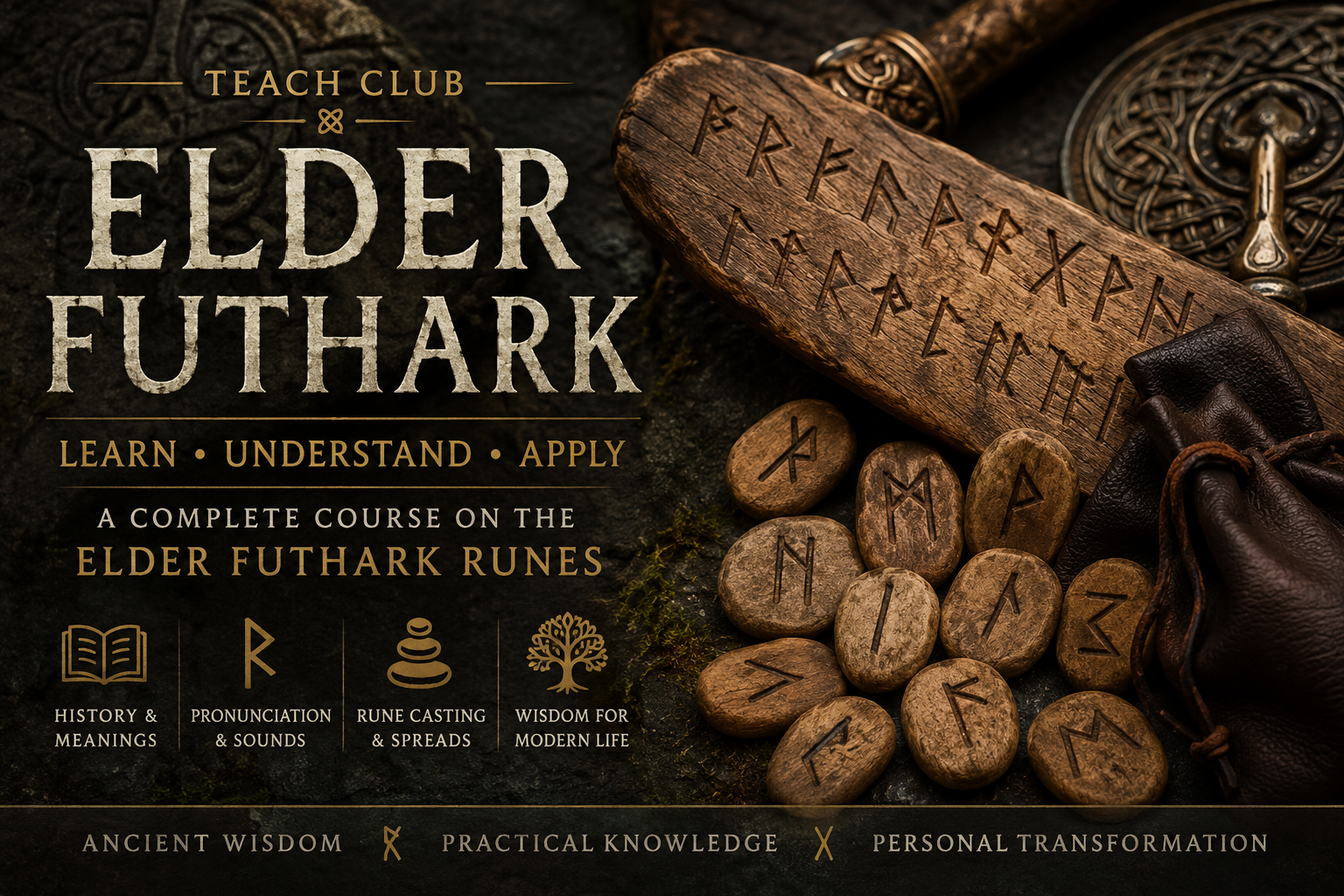
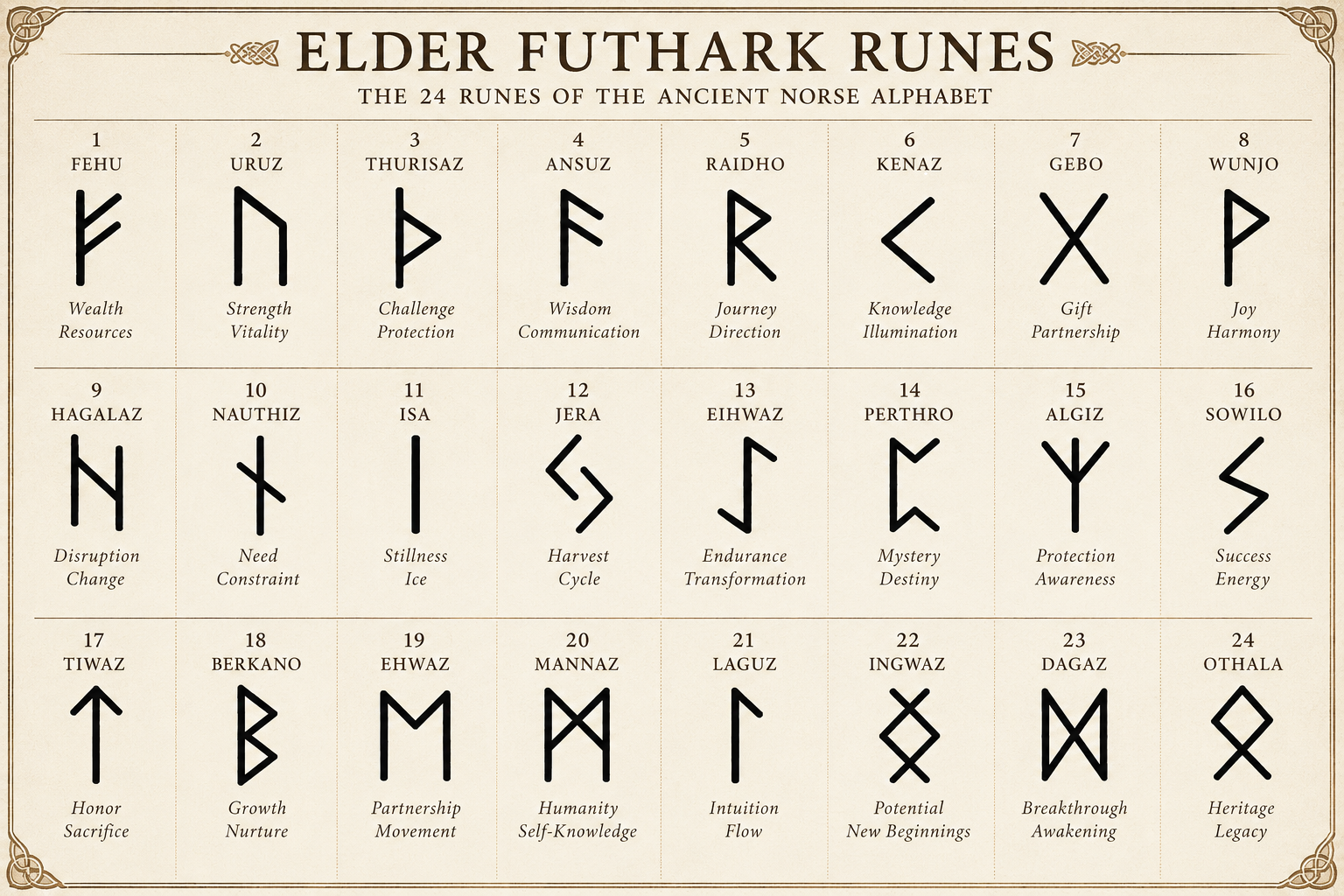
    When most modern readers discuss runes, they are referring to the Elder Futhark.

    The Elder Futhark is the oldest known runic alphabet.

    It contains twenty-four characters.

    Its name comes from the first six runes:

    • Fehu
    • Uruz
    • Thurisaz
    • Ansuz
    • Raidho
    • Kenaz

    Together, these sounds form the word Futhark, much like the word alphabet derives from alpha and beta.

    The Elder Futhark remained in use for several centuries before later runic systems developed.

    Because of its historical importance and symbolic richness, it remains the most widely studied rune system today.

    Explore Our Courses
    ChatGPT Image Jun 26, 2026, 04_57_25 PM
    PlayPause
    ChatGPT Image Jun 26, 2026, 04_57_25 PM
    image-slider-with-thumbnail1.jpeg
    image-slider-with-thumbnail2.jpeg
    ChatGPT Image Jun 26, 2026, 05_01_22 PM
    image-slider-with-thumbnail3.jpeg
    image-slider-with-thumbnail4.jpeg
    ChatGPT Image Jun 26, 2026, 04_51_54 PM
    image-slider-with-thumbnail5.jpeg
    image-slider-with-thumbnail6.jpeg
    ChatGPT Image Jun 27, 2026, 09_24_15 AM
    image-slider-with-thumbnail7.jpeg
    ChatGPT Image Jun 26, 2026, 04_54_23 PM
    ChatGPT Image Jun 26, 2026, 04_19_39 PM
    ChatGPT Image Jun 26, 2026, 04_28_19 PM
    ChatGPT Image Jun 26, 2026, 04_37_00 PM
    ChatGPT Image Jun 26, 2026, 05_04_59 PM
    ChatGPT Image Jun 26, 2026, 04_38_53 PM
    ChatGPT Image Jun 27, 2026, 09_13_22 AM
    ChatGPT Image Jun 26, 2026, 04_41_25 PM
    ChatGPT Image Jun 26, 2026, 04_44_22 PM
    ChatGPT Image Jun 30, 2026, 10_56_33 AM
    previous arrow
    next arrow

    Why Do Runes Look Angular?

    One of the most distinctive features of runes is their appearance.

    Unlike modern handwriting, runes consist primarily of straight lines.

    This design was practical.

    Many runic inscriptions were carved into:

    • Wood
    • Stone
    • Bone
    • Metal

    Straight lines are easier to carve than curves.

    The shape of the runes reflects the materials and tools used by the people who created them.

    Runes and Norse Mythology

    Many modern discussions of runes connect them with Norse mythology.

    This connection stems largely from the poem known as the Hávamál, preserved within the Poetic Edda.

    According to the story, the god Odin sacrificed himself by hanging upon the World Tree, Yggdrasil.

    Through this ordeal, he gained knowledge of the runes.

    The passage presents the runes as a form of wisdom acquired through sacrifice and insight.

    Whether interpreted literally, symbolically, or mythologically, this story contributed significantly to the cultural significance of runes.

    Readers interested in mythological themes may also enjoy:

    Why Mythology Matters

    The relationship between runes and mythology remains one of the most fascinating aspects of rune study.

    Runes as Symbols

    Each rune represents a sound.

    Yet each rune also came to be associated with concepts, objects, and symbolic meanings.

    For example:

    Fehu is often associated with wealth and resources.

    Raidho often relates to journeys and movement.

    Berkano often relates to growth and development.

    Dagaz often relates to transformation and breakthrough.

    These symbolic associations developed through historical rune poems and later interpretive traditions.

    Many modern practitioners focus heavily on these symbolic dimensions.

    Symbolism and Rune Study

    Understanding symbolism plays a major role in modern rune practice.

    The runes function as more than letters.

    They also serve as symbolic images that suggest themes, questions, and possibilities.

    Readers interested in symbolic interpretation may enjoy:

    What Is Symbolism? A Beginner’s Introduction

    The study of symbolism often deepens one’s understanding of rune meanings.

    Historical Uses of Runes

    Historical evidence suggests that runes served several purposes.

    Writing

    The primary function of runes was communication.

    Many inscriptions record names, ownership, dedications, and memorial messages.

    Memorial Stones

    Runestones became particularly important in Scandinavia.

    Families commissioned stones to honor the dead, commemorate achievements, and preserve memories.

    Decorative Purposes

    Runes often appeared on jewelry, weapons, tools, and other objects.

    Possible Magical Uses

    Some historical sources suggest that runes occasionally appeared in ritual or magical contexts.

    The evidence is complex and sometimes difficult to interpret.

    Scholars continue debating the extent and nature of these practices.

    Rune Meanings and Personal Reflection

    Modern rune study often emphasizes reflection rather than historical reconstruction.

    Many people use runes as prompts for contemplation.

    A rune may encourage questions such as:

    • What needs attention?
    • What challenge am I facing?
    • What opportunity is emerging?
    • What lesson am I learning?

    In this way, runes function similarly to other symbolic systems.

    The emphasis shifts from prediction toward reflection.

    Runes and Archetypes

    Many rune meanings overlap with archetypal themes.

    Growth.

    Transformation.

    Journey.

    Sacrifice.

    Wisdom.

    Protection.

    Renewal.

    These themes appear throughout mythology, dreams, stories, and spiritual traditions.

    Readers interested in archetypal psychology may enjoy:

    What Is an Archetype? A Jungian Introduction

    Archetypal thinking often enriches modern rune study.

    Runes and Other Symbolic Systems

    Many people who study runes also explore:

    • Tarot
    • Lenormand
    • Dream symbolism
    • Mythology
    • Alchemy

    Each system approaches meaning differently.

    Readers interested in tarot may enjoy:

    Beginner’s Guide to Tarot

    Those interested in card-based symbolic reading may also enjoy:

    Beginner’s Guide to Lenormand

    Although these systems differ substantially, they all rely on symbols and interpretation.

    How Modern People Use Runes

    Today, people engage with runes in many ways.

    Some study runic history and linguistics.

    Others focus on mythology.

    Some use runes for journaling and self-reflection.

    Others incorporate them into meditation practices.

    Still others use rune casting as a form of symbolic exploration.

    The diversity of modern approaches reflects the flexibility of the runes themselves.

    Common Misconceptions About Runes

    Runes Were Created for Fortune-Telling

    Historically, runes functioned first as writing systems.

    Their modern use in divination developed much later.

    Every Rune Has One Fixed Meaning

    Most runes possess a range of possible interpretations.

    Context remains important.

    Runes Belong Only to Norse Mythology

    Although strongly associated with Norse culture, runes appeared throughout various Germanic societies.

    Runes Are Inherently Magical

    Historical evidence shows both practical and symbolic uses.

    Reducing runes to magic alone oversimplifies their history.

    Why Runes Still Matter

    The continued popularity of runes reveals something important.

    People remain drawn to symbols.

    They seek meaningful ways to reflect on experience.

    Runes offer:

    • Simplicity
    • Symbolism
    • Historical depth
    • Mythological richness
    • Opportunities for reflection

    Their combination of history and symbolism gives them a unique place among traditional systems of meaning.

    Learning More About Runes

    Readers interested in scholarly research can explore resources provided by the National Museum of Denmark and the Runes Database at Uppsala University.

    These organizations provide valuable historical information about runic inscriptions, archaeology, and Scandinavian cultural history.

    Frequently Asked Questions

    What are runes?

    Runes are letters from ancient Germanic alphabets that later acquired symbolic and cultural significance.

    What is the Elder Futhark?

    The Elder Futhark is the oldest known runic alphabet and contains twenty-four runes.

    Did Vikings use runes?

    Yes. Vikings used later runic alphabets for inscriptions, memorials, and communication.

    Are runes a language?

    No. Runes are an alphabet used to write languages.

    Were runes used for divination historically?

    The strongest historical evidence points to their use as writing systems. Modern divinatory practices developed much later.

    Do runes have meanings beyond their sounds?

    Yes. Historical rune poems and later traditions associate runes with symbolic themes and concepts.

    Can beginners study runes?

    Absolutely. Learning the basic runes, their history, and their symbolic meanings provides an excellent foundation.

    Final Thoughts

    Originally created as practical writing systems, runes evolved into powerful cultural symbols that continue to inspire people today. Their angular forms connect modern readers to ancient traditions, while their symbolic meanings encourage reflection on enduring themes such as growth, wisdom, transformation, and journey.

    Whether approached historically, symbolically, spiritually, or academically, runes offer a rich field of study.

    They remind us that even the simplest marks carved into stone can carry stories, meanings, and mysteries across centuries.

    And perhaps that is part of their enduring appeal. They are at once letters, symbols, and invitations to deeper exploration.

  • Beginner’s Guide to Runes: Everything You Need to Know to Get Started

    Beginner’s Guide to Runes: Everything You Need to Know to Get Started

    Runes have fascinated people for centuries. Their angular shapes appear on ancient stones, carved artifacts, manuscripts, jewelry, and modern rune sets. Some people encounter runes through Norse mythology, while others discover them through history, spirituality, symbolism, or divination.

    If you are new to rune study, you may wonder where to begin. The internet offers countless interpretations, historical claims, and mystical theories. For a newcomer, it can be difficult to separate fact from speculation.

    This beginner runes guide introduces the foundations of rune study without overwhelming you with details. Rather than memorizing dozens of meanings immediately, you will learn what runes are, where they came from, why people continue to study them, and how to begin building a thoughtful relationship with this ancient symbolic system.

    Whether you approach runes as a historical subject, a symbolic language, a reflective practice, or a form of divination, this beginner’s runes guide will help you take your first steps with confidence.

    This article contains affiliate links.

    Runes Beginner Guide

    In This Beginner Runes Guide

    • What runes are
    • The origins of the runic alphabets
    • Why runes continue to fascinate people
    • The Elder Futhark and other rune systems
    • Historical and modern uses of runes
    • Choosing your first rune set
    • How to begin learning runes
    • Common mistakes beginners make
    • Where to go next in your studies

    What Are Runes?

    Runes are letters from ancient Germanic alphabets used across parts of Northern Europe for writing, communication, memorial inscriptions, and symbolic purposes.

    The word rune comes from an old Germanic root associated with mystery, whispering, or secret knowledge. This connection to hidden meaning has contributed to the fascination surrounding runes throughout history.

    Today, many people think of runes primarily as divination tools. Historically, however, runes were first and foremost letters used for writing.

    People carved runes into:

    • Stone monuments
    • Weapons
    • Jewelry
    • Wooden objects
    • Bone and antler
    • Everyday household items

    Like any alphabet, runes served practical purposes. At the same time, many historical examples suggest that people also associated runes with symbolic and magical significance.

    This combination of practicality and mystery helps explain why runes continue to attract students today.

    Why Do People Study Runes?

    People come to runes from many different directions.

    Some are interested in history and archaeology.

    Others are fascinated by Norse mythology.

    Many are drawn to symbolism and personal reflection.

    Some use runes as part of a spiritual practice.

    Others enjoy learning ancient writing systems.

    There is no single correct reason to study runes.

    For many modern practitioners, runes function as a symbolic language that encourages reflection and self-examination. Much like dreams, myths, or tarot cards, runes can provide images and themes that help us think differently about our lives and experiences.

    Where Did the Runes Come From?

    Scholars continue to debate the exact origins of the runic alphabets.

    Most evidence suggests that the earliest runes developed sometime during the first centuries of the Common Era among Germanic peoples in Northern Europe.

    The creators of the runic system likely adapted ideas from other writing systems they encountered through trade, travel, and cultural exchange.

    Over time, various runic alphabets developed throughout different regions.

    These alphabets evolved as languages changed and societies developed.

    Although popular culture often treats runes as a single system, several rune rows existed throughout history.

    Runes offer a fascinating window into the cultures, languages, and symbolic traditions of Northern Europe. While many people encounter runes through modern spiritual practices, their history stretches back nearly two thousand years through inscriptions, memorial stones, and archaeological discoveries. Readers interested in exploring the historical and scholarly study of runes can find reliable educational resources through the Scandinavian Studies Department at the University of Wisconsin–Madison, which supports research into Old Norse language, literature, and Nordic cultural history.

    The Elder Futhark

    The most commonly studied rune system today is the Elder Futhark.

    Its name comes from the first six runes:

    • Fehu
    • Uruz
    • Thurisaz
    • Ansuz
    • Raidho
    • Kenaz

    Together, these names create the word “Futhark.”

    The Elder Futhark contains twenty-four runes.

    Most modern rune books and rune sets focus on this system because it is the oldest complete runic alphabet we possess.

    For beginners, the Elder Futhark provides the most accessible starting point.

    Later articles in this series will explore individual rune meanings in much greater depth.

    Explore Our Courses
    ChatGPT Image Jun 26, 2026, 04_57_25 PM
    PlayPause
    ChatGPT Image Jun 26, 2026, 04_57_25 PM
    image-slider-with-thumbnail1.jpeg
    image-slider-with-thumbnail2.jpeg
    ChatGPT Image Jun 26, 2026, 05_01_22 PM
    image-slider-with-thumbnail3.jpeg
    image-slider-with-thumbnail4.jpeg
    ChatGPT Image Jun 26, 2026, 04_51_54 PM
    image-slider-with-thumbnail5.jpeg
    image-slider-with-thumbnail6.jpeg
    ChatGPT Image Jun 27, 2026, 09_24_15 AM
    image-slider-with-thumbnail7.jpeg
    ChatGPT Image Jun 26, 2026, 04_54_23 PM
    ChatGPT Image Jun 26, 2026, 04_19_39 PM
    ChatGPT Image Jun 26, 2026, 04_28_19 PM
    ChatGPT Image Jun 26, 2026, 04_37_00 PM
    ChatGPT Image Jun 26, 2026, 05_04_59 PM
    ChatGPT Image Jun 26, 2026, 04_38_53 PM
    ChatGPT Image Jun 27, 2026, 09_13_22 AM
    ChatGPT Image Jun 26, 2026, 04_41_25 PM
    ChatGPT Image Jun 26, 2026, 04_44_22 PM
    ChatGPT Image Jun 30, 2026, 10_56_33 AM
    previous arrow
    next arrow

    Are Runes Connected to Norse Mythology?

    Yes, although the relationship is often simplified.

    One of the most famous stories appears in the Old Norse poem Hávamál. In this account, Odin undergoes a profound ordeal in pursuit of wisdom and ultimately gains knowledge of the runes.

    This story has deeply influenced modern understandings of rune symbolism.

    Many people view the myth as describing sacrifice, transformation, wisdom, and the pursuit of knowledge.

    Whether understood literally, symbolically, or spiritually, the story highlights the importance that runes held within the Norse cultural imagination.

    Historical Uses of Runes
    When people first encounter runes, they often assume they existed primarily for divination.

    History suggests a broader picture.
    Runes appeared in many contexts.

    They were used for:

    • Memorial inscriptions
    • Ownership markings
    • Personal names
    • Messages
    • Commemorative monuments
    • Religious expressions
    • Symbolic formulas

    Archaeologists have discovered thousands of runic inscriptions across Northern Europe.

    Some are simple.

    Others are highly elaborate.

    Together, they reveal that runes served both practical and symbolic roles.

    Modern Uses of Runes

    Today, runes are used in several different ways.

    Some people study them academically.

    Some learn them as an ancient alphabet.

    Others incorporate them into spiritual practices.

    Many modern practitioners use runes as tools for reflection.

    A rune draw may encourage someone to consider themes such as:

    • Growth
    • Change
    • Patience
    • Challenge
    • Communication
    • Transformation

    Rather than viewing runes as fixed predictions, many people see them as symbols that invite contemplation.

    Do You Need to Believe in Magic to Study Runes?

    No.

    This is one of the most common misconceptions surrounding rune study.

    People approach runes from many different perspectives.

    Some hold deeply spiritual beliefs.

    Some view runes as psychological symbols.

    Others appreciate them as historical artifacts.

    Still others enjoy them as creative prompts for writing and personal reflection.

    Your approach does not need to match anyone else’s.

    The beginner runes guide presented here encourages curiosity, respect for history, and openness to symbolic interpretation.

    Choosing Your First Rune Set

    Many beginners wonder whether they need a special rune set.

    The answer is simple.

    Any readable rune set can work.

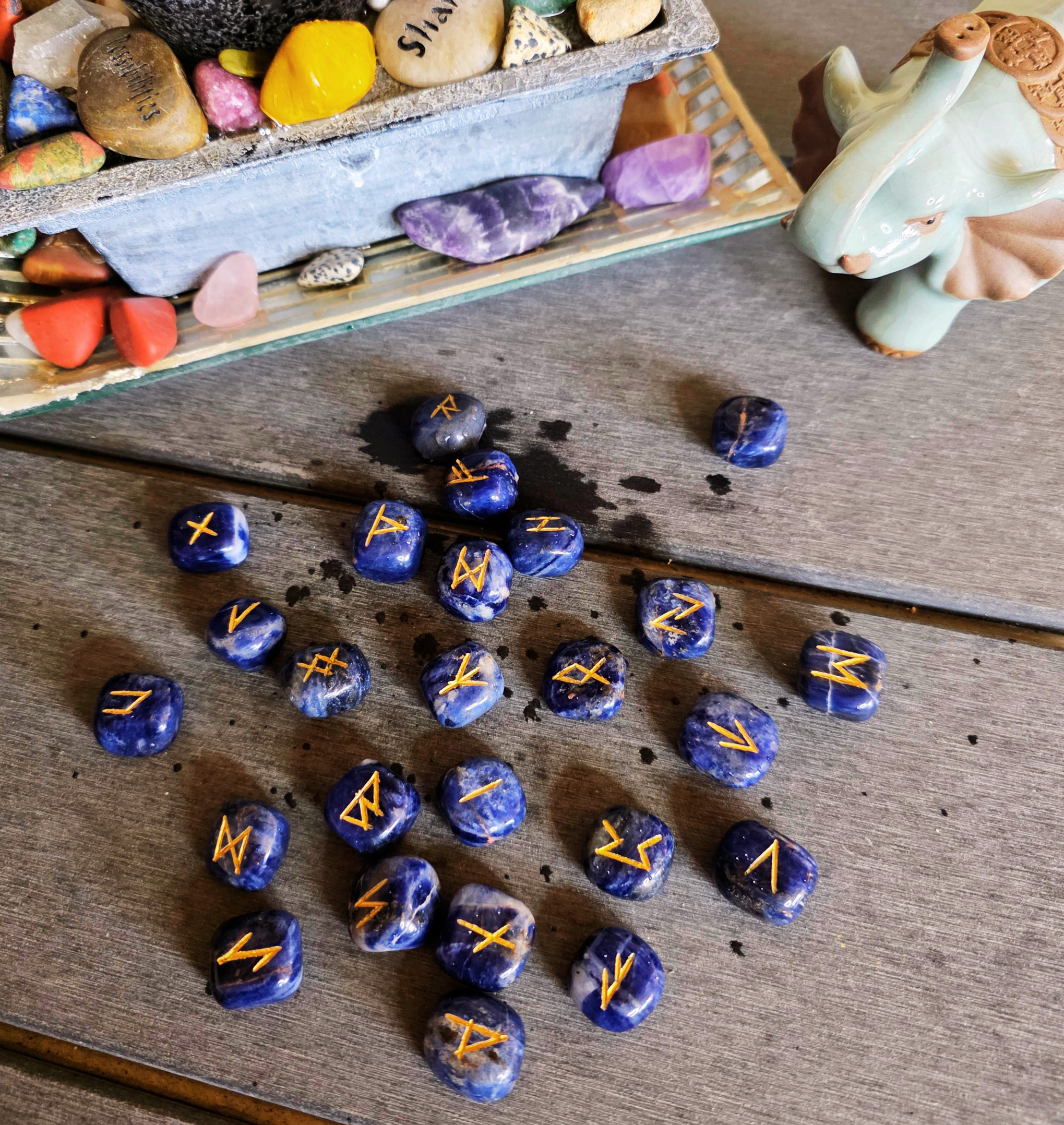
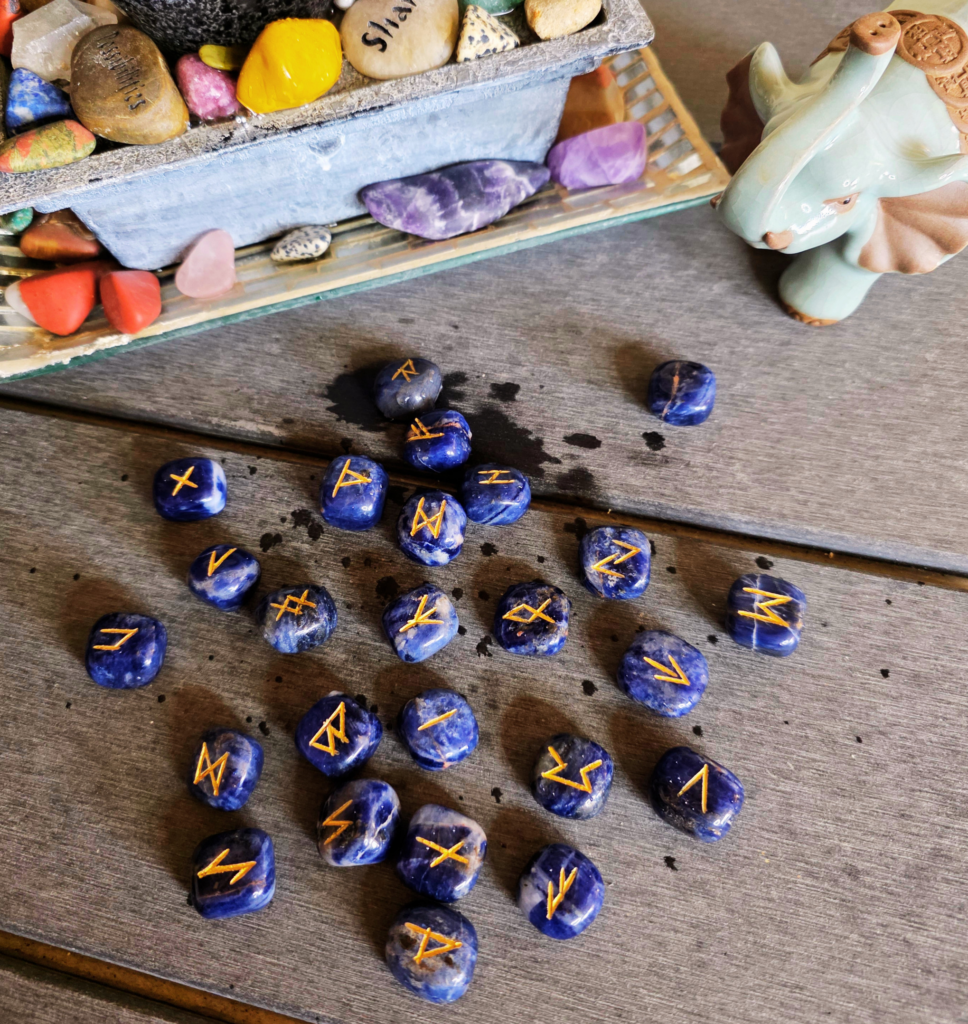
    Runes are commonly made from:

    • Stone
    • Wood
    • Bone
    • Ceramic
    • Glass
    • Resin

    Choose a set that feels comfortable to handle and easy to read.

    Do not worry about finding the perfect set.

    Many experienced rune practitioners own multiple sets collected over time.

    Some even create their own runes by carving or painting them.

    A simple set that encourages regular practice is usually the best place to begin.

    Should You Make Your Own Runes?

    Many people enjoy creating their own rune sets.

    Making runes can become a meaningful part of the learning process.

    When you paint, carve, or inscribe each rune yourself, you naturally spend more time becoming familiar with the symbols.

    Some practitioners believe that handcrafted runes foster a stronger personal connection.

    Others prefer professionally made sets.

    Both approaches are valid.

    The important thing is developing familiarity with the symbols themselves.

    How to Begin Learning the Runes

    Many beginners attempt to memorize all twenty-four runes immediately.

    This often leads to frustration.

    A slower approach works better.

    Start with a few runes at a time.

    Look carefully at each symbol.

    Notice:

    • The shape
    • The name
    • The sounds
    • The themes commonly associated with it

    Spend time reflecting on what the rune suggests to you.

    As with learning a new language, familiarity develops gradually through repeated exposure.

    Patience is more valuable than speed.

    Building a Relationship with the Symbols

    One of the most rewarding aspects of rune study is spending time with individual symbols.

    Choose one rune.

    Study it for several days.

    Observe:

    • Your immediate impressions
    • Images it evokes
    • Emotions it suggests
    • Situations that remind you of its themes

    Over time, the runes begin to feel less like abstract symbols and more like living ideas.

    This process cannot be rushed.

    Meaning deepens through repeated engagement.

    A Reflective Approach to Runes

    Many people use runes as tools for self-reflection.

    Rather than asking:

    “What will happen?”

    You might ask:

    • What should I pay attention to?
    • What challenge am I facing?
    • What lesson is present here?
    • What perspective am I overlooking?

    These questions often lead to richer and more useful insights.

    Runes can encourage thoughtful reflection without requiring certainty about the future.

    Common Mistakes Beginners Make

    Trying to Learn Everything at Once

    Rune study is a long-term journey.

    Focus on steady progress rather than immediate mastery.

    Ignoring Historical Context

    Modern interpretations can be valuable, but understanding the historical background of the runes provides important perspective.

    Looking for One Correct Meaning

    Runes often contain multiple layers of meaning.

    Context matters.

    Flexibility is part of the learning process.

    Obsessing Over Predictions

    Many beginners become preoccupied with fortune-telling.

    A reflective approach often produces deeper and more practical insights.

    Buying Too Many Rune Sets

    One set is enough to begin.

    Spend time learning the symbols before expanding your collection.

    Why Runes Continue to Matter

    Runes have survived because they speak to enduring human concerns.

    Strength.

    Change.

    Growth.

    Communication.

    Challenge.

    Transformation.

    Wisdom.

    Even though the cultures that created the earliest runes are long gone, the themes reflected in the symbols remain deeply relevant.

    People continue returning to runes because they offer a way to engage with timeless questions through powerful symbolic images.

    Where Should You Go Next?

    This beginner runes guide provides only a starting point.

    The next step is exploring the runes in greater depth. J. Hamburger’s book The Runes is a great beginner runes guide.

    Future articles in this series will cover:

    • What Are Runes? History, Meaning, and Use
    • How to Begin Studying the Runes
    • Rune Meanings for Beginners
    • How to Reflect with Runes Without Fortune-Telling
    • The Cultural Context of Rune Study
    • Common Misunderstandings About Runes
    • A Simple Rune Journaling Practice

    Together, these articles will help you build a deeper understanding of both the historical and symbolic dimensions of rune study.

    FAQ for beginner runes guide

    How many runes are there?

    The Elder Futhark contains twenty-four runes. Other historical rune systems contain different numbers.

    What is the best rune system for beginners?

    Most newcomers start with the Elder Futhark because it is the oldest complete runic alphabet and the most widely studied today.

    Can I study runes without practicing divination?

    Absolutely. Many people study runes for historical, linguistic, symbolic, or spiritual reasons without ever using them for divination.

    Do I need a special rune set?

    No. Any clear and readable set is sufficient for learning.

    Are rune meanings fixed?

    Not entirely. Historical evidence, modern interpretations, and personal reflection all contribute to how people understand the runes.

    Can I make my own runes?

    Yes. Many practitioners enjoy creating handcrafted rune sets from wood, stone, clay, or other materials.

    How long does it take to learn runes?

    You can learn the basic structure fairly quickly, but developing a deeper understanding often takes months or years of study and reflection.

    Final Thoughts

    Runes invite us into a conversation with history, symbolism, and the enduring human search for meaning.

    You do not need to master all twenty-four runes overnight. Begin with curiosity. Learn gradually. Spend time with the symbols. Allow their themes to unfold through study and reflection.

    Like any worthwhile journey, rune study rewards patience.

    The first step is simply becoming familiar with the symbols and the stories they carry.

    From there, a much larger world begins to open.

error

Enjoyed this article? Please spread the word :)

RSS
Follow by Email
Pinterest
fb-share-icon
Reddit
BLUESKY