
For many people, tarot begins with a deck.
Soon afterward comes a realization.
The cards contain far more depth than first appears.
A beginner may start by learning keywords and simple spreads, but serious tarot study eventually opens into symbolism, mythology, psychology, spirituality, history, philosophy, and personal transformation. The cards become a doorway into a much larger world.
One of the best ways to deepen your understanding is through books. While online videos and social media offer useful insights, books provide the space needed to explore tarot in greater depth. The best tarot books do more than explain card meanings. They teach ways of thinking, observing, reflecting, and developing a personal relationship with the cards.
The challenge for beginners is knowing where to start.
Hundreds of tarot books exist, and their approaches vary dramatically. Some focus on traditional interpretations. Others emphasize intuition, psychology, Kabbalah, mysticism, or spiritual development.
This guide introduces some of the most influential and useful tarot books available today. Whether you are new to tarot or seeking more advanced studies, these works can help build a strong foundation.
This article contains affiliate links.

In This Guide
- Why books remain important for tarot study
- The best beginner tarot books
- Books that strengthen intuition
- Books focused on personal growth
- Advanced esoteric tarot books
- Christian and mystical approaches to tarot
- Kabbalistic and symbolic studies
- How to build a tarot library
- Frequently asked questions
Why Read Tarot Books?
Modern learners often begin with videos, blogs, and social media.
These resources can be valuable.
Yet books offer something different.
Books allow an author to develop ideas carefully and thoroughly. They provide historical context, deeper symbolism, practical exercises, and detailed discussions that are difficult to fit into shorter formats.
Many of today’s respected tarot teachers developed their understanding through decades of reading, study, and reflection.
A thoughtful tarot library becomes an ongoing teacher.
A Note About Different Approaches
One of the first things readers discover is that tarot authors do not always agree.
Some emphasize intuition.
Some emphasize psychology.
And some focus on spiritual development.
Others explore occult traditions, Kabbalah, mythology, or religious symbolism.
This diversity is one of tarot’s strengths.
No single book contains everything.
Reading multiple perspectives helps develop a richer understanding of the cards.
Best Tarot Books for Beginners
Seventy-Eight Degrees of Wisdom by Rachel Pollack
Few books appear on recommendation lists as consistently as Seventy-Eight Degrees of Wisdom.
Rachel Pollack remains one of the most influential voices in modern tarot. A respected tarot scholar, novelist, and teacher, Pollack helped shape contemporary tarot study for several generations.
This book explores the symbolism and meaning of every card while connecting tarot to mythology, psychology, spirituality, and personal development.
Many readers consider it the single most important modern tarot book.
Although it is accessible to beginners, it rewards repeated reading throughout one’s tarot journey.
The Big Book of Tarot by Joan Bunning
Joan Bunning’s The Big Book of Tarot provides one of the most approachable introductions available.
The writing is clear and practical.
Bunning explains card meanings, spreads, and reading techniques without overwhelming newcomers with advanced theory.
Readers who want a structured and straightforward learning experience often find this book especially helpful.
It serves as an excellent bridge between beginner and intermediate study.
Tarot: No Questions Asked by Theresa Reed
Theresa Reed, often known as “The Tarot Lady,” brings a modern and accessible voice to tarot.
Tarot: No Questions Asked emphasizes intuition and confidence.
Rather than encouraging rigid interpretations, Reed teaches readers how to trust their own observations and develop authentic reading skills.
Her approach feels practical, encouraging, and grounded in real-world reading experience.
For many beginners, this book helps remove anxiety and perfectionism from the learning process.
Tarot Books for Personal Growth
Tarot for Your Self by Mary K. Greer
Mary K. Greer has spent decades shaping modern tarot education.
Tarot for Your Self remains one of the most influential tarot workbooks ever published.
Rather than simply teaching card meanings, Greer invites readers into a process of self-discovery.
The book includes:
- Journaling exercises
- Personal reflection
- Meditation techniques
- Creative exploration
Many readers describe this book as transformative.
It encourages a living relationship with the cards rather than simple memorization.
21 Ways to Read a Tarot Card by Mary K. Greer
21 Ways to Read a Tarot Card addresses one of the most important lessons in tarot:
There is never just one way to read a card.
Greer presents multiple methods for approaching the same image.
Readers learn how symbolism, intuition, psychology, storytelling, and observation can all reveal different layers of meaning.
This book helps break the habit of relying solely on keywords.
For developing readers, it can be a revelation.

Building a Foundation in Symbolism
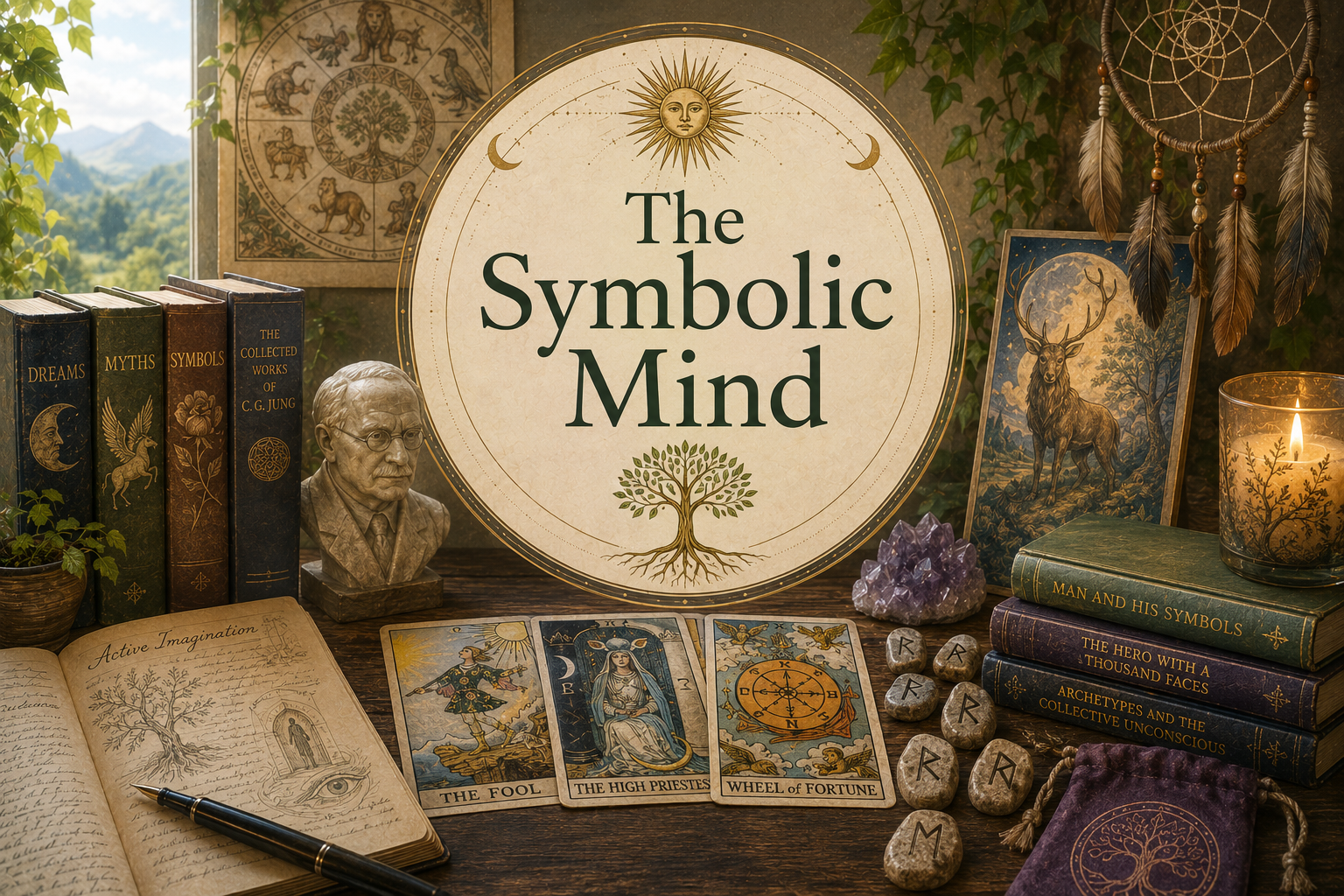
Tarot is ultimately a symbolic language.
Readers interested in deeper symbolic study may also enjoy:
What Is Symbolism? A Beginner’s Introduction
A strong understanding of symbolism often improves tarot reading more than memorizing additional keywords.
The cards communicate through images, stories, archetypes, and patterns of meaning.
Explore Our Courses











Advanced Tarot Books
Holistic Tarot by Benebell Wen
At over 800 pages, Holistic Tarot is less a book and more a comprehensive course.
Benebell Wen combines practical reading techniques with history, symbolism, psychology, and occult traditions.
Her approach emphasizes personal development and disciplined study.
Readers who enjoy deep research and extensive detail often consider this one of the most valuable modern tarot references available.
It is especially useful for those interested in professional-level study.
Tarot: The Library of Esoterica by Jessica Hundley
This visually stunning volume explores tarot through history, art, culture, and symbolism.
Rather than functioning as a traditional instructional guide, it presents tarot within broader esoteric traditions.
The artwork alone makes it worth owning.
Readers interested in the historical and artistic dimensions of tarot often find this book inspiring.
Tarot and Mythology
Tarot shares many themes with mythological traditions.
Heroes embark on journeys.
Wise figures offer guidance.
Transformations occur through challenge and sacrifice.
Readers interested in these deeper patterns may enjoy:
Understanding mythological themes often reveals new dimensions within the cards.
Christian and Mystical Approaches to Tarot
Meditations on the Tarot: A Journey into Christian Hermeticism
Originally published anonymously and later attributed to Valentin Tomberg, Meditations on the Tarot occupies a unique place in tarot literature.
This is not a book about card meanings.
Instead, it uses the Major Arcana as points of departure for profound reflections on Christianity, mysticism, Hermetic philosophy, theology, symbolism, and spiritual development.
The work has influenced scholars, mystics, clergy, and esoteric students for decades.
Many readers consider it one of the most intellectually and spiritually ambitious books ever written about tarot.
It is best approached slowly and contemplatively.
Readers interested in the themes explored within this work may also enjoy:
What Is Christian Hermeticism?
Thoth Tarot Studies
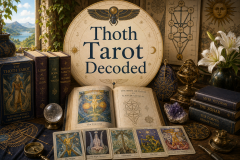
Understanding Aleister Crowley’s Thoth Tarot by Lon Milo DuQuette
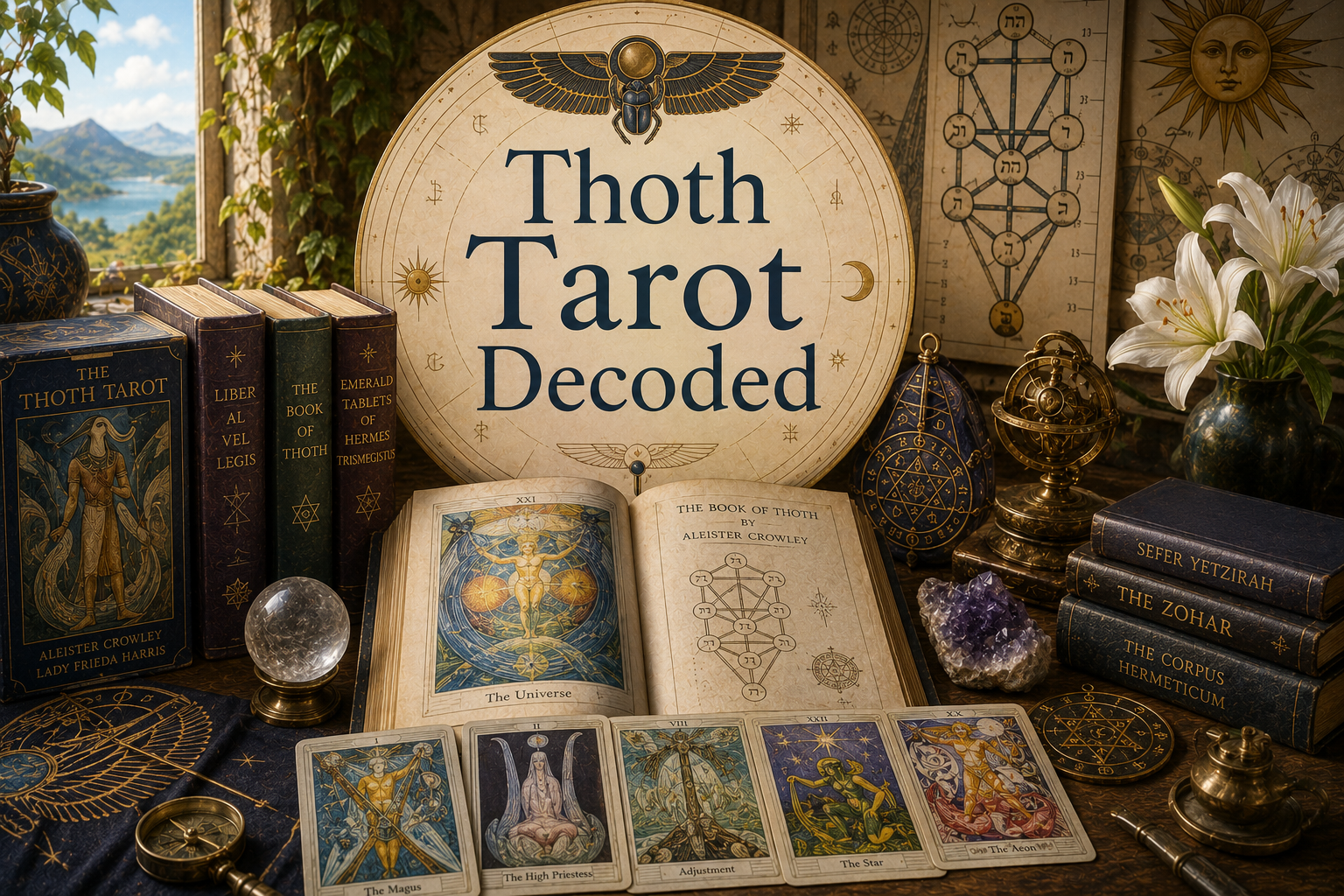
The Thoth Tarot can appear intimidating to newcomers.
Its symbolism draws from:
- Astrology
- Kabbalah
- Alchemy
- Ceremonial magic
- Mythology
Lon Milo DuQuette has a remarkable ability to explain these complex ideas with clarity and humor.
This book serves as one of the best introductions to the Thoth system.
Readers interested in Crowley’s deck will find it indispensable.
The Tarot Architect by Lon Milo DuQuette
DuQuette’s The Tarot Architect explores tarot as a symbolic structure for spiritual development.
The book encourages readers to view the cards as parts of an interconnected system rather than isolated meanings.
His writing combines scholarship, humor, and practical insight.
Readers seeking deeper esoteric understanding often find this book highly rewarding.
Kabbalistic Tarot Studies
Fool’s Pilgrimage by Stephan A. Hoeller
Stephan Hoeller, a respected scholar of Gnosticism and Western esotericism, presents the tarot through the lens of Kabbalah.
The Fool’s journey becomes a symbolic exploration of spiritual development.
Rather than focusing on prediction, Hoeller emphasizes contemplation, symbolism, and personal transformation.
Readers interested in mystical and philosophical approaches will find much to explore here.
Tarot and Other Symbolic Systems
Many tarot students eventually explore related traditions.
These may include:
- Dream symbolism
- Alchemy
- Runes
- Lenormand
- Mythology
You may enjoy:
How to Start Reading Dream Symbols
What Is Alchemy? Historical and Spiritual Perspectives
These systems often enrich one’s understanding of tarot symbolism.
Building a Tarot Library
New readers sometimes feel pressure to buy dozens of books.
This is unnecessary.
A strong library can begin with only a few carefully chosen works.
A balanced starter collection might include:
- Seventy-Eight Degrees of Wisdom
- Tarot for Your Self
- Tarot: No Questions Asked
- The Big Book of Tarot
These books provide an excellent foundation before moving into more specialized studies.
Over time, you can expand into mythology, psychology, Kabbalah, Christian Hermeticism, and other areas of interest.
Learning Beyond Books
Books remain essential, but they work best alongside practice.
Read.
Journal.
Study spreads.
Reflect on symbolism.
Keep notes.
Develop your own observations.
Tarot ultimately becomes meaningful through direct engagement with the cards.
Further Study Resources
Readers interested in scholarly and historical perspectives may wish to explore resources provided by the Tarot Heritage Project and the British Museum Collection Online, both of which offer valuable historical context related to tarot imagery, card history, and visual symbolism.
Frequently Asked Questions
What is the best tarot book for beginners?
Many readers consider Seventy-Eight Degrees of Wisdom by Rachel Pollack the most influential beginner-friendly tarot book.
Which tarot book is best for intuition?
Tarot: No Questions Asked by Theresa Reed offers an excellent introduction to intuitive reading.
Which tarot book is best for self-discovery?
Tarot for Your Self by Mary K. Greer remains one of the most respected personal growth-focused tarot books available.
What is the most comprehensive tarot book?
Holistic Tarot by Benebell Wen is often considered one of the most comprehensive modern tarot references.
Is Meditations on the Tarot a beginner book?
Not usually. Most readers benefit from gaining some familiarity with tarot before approaching it.
Which book should I read for the Thoth Tarot?
Understanding Aleister Crowley’s Thoth Tarot by Lon Milo DuQuette is widely considered one of the best introductions.
How many tarot books do I need?
Only a few. A small collection of high-quality books is often more valuable than a large collection that remains unread.
Final Thoughts
The best tarot books do more than teach card meanings.
They teach ways of seeing.
They deepen understanding of symbolism, psychology, mythology, spirituality, and personal growth. And they encourage readers to move beyond memorization and into genuine relationship with the cards.
Whether you begin with Rachel Pollack, Mary K. Greer, Theresa Reed, Joan Bunning, Benebell Wen, Lon Milo DuQuette, Stephan Hoeller, or Valentin Tomberg, each author offers a unique perspective on tarot’s rich symbolic landscape.
The cards themselves may never change.
Yet the deeper you study them, the more they seem to reveal.
That journey often begins with a single deck.
It continues through the wisdom found in great books.