Author: roseandrune

  • What Is Christian Hermeticism? An Introduction to a Symbolic and Mystical Tradition

    What Is Christian Hermeticism? An Introduction to a Symbolic and Mystical Tradition

    The phrase Christian Hermeticism often raises questions.

    Some people encounter it while studying alchemy, mysticism, symbolism, or Renaissance philosophy. Others come across the term while exploring the Western mystery traditions and wonder whether it belongs within Christianity, outside of Christianity, or somewhere in between.

    The answer is not always simple.

    Christian Hermeticism sits at the crossroads of faith, philosophy, symbolism, and contemplation. It draws from Christian theology while engaging with a body of writings and ideas associated with Hermetic thought. Throughout history, various thinkers sought to understand how divine wisdom, sacred symbolism, nature, and spiritual transformation might fit together within a Christian worldview.

    Because of this unique blend, Christian Hermeticism continues to attract readers interested in mysticism, symbolism, alchemy, contemplative spirituality, and the deeper layers of religious meaning.

    This guide explores the historical foundations of Christian Hermeticism and introduces its major themes without assuming prior knowledge.

    What Is Christian Hermeticism

    In This Guide

    • What Christian Hermeticism is
    • The origins of Hermetic thought
    • Hermes Trismegistus and the Hermetic writings
    • The relationship between Christianity and Hermeticism
    • Christian Hermeticism during the Renaissance
    • Symbolism and contemplation
    • Common misconceptions
    • Why Christian Hermeticism still matters
    • Frequently asked questions

    What Is Christian Hermeticism?

    At its most basic level, Christian Hermeticism is a tradition of thought that combines Christian spirituality with ideas found in the Hermetic writings.

    Rather than seeing the world as meaningless or disconnected, Christian Hermetic thinkers often viewed creation as filled with signs, symbols, patterns, and reflections of divine wisdom.

    Nature could reveal spiritual truths.

    Symbols could illuminate deeper realities.

    The visible world could point toward the invisible.

    This perspective encouraged contemplation, symbolic interpretation, and the search for wisdom.

    A complete answer to the question of what Christian Hermeticism is must therefore include both historical and spiritual dimensions.

    Historically, it emerged through the interaction of Christian theology and ancient Hermetic texts.

    Spiritually, it encouraged reflection on the relationship between God, humanity, creation, and wisdom.

    Who Was Hermes Trismegistus?

    The name Hermes Trismegistus stands at the center of Hermetic tradition.

    Hermes Trismegistus is a legendary figure associated with a collection of writings known as the Hermetica.

    Ancient readers often viewed him as an extraordinarily wise teacher who possessed profound knowledge about the cosmos, humanity, and the divine.

    Modern scholarship generally understands Hermes Trismegistus as a symbolic or literary figure rather than a historical individual.

    The writings attributed to him likely emerged over several centuries in the Hellenistic world, especially in Egypt during the early centuries of the Common Era.

    These texts explored themes such as:

    • Divine wisdom
    • The nature of reality
    • Human consciousness
    • Spiritual ascent
    • The relationship between humanity and God

    Although the Hermetic writings are not Christian texts, many later Christian thinkers found aspects of them intriguing and compatible with certain philosophical and spiritual questions.

    What Are the Hermetic Writings?

    The Hermetic writings consist of several texts traditionally attributed to Hermes Trismegistus.

    Among the most famous are:

    • The Corpus Hermeticum
    • The Asclepius
    • The Emerald Tablet

    These writings explore philosophical and spiritual themes through dialogues, teachings, prayers, and symbolic language.

    Readers encounter discussions about:

    • Creation
    • Divine order
    • Wisdom
    • Human nature
    • Spiritual knowledge

    Many of these texts emphasize the pursuit of wisdom and the transformation of understanding through contemplation.

    Their influence spread widely throughout late antiquity, the Middle Ages, and the Renaissance.

    Explore Our Courses
    ChatGPT Image Jun 26, 2026, 04_57_25 PM
    PlayPause
    ChatGPT Image Jun 26, 2026, 04_57_25 PM
    image-slider-with-thumbnail1.jpeg
    image-slider-with-thumbnail2.jpeg
    ChatGPT Image Jun 26, 2026, 05_01_22 PM
    image-slider-with-thumbnail3.jpeg
    image-slider-with-thumbnail4.jpeg
    ChatGPT Image Jun 26, 2026, 04_51_54 PM
    image-slider-with-thumbnail5.jpeg
    image-slider-with-thumbnail6.jpeg
    ChatGPT Image Jun 27, 2026, 09_24_15 AM
    image-slider-with-thumbnail7.jpeg
    ChatGPT Image Jun 26, 2026, 04_54_23 PM
    ChatGPT Image Jun 26, 2026, 04_19_39 PM
    ChatGPT Image Jun 26, 2026, 04_28_19 PM
    ChatGPT Image Jun 26, 2026, 04_37_00 PM
    ChatGPT Image Jun 26, 2026, 05_04_59 PM
    ChatGPT Image Jun 26, 2026, 04_38_53 PM
    ChatGPT Image Jun 27, 2026, 09_13_22 AM
    ChatGPT Image Jun 26, 2026, 04_41_25 PM
    ChatGPT Image Jun 26, 2026, 04_44_22 PM
    ChatGPT Image Jun 30, 2026, 10_56_33 AM
    previous arrow
    next arrow

    How Did Christianity and Hermeticism Meet?

    The relationship between Christianity and Hermeticism developed gradually.

    Early Christian thinkers lived in a world filled with competing philosophies, religious traditions, and schools of thought.

    Some Christian scholars encountered Hermetic writings alongside Platonic philosophy and other intellectual traditions.

    Later generations became interested in whether certain Hermetic ideas reflected truths compatible with Christian belief.

    Particular attention focused on themes such as:

    • Divine wisdom
    • Creation
    • Spiritual renewal
    • The pursuit of truth

    Not every Christian agreed with these interpretations.

    Many remained skeptical of Hermetic texts.

    Others viewed them as valuable sources of philosophical insight.

    The conversation continued for centuries.

    Christian Hermeticism During the Renaissance

    Christian Hermeticism became especially influential during the Renaissance.

    In fifteenth-century Italy, scholars recovered and translated ancient texts that had been unavailable in Western Europe for generations.

    Among these were the Hermetic writings.

    Many Renaissance thinkers believed these texts contained ancient wisdom that could enrich Christian understanding.

    One of the most influential figures was Marsilio Ficino, who translated the Corpus Hermeticum into Latin.

    Another important figure was Giovanni Pico della Mirandola, whose work sought to synthesize various philosophical and religious traditions.

    These scholars did not reject Christianity.

    Rather, they attempted to explore how ancient wisdom traditions might illuminate Christian truths.

    Their efforts helped shape Renaissance spirituality, philosophy, and symbolism.

    The Importance of Wisdom

    One theme appears repeatedly throughout Christian Hermetic thought.

    Wisdom.

    Wisdom is more than information.

    It is more than intellectual knowledge.

    Wisdom involves seeing reality clearly and understanding one’s place within the larger order of creation.

    Many Christian Hermetic thinkers viewed wisdom as a gift that draws the soul closer to God.

    This emphasis connects Hermetic thought to biblical traditions that celebrate wisdom literature.

    Books such as Proverbs and Ecclesiastes reflect a similar concern with understanding divine order and living in harmony with truth.

    The World as Symbol

    One of the most distinctive aspects of Christian Hermeticism is its symbolic perspective.

    Rather than viewing symbols as decorative additions, Christian Hermetic thinkers often saw them as meaningful expressions of deeper realities.

    Nature became a kind of symbolic language.

    The stars, seasons, elements, animals, plants, and patterns of creation could all serve as reminders of spiritual truths.

    This symbolic outlook influenced:

    • Art
    • Literature
    • Architecture
    • Mysticism
    • Alchemy

    The goal was not to escape the physical world but to perceive the deeper meanings reflected within it.

    Christian Hermeticism and Alchemy

    Many people first encounter Christian Hermeticism through alchemy.

    Although the two traditions are not identical, they often overlap.

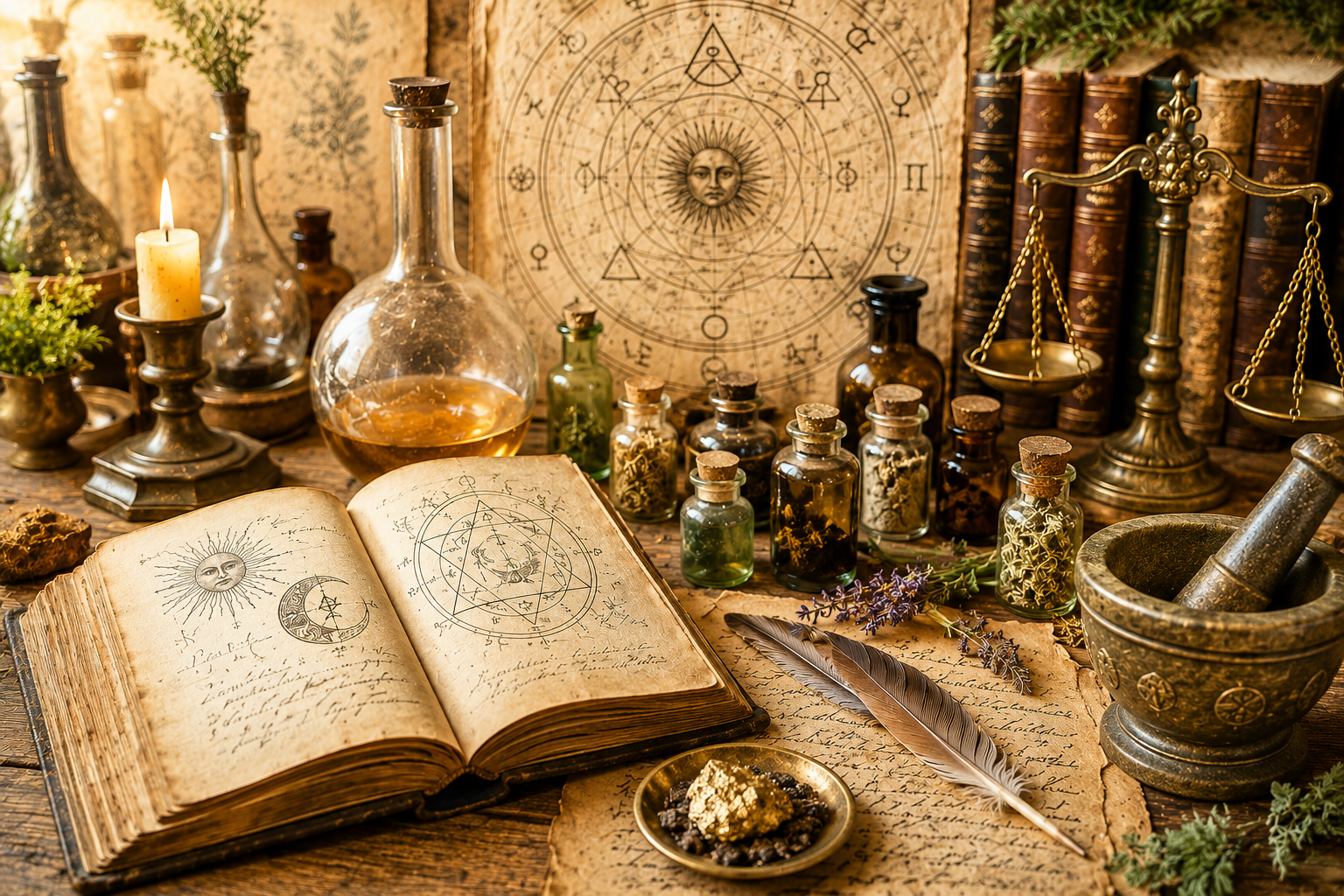
    Alchemists frequently used symbolic language to describe transformation.

    Gold, fire, vessels, kings, queens, and celestial bodies all carried symbolic significance.

    Many Christian Hermetic thinkers interpreted these images as reflections of spiritual growth and renewal.

    Readers interested in the historical and symbolic dimensions of alchemy may also enjoy our article:

    What Is Alchemy? Historical and Spiritual Perspectives

    Throughout history, alchemy and Christian Hermeticism often shared a common interest in transformation, wisdom, and the relationship between the visible and invisible worlds.

    Contemplation and Spiritual Reflection

    Christian Hermeticism places significant emphasis on contemplation.

    Contemplation involves more than analysis.

    It requires attentive reflection.

    It invites the individual to pause, observe, and consider deeper realities.

    For many practitioners, symbols functioned as aids to contemplation.

    A symbol could focus attention.

    A story could reveal wisdom.

    A natural process could suggest spiritual truths.

    This contemplative dimension distinguishes Christian Hermeticism from purely academic or intellectual approaches.

    Knowledge was valuable, but wisdom remained the ultimate goal.

    Common Misconceptions About Christian Hermeticism

    Christian Hermeticism Is a Separate Religion

    It is not.

    Christian Hermeticism developed within Christian contexts and engages with Christian theology, even as it draws on Hermetic sources.

    Christian Hermeticism Is the Same as Occultism

    Not exactly.

    While some later esoteric traditions incorporated Hermetic ideas, Christian Hermeticism has its own historical development and should not be reduced to modern occult movements.

    Christian Hermeticism Rejects Christianity

    Historically, many Christian Hermetic thinkers saw themselves as committed Christians.

    They sought deeper understanding, not replacement of Christian belief.

    Christian Hermeticism Is Only About Secret Knowledge

    Although Hermetic writings often discuss wisdom and insight, the tradition involves much more than hidden teachings.

    It includes contemplation, symbolism, philosophy, theology, and spiritual reflection.

    Why Christian Hermeticism Still Matters

    The modern world often separates knowledge into isolated categories.

    Science examines nature.

    Religion addresses faith.

    Art explores meaning.

    Psychology studies the mind.

    Christian Hermeticism offers a different perspective.

    It encourages readers to consider connections.

    It asks how wisdom, symbolism, spirituality, and creation might relate to one another.

    Many contemporary readers find this integrative approach appealing.

    The tradition reminds us that symbols can still communicate meaning and that contemplation remains valuable in a world dominated by speed and distraction.

    Christian Hermeticism and Symbolic Traditions

    Students of symbolism often discover connections between Christian Hermetic thought and other symbolic systems.

    Tarot, for example, developed much later and in a different context, yet many modern readers approach it through symbolic and contemplative lenses.

    Readers interested in symbolic interpretation may wish to explore our:

    Beginner’s Guide to Tarot

    Both traditions invite careful attention to symbols, images, and patterns of meaning.

    Learning More About Christian Hermeticism

    Readers interested in scholarly resources can explore the work of The Warburg Institute, one of the leading centers for the study of Renaissance thought, Hermeticism, symbolism, and the history of ideas.

    The institute’s research has contributed significantly to modern understanding of Hermetic traditions and their influence on Western culture.

    Frequently Asked Questions

    What is Christian Hermeticism in simple terms?

    Christian Hermeticism is a tradition that combines Christian spirituality with ideas found in the Hermetic writings, emphasizing wisdom, symbolism, contemplation, and the search for deeper understanding.

    Who wrote the Hermetic texts?

    The texts are traditionally attributed to Hermes Trismegistus, though modern scholars believe they were written by multiple authors over several centuries.

    Is Christian Hermeticism a denomination?

    No. It is a philosophical and spiritual tradition rather than a separate church or denomination.

    Is Christian Hermeticism compatible with Christianity?

    Different Christians answer this question differently. Historically, many Christian Hermetic thinkers considered themselves faithful Christians while drawing insight from Hermetic writings.

    Is Christian Hermeticism connected to alchemy?

    Yes. The two traditions often intersect through their shared interest in symbolism, transformation, and spiritual reflection.

    Why is symbolism so important in Christian Hermeticism?

    Symbols are viewed as meaningful expressions of deeper realities. They help communicate truths that may be difficult to express through ordinary language.

    Do I need to study alchemy to understand Christian Hermeticism?

    No. Alchemy is one related tradition, but Christian Hermeticism also involves theology, philosophy, contemplation, and symbolism.

    Final Thoughts

    The question of what Christian Hermeticism is opens the door to a fascinating and often misunderstood tradition.

    Rooted in the encounter between Christian spirituality and Hermetic thought, it invites readers to explore wisdom, symbolism, contemplation, and the meaningful patterns woven throughout creation.

    Christian Hermeticism is not merely a historical curiosity. Its questions remain relevant today.

    How do we find wisdom?

    How do symbols communicate truth?

    And how do we understand our place within the larger order of creation?

    For centuries, Christian Hermetic thinkers wrestled with these questions through prayer, study, reflection, and symbolic interpretation. Their writings continue to offer a rich source of insight for anyone interested in the deeper dimensions of spirituality and meaning.

    In future articles, we will explore the symbols, ideas, and practices that shaped this remarkable tradition in greater depth.

    Read more in the article, An Introduction to Christian Hermetic Thought.

  • What Is Alchemy? Historical and Spiritual Perspectives

    What Is Alchemy? Historical and Spiritual Perspectives

    When most people hear the word alchemy, they imagine medieval practitioners trying to turn lead into gold. Popular culture often portrays alchemists as mysterious figures working in hidden laboratories, surrounded by strange symbols, bubbling flasks, and secret formulas.

    While this image contains a grain of truth, it only tells part of the story.

    Alchemy has fascinated historians, philosophers, psychologists, spiritual seekers, and students of symbolism for centuries. Alchemy is much more than an early form of chemistry. It is a rich tradition that combines science, philosophy, spirituality, mythology, symbolism, and the human search for transformation.

    For some, alchemy represents a historical effort to understand the natural world. For others, it serves as a symbolic language for personal growth and spiritual development. Many modern readers encounter alchemy through the work of Carl Jung, who saw alchemical imagery as a powerful expression of psychological transformation.

    In this guide, we will explore the origins of alchemy, its historical development, its spiritual dimensions, and why it continues to captivate people today.

    This article contains affiliate links.

    what is alchemy

    In This Guide

    • What alchemy is
    • The origins of alchemy
    • Historical alchemy and the search for knowledge
    • Common misconceptions about alchemy
    • The spiritual side of alchemy
    • Alchemy and symbolism
    • Alchemy’s influence on modern thought
    • Why alchemy still matters
    • Frequently asked questions

    What Is Alchemy?

    At its simplest, alchemy was a historical tradition that sought to understand and transform matter.

    Practitioners experimented with metals, minerals, plants, and chemical processes. They recorded observations, developed laboratory techniques, and sought deeper principles governing nature.

    Yet alchemy was never purely scientific.

    Many alchemists believed that physical transformation reflected larger truths about the universe. Matter, spirit, nature, and humanity formed an interconnected whole.

    Because of this broader vision, alchemy often blended practical experimentation with philosophy, religion, symbolism, and spiritual reflection.

    The Origins

    Alchemy emerged from several cultural streams rather than a single point of origin.

    Elements of alchemical thought appeared in:

    • Ancient Egypt
    • Greece
    • Rome
    • Persia
    • India
    • China
    • The Islamic world

    Many scholars trace Western alchemy to the cultural exchanges that occurred in Hellenistic Egypt, particularly in Alexandria. There, Egyptian traditions mixed with Greek philosophy and practical metallurgy.

    Over time, alchemical ideas spread throughout the Mediterranean world and later flourished within Islamic civilization.

    Islamic scholars preserved, translated, and expanded many earlier texts. Their work eventually influenced European alchemists during the Middle Ages and Renaissance.

    The result was a complex tradition that evolved over centuries and across many cultures.

    Why Was Gold So Important?

    One reason alchemy remains associated with gold is that many historical texts discuss the transformation of base metals into precious metals.

    Gold fascinated ancient and medieval thinkers because it appeared resistant to decay. Unlike iron, it did not rust. Unlike many other materials, it retained its beauty and stability over time.

    Gold seemed perfect.

    To many alchemists, this perfection suggested that gold represented a completed state of nature.

    The search for gold therefore became more than a quest for wealth. It symbolized the possibility of transformation itself.

    Could something ordinary become extraordinary?

    Could something incomplete become perfected?

    These questions shaped much of alchemical thought.

    The Philosopher’s Stone

    Perhaps no symbol is more famous than the Philosopher’s Stone.

    According to many alchemical traditions, the Philosopher’s Stone could transform base metals into gold.

    Stories also associated it with healing, longevity, wisdom, and spiritual enlightenment.

    Whether the Stone existed as a literal substance remains a matter of debate and speculation.

    What matters historically is that the Philosopher’s Stone became one of alchemy’s central symbols.

    For many practitioners, it represented the ultimate goal of transformation.

    Its meaning extended beyond metallurgy into philosophy and spirituality.

    Explore Our Courses
    ChatGPT Image Jun 26, 2026, 04_57_25 PM
    PlayPause
    ChatGPT Image Jun 26, 2026, 04_57_25 PM
    image-slider-with-thumbnail1.jpeg
    image-slider-with-thumbnail2.jpeg
    ChatGPT Image Jun 26, 2026, 05_01_22 PM
    image-slider-with-thumbnail3.jpeg
    image-slider-with-thumbnail4.jpeg
    ChatGPT Image Jun 26, 2026, 04_51_54 PM
    image-slider-with-thumbnail5.jpeg
    image-slider-with-thumbnail6.jpeg
    ChatGPT Image Jun 27, 2026, 09_24_15 AM
    image-slider-with-thumbnail7.jpeg
    ChatGPT Image Jun 26, 2026, 04_54_23 PM
    ChatGPT Image Jun 26, 2026, 04_19_39 PM
    ChatGPT Image Jun 26, 2026, 04_28_19 PM
    ChatGPT Image Jun 26, 2026, 04_37_00 PM
    ChatGPT Image Jun 26, 2026, 05_04_59 PM
    ChatGPT Image Jun 26, 2026, 04_38_53 PM
    ChatGPT Image Jun 27, 2026, 09_13_22 AM
    ChatGPT Image Jun 26, 2026, 04_41_25 PM
    ChatGPT Image Jun 26, 2026, 04_44_22 PM
    ChatGPT Image Jun 30, 2026, 10_56_33 AM
    previous arrow
    next arrow

    Historical Alchemy as a Practical Discipline

    Modern readers sometimes dismiss it as superstition.

    This overlooks an important fact.

    Many alchemists were serious observers of nature.

    They conducted experiments.

    They developed laboratory equipment.

    And they refined methods of distillation, purification, extraction, and observation.

    Although their theories differed from modern science, their work contributed to the development of chemistry.

    In some respects, chemistry emerged from the practical side of alchemical experimentation.

    Many laboratory techniques used today have roots in earlier alchemical practices.

    Common Misconceptions About Alchemy

    Alchemy Was Only About Making Gold

    This is probably the most common misunderstanding.

    While the transformation of metals played an important role, it addressed much broader questions about nature, change, knowledge, and perfection.

    Alchemists Were Fraudsters

    Some certainly were.

    Others, however, were sincere researchers, philosophers, physicians, and scholars.

    Like any field, it included both serious practitioners and opportunists.

    Alchemy Was Purely Scientific

    Alchemy involved experimentation, but it also included spiritual, philosophical, and symbolic dimensions.

    Separating these elements completely would distort the historical tradition.

    Alchemy Disappeared Long Ago

    Although historical alchemy declined as modern science developed, its symbols and ideas continue to influence psychology, spirituality, literature, and art.

    The Spiritual Side of Alchemy

    As it developed, many practitioners began to view transformation as occurring not only within the individual but also within the laboratory.

    Physical processes became symbols for inner change.

    Transformation in matter reflected transformation in consciousness.

    The purification of metals suggested the purification of the self.

    This perspective became especially influential within mystical, Hermetic, and esoteric traditions.

    The laboratory became a metaphor for personal development.

    The alchemist became a seeker pursuing wisdom rather than merely material success.

    This spiritual interpretation remains highly influential today.

    Alchemy and Symbolism

    One reason alchemy continues to attract modern readers is its remarkable symbolic language.

    Alchemical texts often contain:

    • Dragons
    • Kings and queens
    • Suns and moons
    • Serpents
    • Birds
    • Gardens
    • Vessels
    • Crowns

    To a modern reader, these images may seem strange or confusing.

    Yet they function as symbols that communicate complex ideas.

    Rather than explaining concepts directly, alchemists often expressed them through stories, images, and allegories.

    This symbolic richness gives alchemy a timeless quality.

    People continue discovering new meanings within its imagery.

    Alchemy and Carl Jung

    Few figures contributed more to the modern revival of alchemy than Carl Jung.

    Jung believed that alchemical symbols reflected psychological processes occurring within the human psyche.

    He saw alchemical imagery as expressions of archetypal patterns that appear in dreams, myths, religions, and personal development.

    According to Jung, it provided a symbolic language for describing the process of becoming a more complete and integrated person.

    His interpretation introduced the topic to many readers who had little interest in chemistry or medieval history.

    Today, many students encounter alchemy through Jungian psychology before encountering it in historical texts.

    Alchemy and the Western Mystery Tradition

    Alchemy occupies an important place within the broader Western mystery tradition.

    It intersects with:

    • Hermeticism
    • Mysticism
    • Symbolism
    • Astrology
    • Philosophy
    • Esoteric Christianity

    For this reason, many students who explore tarot, archetypes, or symbolic systems eventually encounter alchemical ideas.

    Readers interested in symbolic traditions may also enjoy our introduction to tarot: Beginner’s Guide to Tarot.

    Both systems rely heavily on symbolic imagery and the exploration of human experience through metaphor.

    Why Alchemy Still Matters

    Alchemy continues to resonate because transformation remains one of humanity’s central concerns.

    People seek transformation in many forms:

    • Personal growth
    • Spiritual development
    • Healing
    • Creativity
    • Wisdom
    • Self-understanding

    Alchemical language offers a way to think about these experiences.

    The symbols may be ancient, but the questions remain contemporary.

    How do people change?

    How does growth occur?

    What transforms an ordinary life into a meaningful one?

    Alchemy provides a symbolic framework for exploring these questions.

    How Should Beginners Approach Alchemy?

    Start with curiosity.

    Do not worry about mastering every symbol or understanding every historical text.

    Begin by learning the broad outlines of the tradition.

    Explore its history.

    Study its symbols.

    Read widely.

    Pay attention to the ways different scholars and practitioners interpret it.

    Most importantly, allow the tradition to unfold gradually.

    Alchemy rewards patience.

    Its symbols often reveal deeper meanings over time.

    Learning More About Alchemy

    Readers who want to explore the historical study of alchemy can find valuable educational resources through The University of Glasgow’s Alchemy Website Project, one of the most respected scholarly resources dedicated to the history of alchemy and alchemical texts.

    This project provides access to manuscripts, historical research, biographies, and educational materials that help place it within its proper historical context.

    Frequently Asked Questions

    What is alchemy in simple terms?

    Alchemy is a historical tradition that combined experimentation, philosophy, symbolism, and spiritual ideas to understand transformation in nature and human life.

    Was alchemy a real science?

    Alchemy contributed to the development of chemistry and included genuine experimentation. However, it also incorporated philosophical and spiritual concepts that fall outside modern scientific practice.

    Did alchemists actually turn lead into gold?

    There is no accepted historical evidence that alchemists succeeded in transforming lead into gold. The pursuit itself, however, played a major role in alchemical thought.

    Is alchemy connected to spirituality?

    For many practitioners, yes. Alchemy often served as a symbolic framework for spiritual growth, wisdom, and transformation.

    What is the Philosopher’s Stone?

    The Philosopher’s Stone is a legendary substance associated with transformation, perfection, wisdom, and the transmutation of metals.

    Is alchemy related to tarot?

    Although they developed separately, both traditions use rich symbolic imagery and often appear together within the broader Western mystery tradition.

    Can beginners study alchemy?

    Absolutely. A strong foundation begins with understanding the historical background and symbolic language before moving into more advanced concepts.

    Final Thoughts

    Alchemy is a historical discipline, a symbolic language, a philosophical tradition, and for many people, a spiritual path.

    It emerged from humanity’s desire to understand transformation. Ancient practitioners explored that transformation in metals, minerals, and natural processes. Later generations discovered that the same symbols could illuminate inner change, personal growth, and the search for meaning.

    That combination of history and symbolism explains why it continues to fascinate readers centuries after its emergence.

    In future articles, we will explore the symbols, ideas, and transformative language that make alchemy one of the most enduring traditions within the Western mystery tradition.

  • Beginner’s Guide to Runes: Everything You Need to Know to Get Started

    Beginner’s Guide to Runes: Everything You Need to Know to Get Started

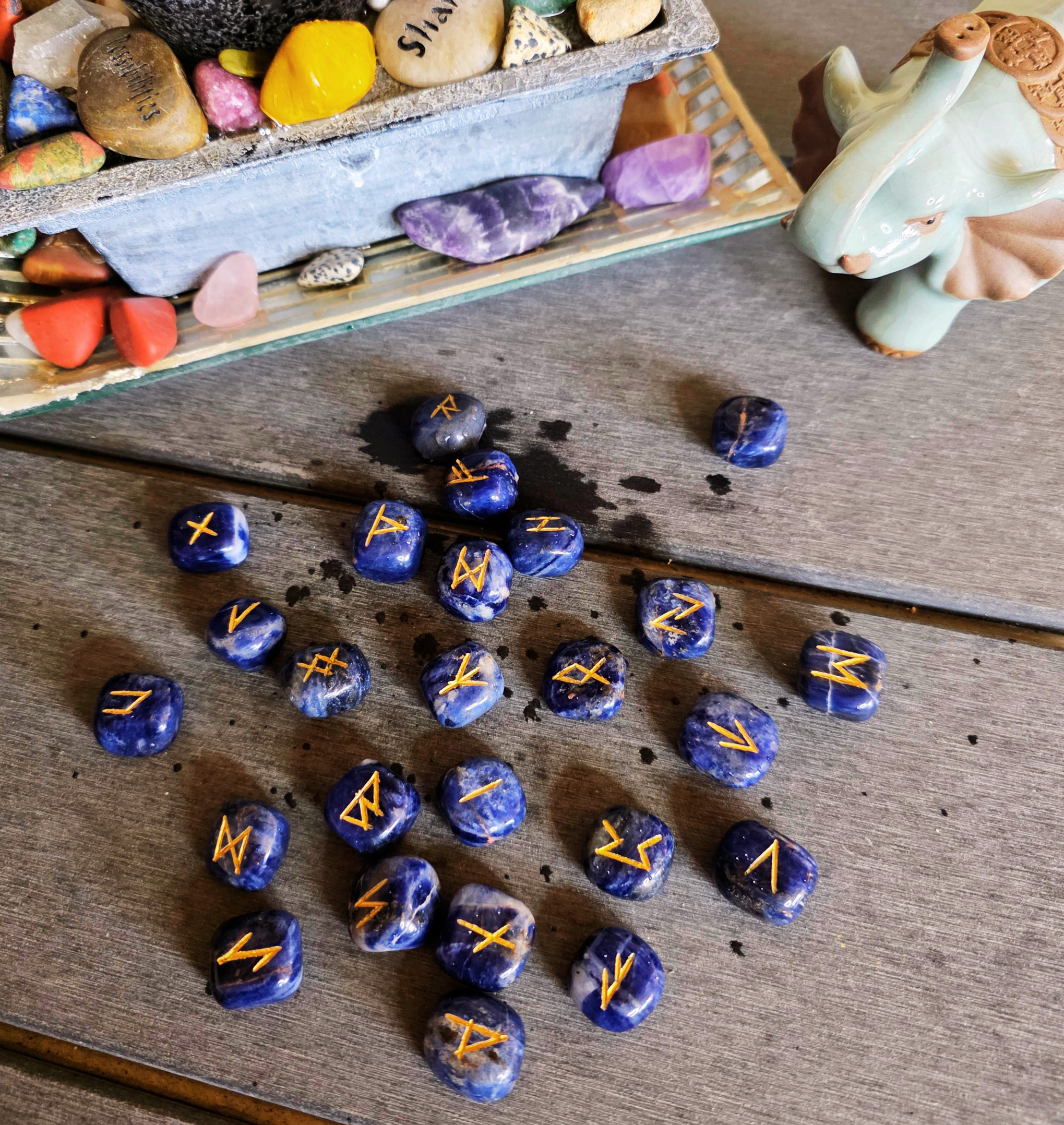
    Runes have fascinated people for centuries. Their angular shapes appear on ancient stones, carved artifacts, manuscripts, jewelry, and modern rune sets. Some people encounter runes through Norse mythology, while others discover them through history, spirituality, symbolism, or divination.

    If you are new to rune study, you may wonder where to begin. The internet offers countless interpretations, historical claims, and mystical theories. For a newcomer, it can be difficult to separate fact from speculation.

    This beginner runes guide introduces the foundations of rune study without overwhelming you with details. Rather than memorizing dozens of meanings immediately, you will learn what runes are, where they came from, why people continue to study them, and how to begin building a thoughtful relationship with this ancient symbolic system.

    Whether you approach runes as a historical subject, a symbolic language, a reflective practice, or a form of divination, this beginner’s runes guide will help you take your first steps with confidence.

    This article contains affiliate links.

    Runes Beginner Guide

    In This Beginner Runes Guide

    • What runes are
    • The origins of the runic alphabets
    • Why runes continue to fascinate people
    • The Elder Futhark and other rune systems
    • Historical and modern uses of runes
    • Choosing your first rune set
    • How to begin learning runes
    • Common mistakes beginners make
    • Where to go next in your studies

    What Are Runes?

    Runes are letters from ancient Germanic alphabets used across parts of Northern Europe for writing, communication, memorial inscriptions, and symbolic purposes.

    The word rune comes from an old Germanic root associated with mystery, whispering, or secret knowledge. This connection to hidden meaning has contributed to the fascination surrounding runes throughout history.

    Today, many people think of runes primarily as divination tools. Historically, however, runes were first and foremost letters used for writing.

    People carved runes into:

    • Stone monuments
    • Weapons
    • Jewelry
    • Wooden objects
    • Bone and antler
    • Everyday household items

    Like any alphabet, runes served practical purposes. At the same time, many historical examples suggest that people also associated runes with symbolic and magical significance.

    This combination of practicality and mystery helps explain why runes continue to attract students today.

    Why Do People Study Runes?

    People come to runes from many different directions.

    Some are interested in history and archaeology.

    Others are fascinated by Norse mythology.

    Many are drawn to symbolism and personal reflection.

    Some use runes as part of a spiritual practice.

    Others enjoy learning ancient writing systems.

    There is no single correct reason to study runes.

    For many modern practitioners, runes function as a symbolic language that encourages reflection and self-examination. Much like dreams, myths, or tarot cards, runes can provide images and themes that help us think differently about our lives and experiences.

    Where Did the Runes Come From?

    Scholars continue to debate the exact origins of the runic alphabets.

    Most evidence suggests that the earliest runes developed sometime during the first centuries of the Common Era among Germanic peoples in Northern Europe.

    The creators of the runic system likely adapted ideas from other writing systems they encountered through trade, travel, and cultural exchange.

    Over time, various runic alphabets developed throughout different regions.

    These alphabets evolved as languages changed and societies developed.

    Although popular culture often treats runes as a single system, several rune rows existed throughout history.

    Runes offer a fascinating window into the cultures, languages, and symbolic traditions of Northern Europe. While many people encounter runes through modern spiritual practices, their history stretches back nearly two thousand years through inscriptions, memorial stones, and archaeological discoveries. Readers interested in exploring the historical and scholarly study of runes can find reliable educational resources through the Scandinavian Studies Department at the University of Wisconsin–Madison, which supports research into Old Norse language, literature, and Nordic cultural history.

    The Elder Futhark

    The most commonly studied rune system today is the Elder Futhark.

    Its name comes from the first six runes:

    • Fehu
    • Uruz
    • Thurisaz
    • Ansuz
    • Raidho
    • Kenaz

    Together, these names create the word “Futhark.”

    The Elder Futhark contains twenty-four runes.

    Most modern rune books and rune sets focus on this system because it is the oldest complete runic alphabet we possess.

    For beginners, the Elder Futhark provides the most accessible starting point.

    Later articles in this series will explore individual rune meanings in much greater depth.

    Explore Our Courses
    ChatGPT Image Jun 26, 2026, 04_57_25 PM
    PlayPause
    ChatGPT Image Jun 26, 2026, 04_57_25 PM
    image-slider-with-thumbnail1.jpeg
    image-slider-with-thumbnail2.jpeg
    ChatGPT Image Jun 26, 2026, 05_01_22 PM
    image-slider-with-thumbnail3.jpeg
    image-slider-with-thumbnail4.jpeg
    ChatGPT Image Jun 26, 2026, 04_51_54 PM
    image-slider-with-thumbnail5.jpeg
    image-slider-with-thumbnail6.jpeg
    ChatGPT Image Jun 27, 2026, 09_24_15 AM
    image-slider-with-thumbnail7.jpeg
    ChatGPT Image Jun 26, 2026, 04_54_23 PM
    ChatGPT Image Jun 26, 2026, 04_19_39 PM
    ChatGPT Image Jun 26, 2026, 04_28_19 PM
    ChatGPT Image Jun 26, 2026, 04_37_00 PM
    ChatGPT Image Jun 26, 2026, 05_04_59 PM
    ChatGPT Image Jun 26, 2026, 04_38_53 PM
    ChatGPT Image Jun 27, 2026, 09_13_22 AM
    ChatGPT Image Jun 26, 2026, 04_41_25 PM
    ChatGPT Image Jun 26, 2026, 04_44_22 PM
    ChatGPT Image Jun 30, 2026, 10_56_33 AM
    previous arrow
    next arrow

    Are Runes Connected to Norse Mythology?

    Yes, although the relationship is often simplified.

    One of the most famous stories appears in the Old Norse poem Hávamál. In this account, Odin undergoes a profound ordeal in pursuit of wisdom and ultimately gains knowledge of the runes.

    This story has deeply influenced modern understandings of rune symbolism.

    Many people view the myth as describing sacrifice, transformation, wisdom, and the pursuit of knowledge.

    Whether understood literally, symbolically, or spiritually, the story highlights the importance that runes held within the Norse cultural imagination.

    Historical Uses of Runes

    When people first encounter runes, they often assume they existed primarily for divination.

    History suggests a broader picture.

    Runes appeared in many contexts.

    They were used for:

    • Memorial inscriptions
    • Ownership markings
    • Personal names
    • Messages
    • Commemorative monuments
    • Religious expressions
    • Symbolic formulas

    Archaeologists have discovered thousands of runic inscriptions across Northern Europe.

    Some are simple.

    Others are highly elaborate.

    Together, they reveal that runes served both practical and symbolic roles.

    Modern Uses of Runes

    Today, runes are used in several different ways.

    Some people study them academically.

    Some learn them as an ancient alphabet.

    Others incorporate them into spiritual practices.

    Many modern practitioners use runes as tools for reflection.

    A rune draw may encourage someone to consider themes such as:

    • Growth
    • Change
    • Patience
    • Challenge
    • Communication
    • Transformation

    Rather than viewing runes as fixed predictions, many people see them as symbols that invite contemplation.

    Do You Need to Believe in Magic to Study Runes?

    No.

    This is one of the most common misconceptions surrounding rune study.

    People approach runes from many different perspectives.

    Some hold deeply spiritual beliefs.

    Some view runes as psychological symbols.

    Others appreciate them as historical artifacts.

    Still others enjoy them as creative prompts for writing and personal reflection.

    Your approach does not need to match anyone else’s.

    The beginner runes guide presented here encourages curiosity, respect for history, and openness to symbolic interpretation.

    Choosing Your First Rune Set

    Many beginners wonder whether they need a special rune set.

    The answer is simple.

    Any readable rune set can work.

    Runes are commonly made from:

    • Stone
    • Wood
    • Bone
    • Ceramic
    • Glass
    • Resin

    Choose a set that feels comfortable to handle and easy to read.

    Do not worry about finding the perfect set.

    Many experienced rune practitioners own multiple sets collected over time.

    Some even create their own runes by carving or painting them.

    A simple set that encourages regular practice is usually the best place to begin.

    Should You Make Your Own Runes?

    Many people enjoy creating their own rune sets.

    Making runes can become a meaningful part of the learning process.

    When you paint, carve, or inscribe each rune yourself, you naturally spend more time becoming familiar with the symbols.

    Some practitioners believe that handcrafted runes foster a stronger personal connection.

    Others prefer professionally made sets.

    Both approaches are valid.

    The important thing is developing familiarity with the symbols themselves.

    How to Begin Learning the Runes

    Many beginners attempt to memorize all twenty-four runes immediately.

    This often leads to frustration.

    A slower approach works better.

    Start with a few runes at a time.

    Look carefully at each symbol.

    Notice:

    • The shape
    • The name
    • The sounds
    • The themes commonly associated with it

    Spend time reflecting on what the rune suggests to you.

    As with learning a new language, familiarity develops gradually through repeated exposure.

    Patience is more valuable than speed.

    Building a Relationship with the Symbols

    One of the most rewarding aspects of rune study is spending time with individual symbols.

    Choose one rune.

    Study it for several days.

    Observe:

    • Your immediate impressions
    • Images it evokes
    • Emotions it suggests
    • Situations that remind you of its themes

    Over time, the runes begin to feel less like abstract symbols and more like living ideas.

    This process cannot be rushed.

    Meaning deepens through repeated engagement.

    A Reflective Approach to Runes

    Many people use runes as tools for self-reflection.

    Rather than asking:

    “What will happen?”

    You might ask:

    • What should I pay attention to?
    • What challenge am I facing?
    • What lesson is present here?
    • What perspective am I overlooking?

    These questions often lead to richer and more useful insights.

    Runes can encourage thoughtful reflection without requiring certainty about the future.

    Common Mistakes Beginners Make

    Trying to Learn Everything at Once

    Rune study is a long-term journey.

    Focus on steady progress rather than immediate mastery.

    Ignoring Historical Context

    Modern interpretations can be valuable, but understanding the historical background of the runes provides important perspective.

    Looking for One Correct Meaning

    Runes often contain multiple layers of meaning.

    Context matters.

    Flexibility is part of the learning process.

    Obsessing Over Predictions

    Many beginners become preoccupied with fortune-telling.

    A reflective approach often produces deeper and more practical insights.

    Buying Too Many Rune Sets

    One set is enough to begin.

    Spend time learning the symbols before expanding your collection.

    Why Runes Continue to Matter

    Runes have survived because they speak to enduring human concerns.

    Strength.

    Change.

    Growth.

    Communication.

    Challenge.

    Transformation.

    Wisdom.

    Even though the cultures that created the earliest runes are long gone, the themes reflected in the symbols remain deeply relevant.

    People continue returning to runes because they offer a way to engage with timeless questions through powerful symbolic images.

    Where Should You Go Next?

    This beginner runes guide provides only a starting point.

    The next step is exploring the runes in greater depth. J. Hamburger’s book The Runes is a great beginner runes guide.

    Future articles in this series will cover:

    • What Are Runes? History, Meaning, and Use
    • How to Begin Studying the Runes
    • Rune Meanings for Beginners
    • How to Reflect with Runes Without Fortune-Telling
    • The Cultural Context of Rune Study
    • Common Misunderstandings About Runes
    • A Simple Rune Journaling Practice

    Together, these articles will help you build a deeper understanding of both the historical and symbolic dimensions of rune study.

    FAQ for beginner runes guide

    How many runes are there?

    The Elder Futhark contains twenty-four runes. Other historical rune systems contain different numbers.

    What is the best rune system for beginners?

    Most newcomers start with the Elder Futhark because it is the oldest complete runic alphabet and the most widely studied today.

    Can I study runes without practicing divination?

    Absolutely. Many people study runes for historical, linguistic, symbolic, or spiritual reasons without ever using them for divination.

    Do I need a special rune set?

    No. Any clear and readable set is sufficient for learning.

    Are rune meanings fixed?

    Not entirely. Historical evidence, modern interpretations, and personal reflection all contribute to how people understand the runes.

    Can I make my own runes?

    Yes. Many practitioners enjoy creating handcrafted rune sets from wood, stone, clay, or other materials.

    How long does it take to learn runes?

    You can learn the basic structure fairly quickly, but developing a deeper understanding often takes months or years of study and reflection.

    Final Thoughts

    Runes invite us into a conversation with history, symbolism, and the enduring human search for meaning.

    You do not need to master all twenty-four runes overnight. Begin with curiosity. Learn gradually. Spend time with the symbols. Allow their themes to unfold through study and reflection.

    Like any worthwhile journey, rune study rewards patience.

    The first step is simply becoming familiar with the symbols and the stories they carry.

    From there, a much larger world begins to open.

  • Beginner’s Guide to Tarot: Everything You Need to Know to Get Started

    Beginner’s Guide to Tarot: Everything You Need to Know to Get Started

    If you are curious about tarot but feel overwhelmed by all the cards, symbols, and conflicting advice online, this beginner tarot guide will help you take your first steps with confidence.

    Many people encounter tarot through movies, social media, or stories about fortune tellers. Others discover it while exploring spirituality, symbolism, personal growth, or creativity. No matter how you arrived here, tarot can feel mysterious at first.

    The good news is that you do not need special abilities, psychic gifts, or years of study to begin learning tarot. Like any symbolic language, tarot becomes easier to understand when you learn its basic structure and approach it with curiosity.

    This beginner tarot guide introduces the foundations of tarot, explains what a tarot deck contains, and offers practical advice for starting your journey.
    This article contains affiliate links.

    beginner tarot guide

    In This beginner tarot guide

    • What tarot is
    • A brief history of tarot
    • What a tarot deck contains
    • Common misconceptions about tarot
    • Choosing your first deck
    • How beginners can start learning
    • Mistakes new readers often make
    • Where to go next

    What Is Tarot?

    Tarot is a system of 78 illustrated cards that people use for reflection, self-exploration, creative inspiration, and divination.

    Each card contains symbols, images, and themes that can spark insight into a situation, question, or life experience. Some people use tarot as a spiritual practice. Others approach it as a psychological tool, a storytelling system, or a way to explore patterns in their lives.

    A tarot reading involves drawing one or more cards and interpreting the symbols and themes they present.

    At its heart, tarot is a symbolic language.

    Just as a dream uses images to communicate meaning, tarot uses pictures, archetypes, and stories.

    A Brief History of Tarot

    The earliest tarot cards appeared in Europe during the fifteenth century. Originally, they were used for card games rather than divination.

    Over time, people began assigning symbolic and spiritual meanings to the cards. During the eighteenth and nineteenth centuries, various writers connected tarot to mystical traditions, esoteric philosophy, and symbolic systems.

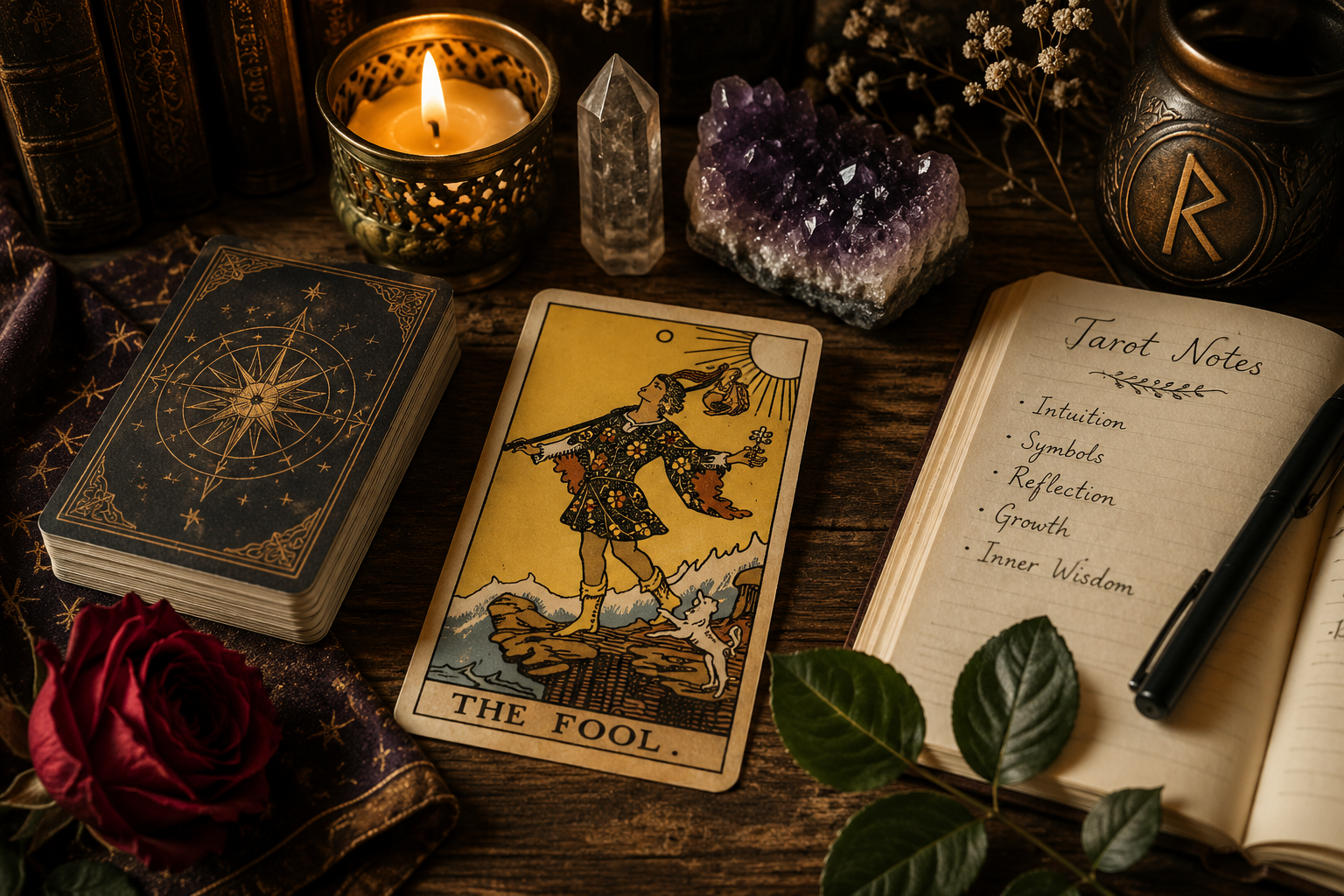
    The most influential tarot deck today is the Rider-Waite-Smith deck, first published in 1909. Created by Arthur Edward Waite and illustrated by Pamela Colman Smith, this deck helped shape the way modern readers understand tarot.

    Many contemporary decks build upon the structure established by the Rider-Waite-Smith tradition.

    What Does a Tarot Deck Contain?

    A standard tarot deck contains 78 cards divided into two main groups.

    The Major Arcana

    The Major Arcana consists of 22 cards.

    These cards represent significant themes, life lessons, archetypes, and transformative experiences.

    Some well-known Major Arcana cards include:

    • The Fool
    • The Magician
    • The High Priestess
    • The Hermit
    • Death
    • The Star
    • The World

    The Major Arcana often attracts the most attention because the imagery tends to be dramatic and memorable.

    The Minor Arcana

    The Minor Arcana contains 56 cards.

    These cards focus more on everyday experiences, relationships, challenges, opportunities, emotions, and actions.

    The Minor Arcana is divided into four suits:

    • Wands
    • Cups
    • Swords
    • Pentacles

    Each suit contains numbered cards and court cards.

    Together, the Major and Minor Arcana create a symbolic map of human experience.

    In future articles, we will explore each of these sections in much greater detail.

    Explore Our Courses
    ChatGPT Image Jun 26, 2026, 04_57_25 PM
    PlayPause
    ChatGPT Image Jun 26, 2026, 04_57_25 PM
    image-slider-with-thumbnail1.jpeg
    image-slider-with-thumbnail2.jpeg
    ChatGPT Image Jun 26, 2026, 05_01_22 PM
    image-slider-with-thumbnail3.jpeg
    image-slider-with-thumbnail4.jpeg
    ChatGPT Image Jun 26, 2026, 04_51_54 PM
    image-slider-with-thumbnail5.jpeg
    image-slider-with-thumbnail6.jpeg
    ChatGPT Image Jun 27, 2026, 09_24_15 AM
    image-slider-with-thumbnail7.jpeg
    ChatGPT Image Jun 26, 2026, 04_54_23 PM
    ChatGPT Image Jun 26, 2026, 04_19_39 PM
    ChatGPT Image Jun 26, 2026, 04_28_19 PM
    ChatGPT Image Jun 26, 2026, 04_37_00 PM
    ChatGPT Image Jun 26, 2026, 05_04_59 PM
    ChatGPT Image Jun 26, 2026, 04_38_53 PM
    ChatGPT Image Jun 27, 2026, 09_13_22 AM
    ChatGPT Image Jun 26, 2026, 04_41_25 PM
    ChatGPT Image Jun 26, 2026, 04_44_22 PM
    ChatGPT Image Jun 30, 2026, 10_56_33 AM
    previous arrow
    next arrow

    Do You Need Psychic Abilities to Read Tarot?

    No.

    This is one of the biggest misconceptions surrounding tarot.

    Some readers believe psychic intuition plays a role in their practice. Others view tarot primarily as a symbolic system. Many combine both approaches.

    Regardless of your perspective, beginners can learn tarot without claiming psychic abilities.

    The most important skills are:

    • Observation
    • Curiosity
    • Reflection
    • Pattern recognition
    • Familiarity with the cards

    As you spend time with the cards, you naturally become more comfortable interpreting their imagery and themes.

    Is Tarot About Predicting the Future?

    People answer this question in different ways.

    Some readers use tarot to explore possible future outcomes.

    Others see tarot as a reflective tool that highlights current patterns, choices, opportunities, and challenges.

    At Rose and Rune, tarot is approached primarily as a symbolic language that encourages reflection and self-understanding. Rather than offering certainty about the future, tarot invites meaningful questions and fresh perspectives.

    Many readers discover that the greatest value of tarot lies not in prediction but in insight.

    Why Are the Images So Important?

    The artwork is one of the most powerful aspects of tarot.

    Every card contains symbols that can communicate ideas and emotions beyond ordinary language.

    A lantern may suggest guidance.

    A mountain may suggest challenge.

    A river may suggest emotion or change.

    A crown may suggest authority or responsibility.

    As you learn tarot, you will begin noticing recurring symbols and themes throughout the deck.

    This symbolic richness is one reason tarot remains fascinating after hundreds of years.

    Choosing Your First Tarot Deck

    One of the most common questions beginners ask is:

    “What deck should I buy?”

    The simplest answer is to start with a Rider-Waite-Smith style deck.

    Because so many books, websites, and teachers use this system, it provides the easiest learning path.

    When selecting your first deck, look for artwork that you enjoy and can clearly understand.

    Avoid choosing a deck solely because it looks mysterious or beautiful. If the images confuse you, learning becomes more difficult.

    A clear, accessible deck often makes the best teacher.

    Do You Need to Cleanse Your Deck?

    You may encounter advice about cleansing, charging, blessing, or consecrating tarot cards.

    Some readers perform these rituals regularly.

    Others never do.

    There is no universal rule.

    If rituals help you feel focused and intentional, they may enrich your practice.

    If they do not resonate with you, you can simply begin using your cards.

    The most important thing is building a meaningful relationship with the deck through regular use.

    How Beginners Can Start Learning Tarot

    New readers often believe they must memorize all 78 cards immediately.

    This usually leads to frustration.

    A better approach is to learn gradually.

    Start by spending time with a single card.

    Notice:

    • The imagery
    • The emotions it evokes
    • The symbols you recognize
    • The story suggested by the artwork

    Keep a notebook or journal nearby and record your observations.

    Over time, patterns begin to emerge naturally.

    Tarot rewards patience more than speed.

    A Simple Daily Practice

    One of the best ways to learn tarot is through a daily card draw.

    Each morning, shuffle your deck and draw one card.

    Ask yourself:

    • What stands out in the image?
    • What emotions does this card evoke?
    • How might this theme appear today?
    • What lesson might this card offer?

    At the end of the day, revisit your notes and reflect on whether the card connected with any experiences or observations.

    This simple habit can teach you a great deal about the cards.

    Common Mistakes Beginners Make

    Trying to Memorize Everything

    Tarot is not a school exam.

    Learning develops through experience.

    Focus on understanding rather than memorization.

    Buying Too Many Decks

    One deck is enough to begin.

    Many newcomers collect multiple decks before learning the basics.

    Spend time with a single deck first.

    Seeking Perfect Interpretations

    There is rarely one correct interpretation.

    Tarot invites exploration.

    Different readers may see different aspects of the same card.

    Becoming Dependent on Readings

    Tarot works best when it supports reflection rather than replacing personal responsibility.

    The cards can offer perspective, but you remain responsible for your choices.

    What Makes Tarot Endure?

    Tarot has survived for centuries because it speaks to universal human experiences.

    Love.

    Loss.

    Growth.

    Fear.

    Hope.

    Change.

    Purpose.

    The cards continue to resonate because the challenges they explore remain part of the human journey.

    Whether you approach tarot as a spiritual practice, a symbolic language, a creative tool, or a source of reflection, it offers a unique way to engage with life’s questions.

    Tarot has fascinated people for centuries because it combines rich symbolism with personal reflection. Whether you approach the cards as a spiritual practice, a creative tool, or a way to explore archetypal themes, learning the foundations can deepen your understanding of the images and stories within the deck. For readers interested in the historical development of tarot and its symbolism, the resources of the Tarot Association of the British Isles provide valuable background and educational materials.

    Where Should You Go Next?

    Once you understand the basic structure of tarot, the next step is learning how the cards function together.

    Future articles in this series will explore:

    • How tarot works as a reflective practice
    • Understanding the Major Arcana
    • Understanding the Minor Arcana
    • The four suits and their symbolism
    • Court cards and personality patterns
    • How to read tarot symbolically
    • Simple tarot spreads for beginners
    • Building a tarot journaling practice

    Each topic builds upon the foundation established in this beginner tarot guide.

    Frequently Asked Questions

    Is tarot difficult to learn?

    Not at all. Like any symbolic system, it becomes easier with practice. Most beginners can start reading simple cards within a few days.

    Do I need intuition to read tarot?

    Everyone possesses intuition to some degree. However, observation and familiarity with the cards are often more important for beginners.
    Can I read tarot for myself?

    Yes. Many people use tarot primarily for personal reflection and self-exploration.

    How often should I practice?

    Even five minutes a day can make a significant difference. Consistency matters more than lengthy study sessions.
    What is the best first tarot deck?

    Most beginners benefit from a Rider-Waite-Smith style deck because it forms the basis of many modern tarot resources.

    Is tarot connected to a specific religion?

    No. People from many different spiritual, religious, and philosophical backgrounds use tarot. Some approach it spiritually, while others view it as a symbolic or psychological tool.

    Final Thoughts

    Learning tarot does not require perfection, special gifts, or extensive knowledge. It begins with curiosity and a willingness to engage with symbols.

    As you spend time with the cards, you may discover that tarot is less about finding answers and more about asking better questions.

    That journey starts with a single card, a little patience, and an open mind.

    If this beginner tarot guide has helped you take your first steps, continue with the next article in the series, where we explore how tarot works as a reflective practice and why so many people use it for insight, creativity, and self-discovery.

error

Enjoyed this article? Please spread the word :)

RSS
Follow by Email
Pinterest
fb-share-icon
Reddit
BLUESKY