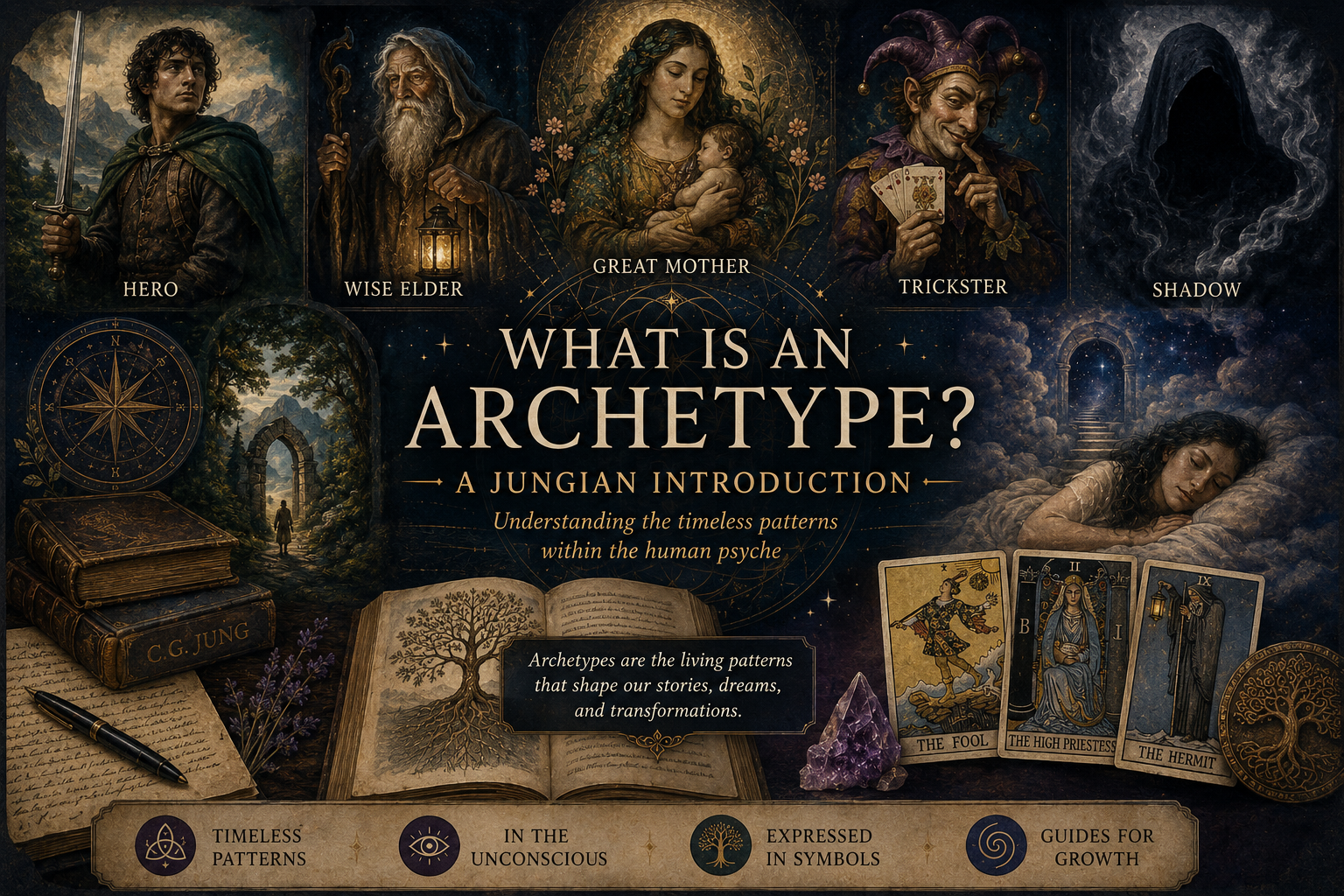
Certain characters seem to appear everywhere.
The wise old mentor. The courageous hero. The trickster who disrupts the established order. The nurturing mother. The mysterious stranger. The shadowy adversary.
These figures appear in myths, fairy tales, novels, films, dreams, religious traditions, and personal experiences. They emerge in stories separated by thousands of years and vast geographical distances. Yet they remain surprisingly familiar.
Why?
Swiss psychiatrist Carl Jung proposed an answer that would become one of the most influential ideas in modern psychology.
He called these recurring patterns archetypes.
The concept of the Jungian archetype continues to influence psychology, mythology, literature, religion, symbolism, dream interpretation, and spiritual traditions. Whether one fully accepts Jung’s theories or views them as symbolic models, archetypes offer a fascinating way of understanding recurring patterns within human experience.
This guide introduces the concept of archetypes from a Jungian perspective and explores why they remain relevant today.
This article contains affiliate links.
In This Guide
- What an archetype is
- Carl Jung’s theory of archetypes
- The collective unconscious
- Common archetypes
- Archetypes in mythology and religion
- Archetypes in dreams
- Archetypes and symbolism
- Misconceptions about archetypes
- Why archetypes still matter
- Frequently asked questions
What Is a Jungian Archetype?
A Jungian archetype is a recurring pattern, image, figure, or theme that appears across cultures, myths, dreams, stories, and human experiences.
According to Jung, archetypes are not learned through culture alone.
Instead, they arise from deeper structures within the human psyche.
An archetype is not a specific person.
It is a pattern.
For example:
The Hero is an archetype.
Luke Skywalker, Frodo Baggins, King Arthur, and countless other characters are specific expressions of that pattern.
Similarly:
The Wise Elder is an archetype.
Merlin, Gandalf, and many spiritual teachers represent variations of that pattern.
The archetype remains constant.
The expression changes.
Carl Jung and the Origins of Archetype Theory
Carl Jung developed the theory of archetypes during the early twentieth century.
Originally a student and colleague of Sigmund Freud, Jung eventually developed his own approach to psychology.
While Freud focused heavily on personal experiences and unconscious desires, Jung became increasingly interested in symbols, mythology, religion, dreams, and cultural patterns.
As he studied myths and religious traditions from around the world, he noticed recurring images and themes.
Cultures that had no apparent connection often produced remarkably similar stories.
Jung believed these similarities pointed toward deeper structures within the human mind.
This observation became one of the foundations of archetype theory.
The Collective Unconscious
To understand archetypes, it helps to understand another key Jungian concept.
The collective unconscious.
Jung proposed that the human psyche contains more than personal memories and experiences.
Beneath the personal unconscious lies a deeper layer shared by humanity.
He called this shared foundation the collective unconscious.
According to Jung, archetypes emerge from this deeper level.
Just as all humans share similar biological structures, Jung suggested that we may also share certain psychological patterns.
Archetypes are expressions of these patterns.
Whether interpreted literally or metaphorically, the concept remains one of Jung’s most influential contributions.
Explore Our Courses














Archetypes Are Not Stereotypes
A common misunderstanding occurs when people confuse archetypes with stereotypes.
The two are very different.
A stereotype reduces individuals to simplistic assumptions.
An archetype describes recurring symbolic patterns.
For example:
The Mother archetype does not refer to every mother.
Instead, it represents themes associated with nurturing, protection, fertility, care, and creation.
Archetypes describe possibilities rather than fixed identities.
They remain flexible and symbolic.
The Hero Archetype
The Hero is perhaps the most recognizable archetype.
Hero stories appear throughout mythology, religion, literature, and popular culture.
The Hero often:
- Leaves the familiar world
- Faces challenges
- Encounters allies and enemies
- Learns important lessons
- Returns transformed
This pattern appears in ancient myths and modern films alike.
Many people connect with Hero stories because they mirror personal struggles and growth.
The Hero’s journey becomes a symbolic map of transformation.
The Wise Elder
The Wise Elder appears as a guide, teacher, mentor, or spiritual advisor.
This figure offers wisdom rather than direct action.
Examples appear throughout mythology and literature:
- Merlin
- Gandalf
- Tiresias
- Various spiritual teachers
The Wise Elder often represents insight, knowledge, and perspective gained through experience.
The Trickster
The Trickster disrupts order.
This archetype breaks rules, challenges assumptions, and introduces change.
Tricksters can be humorous.
They can also be frustrating.
Examples include:
- Loki
- Hermes
- Coyote
- Anansi
The Trickster reminds us that growth often occurs when expectations are challenged.
The Shadow
The Shadow is one of Jung’s most important archetypes.
It represents aspects of ourselves that we prefer not to acknowledge.
The Shadow may contain:
- Fear
- Anger
- Jealousy
- Shame
- Untapped potential
Many stories externalize the Shadow through villains, monsters, or adversaries.
Jung believed genuine personal growth requires confronting rather than avoiding the Shadow.
The Great Mother
The Great Mother appears throughout mythology and religion.
This archetype often represents:
- Nurturing
- Protection
- Fertility
- Creation
- Compassion
Yet the Great Mother can also possess destructive aspects.
Nature nourishes life.
Nature can also bring storms and destruction.
This duality often appears in mythological expressions of the archetype.
The Child
The Child archetype symbolizes beginnings, potential, renewal, and future possibilities.
Also the Child often appears in myths involving miraculous births, divine children, or unexpected saviors.
Psychologically, the archetype reminds us of growth, creativity, and emerging possibilities.
Archetypes and Mythology
Archetypes appear most clearly in mythology.
Heroic quests.
Wise guides.
Sacred marriages.
Descent into darkness.
Death and rebirth.
These themes appear repeatedly across cultures.
Readers interested in these recurring patterns may enjoy:
Myths provide some of the richest expressions of archetypal imagery.
Archetypes and Symbolism
Archetypes often communicate through symbols.
The Hero may appear through a sword.
The Wise Elder through a lantern.
The Shadow through darkness.
The Child through a seed or a newborn.
Because of this connection, the study of archetypes naturally overlaps with symbolism.
Readers interested in symbolic interpretation may enjoy:
What Is Symbolism? A Beginner’s Introduction
Symbols provide visible forms for archetypal patterns that would otherwise remain abstract.
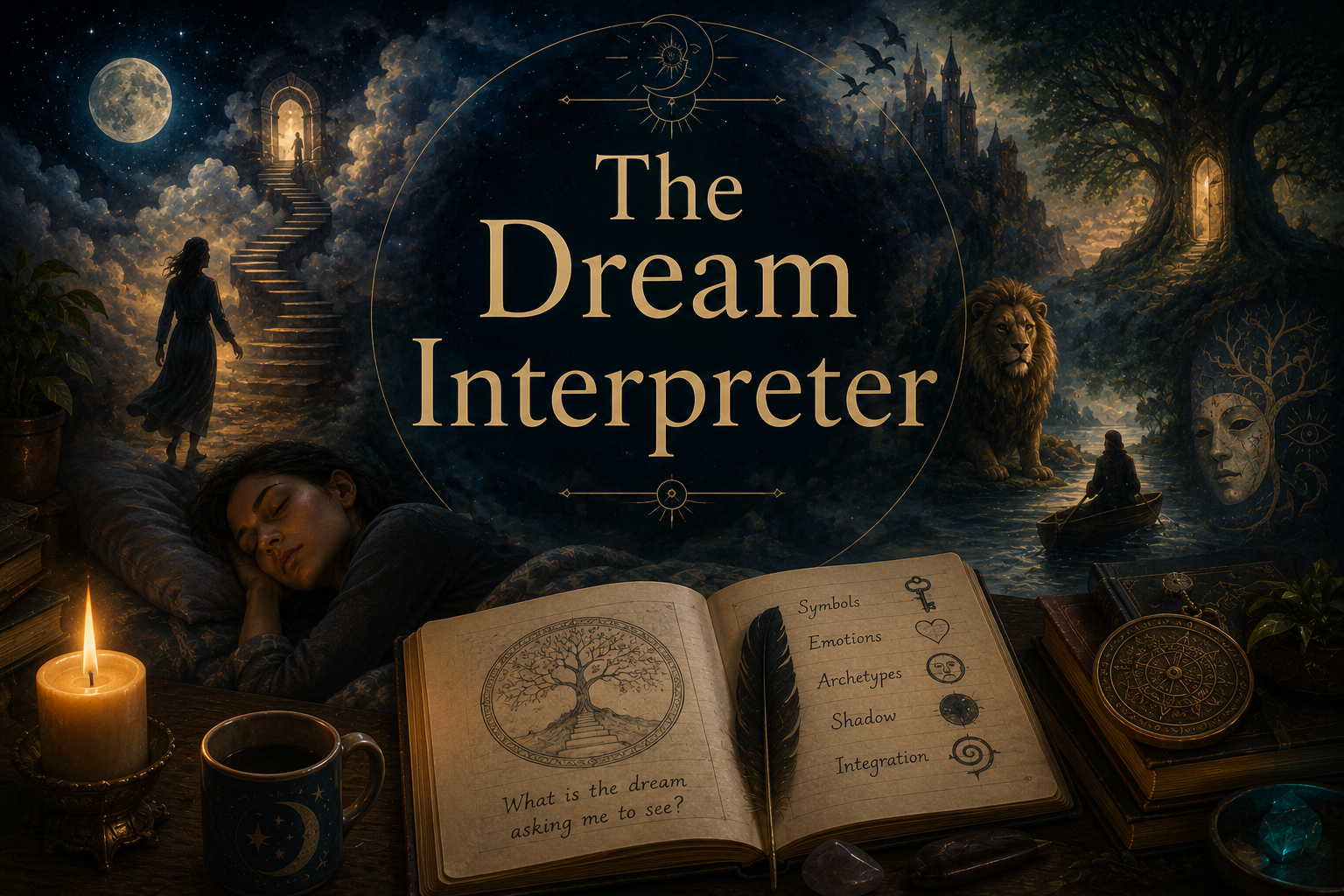
Archetypes and Dreams
Jung believed dreams frequently express archetypal material.
Dream figures sometimes embody archetypal roles.
A stranger may function as the Shadow.
A teacher may appear as the Wise Elder.
A journey may reflect the Hero’s path.
Dreams rarely announce these meanings directly.
Instead, they communicate through symbols and stories.
Readers interested in dream interpretation may enjoy:
How to Start Reading Dream Symbols
Dream work often provides opportunities to observe archetypes in action.
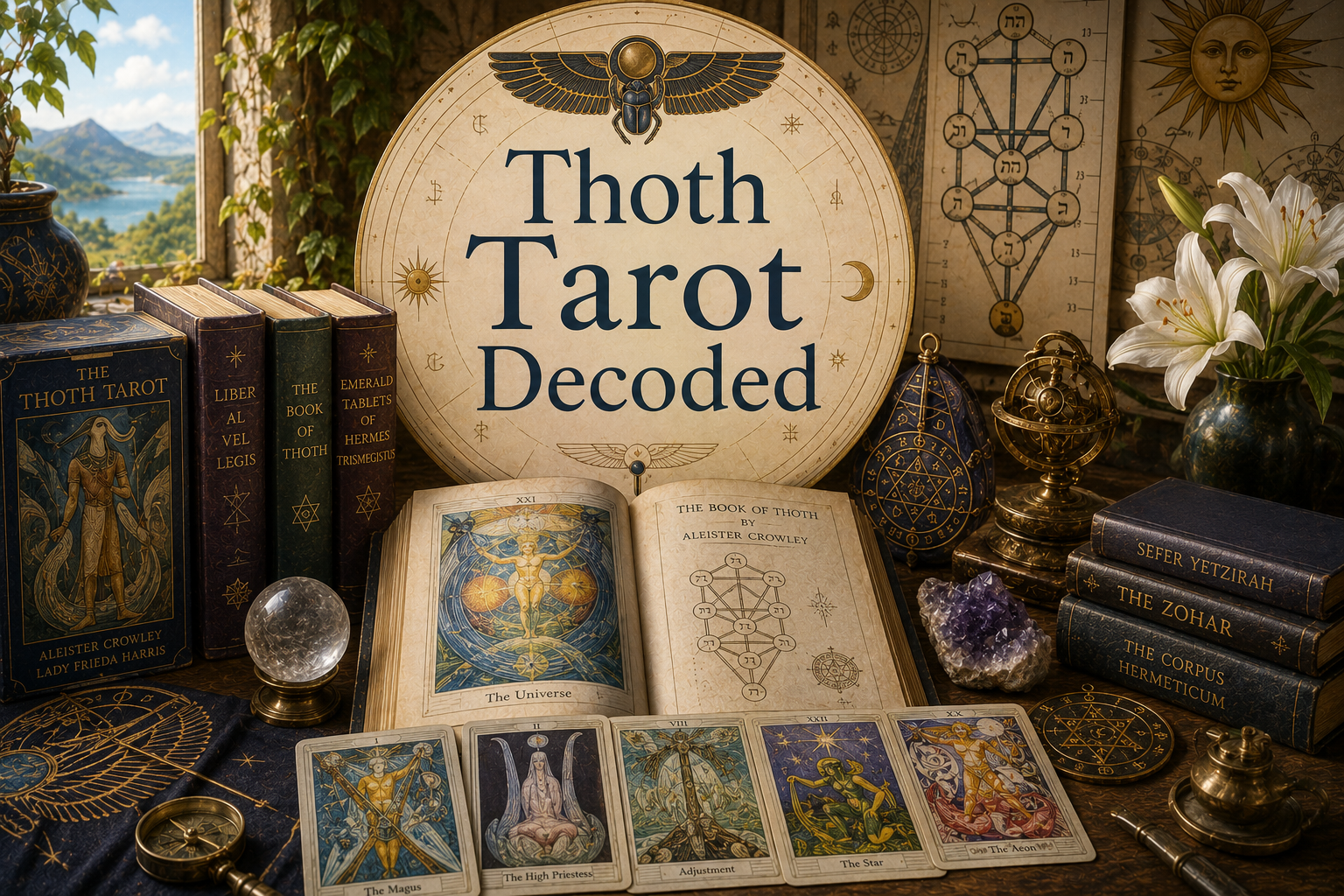
Archetypes and Tarot
Many tarot readers encounter archetypes through the cards.
The Major Arcana contains numerous archetypal figures.
Examples include:
- The Fool
- The Magician
- The High Priestess
- The Hermit
- The Emperor
- Death
These figures function as symbolic patterns rather than literal individuals.
Readers interested in tarot symbolism may enjoy:
Tarot provides a rich visual language for exploring archetypal themes.
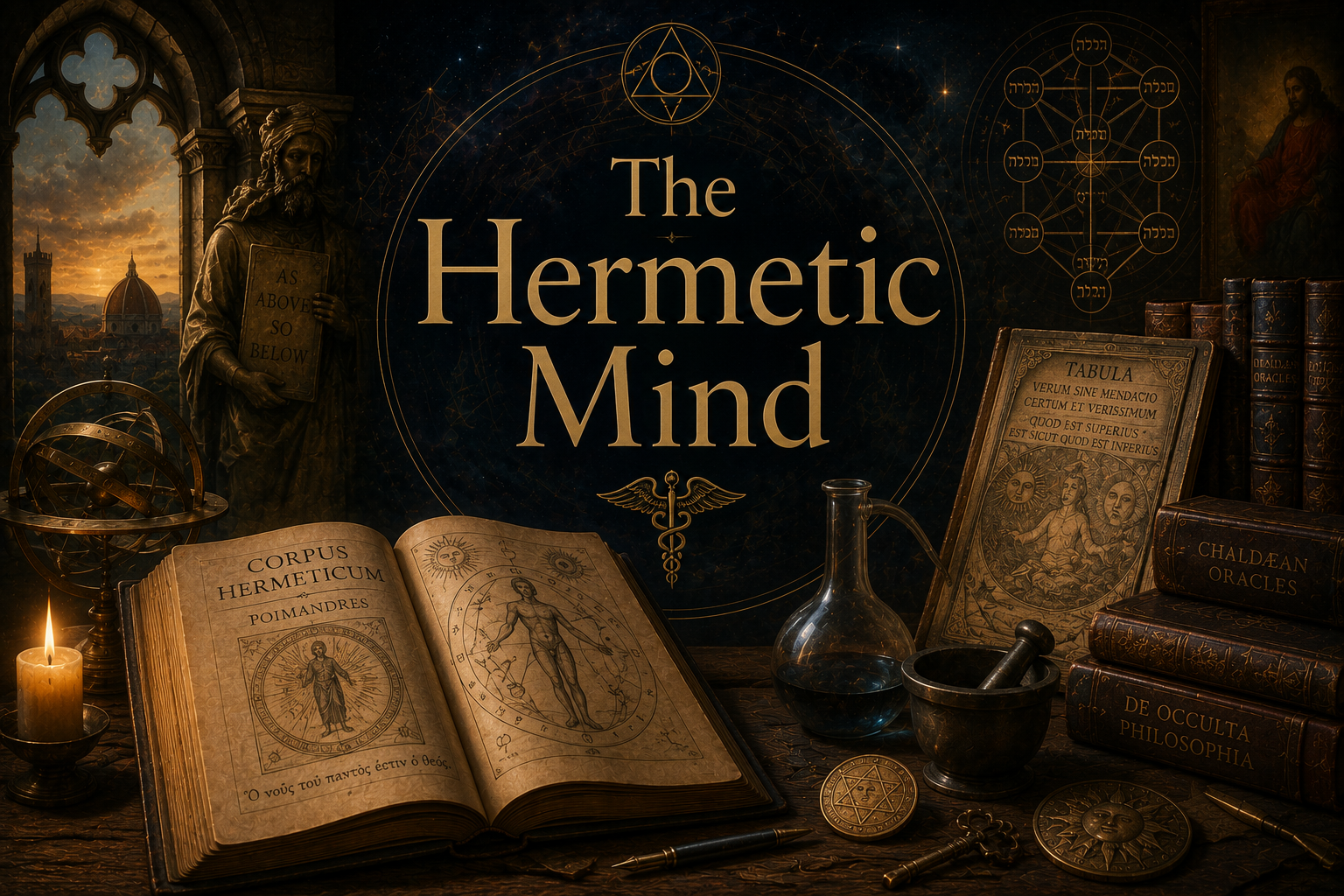
Archetypes and Christian Hermeticism
Archetypal thinking also appears within mystical traditions.
Christian Hermeticism often explores recurring symbolic patterns through scripture, symbolism, contemplation, and spiritual reflection.
Readers interested in these themes may enjoy:
What Is Christian Hermeticism?
While Jung and Christian Hermetic thinkers approached these subjects differently, both traditions recognize the importance of symbolic patterns in human experience.
Common Misconceptions About Archetypes
Archetypes Are Literal Entities
Jung generally described archetypes as psychological patterns rather than independent beings.
Archetypes Predict Behavior
Archetypes influence patterns of experience, but they do not determine individual choices.
Everyone Fits Into One Archetype
People express many archetypal patterns throughout life.
No single archetype defines an entire person.
Archetypes Are Only Found in Ancient Myths
Modern films, novels, games, and personal experiences continue expressing archetypal themes.
Why Archetypes Still Matter
The enduring popularity of archetypes suggests that Jung identified something meaningful.
People continue responding to archetypal stories because they reflect recurring human experiences.
The Hero’s struggle.
The Shadow’s challenge.
The Wise Elder’s guidance.
The Child’s potential.
These patterns help people understand growth, conflict, transformation, and meaning.
Even those who question Jung’s theories often find value in archetypal language as a tool for reflection.
Learning More About Archetypes
Readers interested in exploring Jung’s work further may find valuable resources through the C.G. Jung Institute of San Francisco and the C.G. Jung Foundation for Analytical Psychology.
Both organizations provide educational resources related to Jungian psychology, archetypes, symbolism, dreams, and personal development.
Frequently Asked Questions
What is a Jungian archetype?
A Jungian archetype is a recurring psychological pattern that appears in myths, dreams, stories, symbols, and human experiences.
Did Carl Jung invent archetypes?
Jung did not invent recurring symbolic patterns, but he developed one of the most influential modern theories explaining them.
What is the collective unconscious?
The collective unconscious is Jung’s concept of a shared psychological foundation from which archetypes emerge.
Are archetypes real?
Different people answer this question differently. Some view archetypes as psychological realities, while others see them as useful symbolic models.
What is the most common archetype?
The Hero is probably the most widely recognized archetype because Hero stories appear across many cultures.
How do archetypes appear in dreams?
Dream figures, journeys, symbols, and situations often express archetypal themes and patterns.
Why are archetypes important?
Archetypes help explain recurring patterns in stories, myths, religions, dreams, and personal experiences.
Final Thoughts
The concept of the Jungian archetype offers a fascinating lens through which to view human experience.
Whether encountered in mythology, dreams, religion, literature, tarot, or personal reflection, archetypes reveal recurring patterns that seem woven into the fabric of human storytelling and imagination.
The Hero continues to face challenges.
The Wise Elder continues to offer guidance.
The Shadow continues to demand attention.
These patterns remain meaningful because they reflect enduring aspects of life itself.
Carl Jung believed archetypes emerge from deep structures within the psyche. Whether one accepts that theory literally or approaches it symbolically, archetypes provide a powerful framework for understanding the stories we tell, the dreams we dream, and the symbols that continue to shape our lives.
The more we study archetypes, the more we begin to recognize them everywhere. And once we see them, it becomes difficult not to notice how deeply they influence the ways human beings search for meaning.