Kabbalah is one of the most influential mystical traditions in Western spirituality. For centuries, it has shaped Jewish mysticism, Christian Hermeticism, ceremonial magic, alchemy, psychology, and modern symbolism. Yet despite its enormous influence, it often feels mysterious or inaccessible to beginners.
If you’ve ever wondered what the Tree of Life represents, why so many esoteric traditions refer to the ten Sephirot, or whether Kabbalah is a religion, a philosophy, or a mystical practice, this guide will introduce the essential ideas without overwhelming you.
Whether your interest comes from biblical studies, symbolism, tarot, Jungian psychology, or Western esotericism, understanding Kabbalah provides an invaluable foundation for exploring the symbolic traditions that continue to shape spiritual thought today.
This article contains affiliate links.
In This Guide
- What is Kabbalah?
- What does the word “Kabbalah” mean?
- A brief history of Kabbalah
- The major branches of Kabbalah
- Core beliefs and concepts
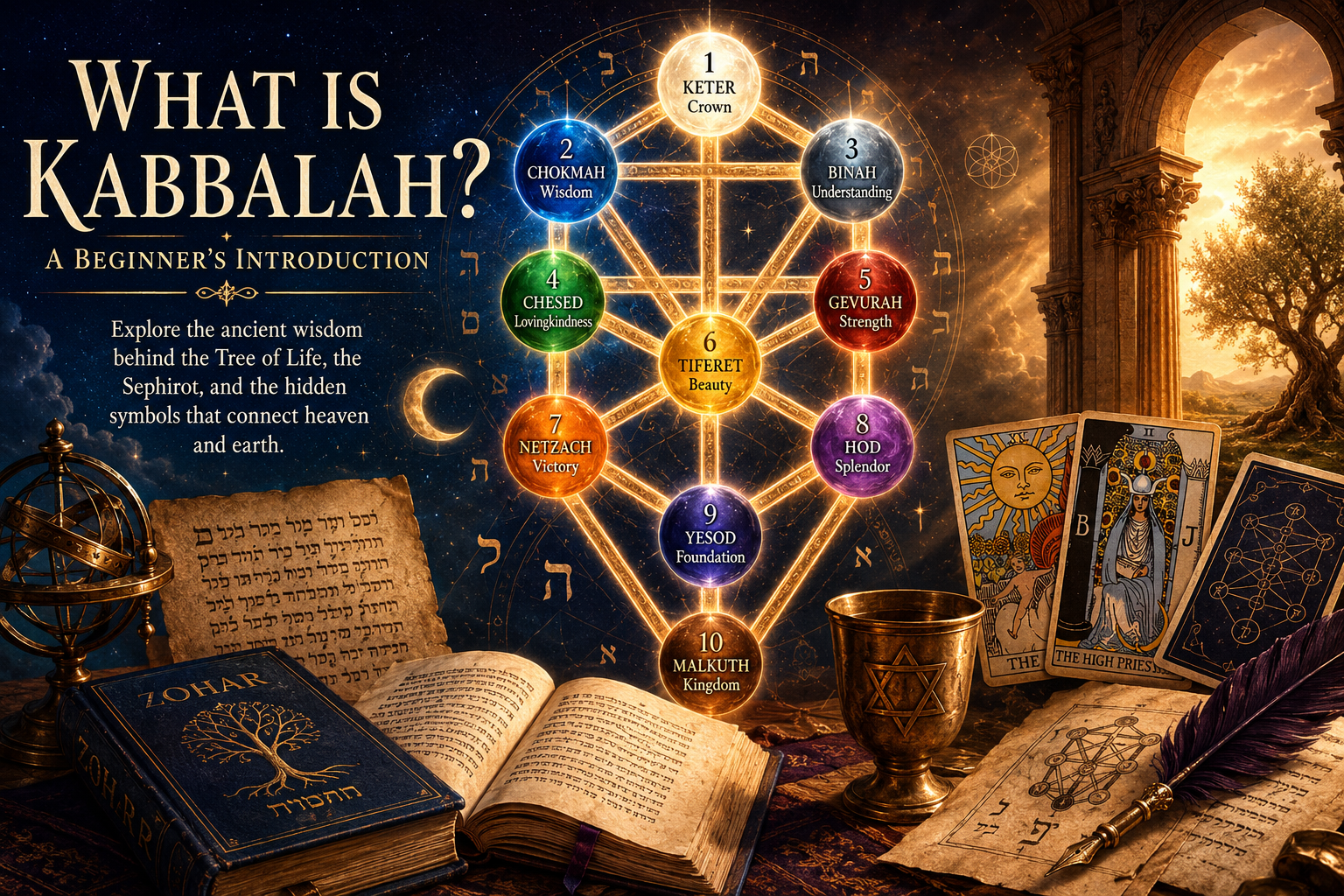
- The Tree of Life explained
- The ten Sephirot
- The Four Worlds
- Kabbalah and symbolism
- Kabbalah and tarot
- Kabbalah and Christian Hermeticism
- Common misconceptions
- How beginners should study Kabbalah
- Recommended books
- Frequently Asked Questions
What Is Kabbalah?
Kabbalah (also spelled Cabala, Cabbala, or Qabalah depending on the tradition) is the mystical tradition of Judaism that seeks to understand God’s nature, the structure of creation, and humanity’s relationship with the Divine.
Unlike systematic theology, Kabbalah emphasizes direct spiritual insight through contemplation, symbolism, sacred texts, meditation, and the interpretation of hidden meanings.
Rather than asking only:
“What does Scripture say?”
Kabbalah also asks:
- Why was reality created?
- How does divine energy enter the world?
- Why does evil exist?
- What is the purpose of the soul?
- How can human beings participate in spiritual restoration?
Its answers unfold through a rich symbolic language that includes numbers, letters, sacred geometry, the Hebrew alphabet, and perhaps its most famous image, the Tree of Life.
What Does “Kabbalah” Mean?
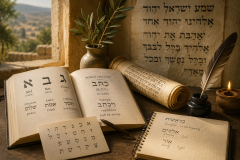
The Hebrew word Qabbalah (קַבָּלָה) literally means “receiving” or “that which has been received.”
The name reflects the belief that mystical wisdom passed from teacher to student through an unbroken tradition.
Historically, this did not mean secret knowledge available only to an elite few. Instead, it referred to teachings that required maturity and preparation because they dealt with profound theological questions.
Today, the word often serves as an umbrella term for several related mystical traditions that developed over many centuries.
A Brief History of Kabbalah
Understanding Kabbalah becomes much easier when viewed as a historical development rather than a single book or system.
Biblical Roots
Many themes later developed by Kabbalists already appear in the Hebrew Bible:
- Jacob’s ladder
- Ezekiel’s vision of the divine chariot
- Isaiah’s throne vision
- Creation in Genesis
- Wisdom literature
These passages inspired generations of mystical interpretation.
Early Jewish Mysticism
Between the first and sixth centuries CE, Jewish mystics explored visionary experiences involving heavenly journeys and encounters with God’s throne.
These traditions became known as Merkabah Mysticism, named after Ezekiel’s heavenly chariot.
Medieval Kabbalah
The recognizable form of Kabbalah emerged in medieval Spain and southern France during the twelfth and thirteenth centuries.
During this period, scholars developed:
- the Tree of Life
- the doctrine of the Sephirot
- symbolic interpretations of Scripture
- mystical meditation practices
The publication of the Zohar transformed Kabbalah into one of Judaism’s most influential mystical traditions.
Lurianic Kabbalah
In the sixteenth century, Rabbi Isaac Luria introduced ideas that continue to influence modern Kabbalah:
- Tzimtzum (Divine contraction)
- Shevirat ha-Kelim (the breaking of the vessels)
- Tikkun (restoration or repair)
These concepts explain why the world appears fractured and how human actions participate in healing creation.
The Major Branches of Kabbalah
Although people often speak of “Kabbalah” as one thing, several traditions developed from the same roots.
Jewish Kabbalah
This remains the original tradition and focuses on biblical interpretation, prayer, meditation, and mystical union with God.
Christian Kabbalah
During the Renaissance, Christian scholars adapted many Kabbalistic ideas into Christian theology.
Figures such as Giovanni Pico della Mirandola and Johannes Reuchlin believed Kabbalah revealed hidden truths about Christ while preserving its symbolic richness.
If you’re interested in this tradition, see our article on Christian Hermeticism.
Hermetic Qabalah
Modern occult traditions developed another branch known as Hermetic Qabalah.
Organizations such as the Hermetic Order of the Golden Dawn incorporated:
- astrology
- alchemy
- tarot
- ceremonial magic
- sacred geometry
within the structure of the Tree of Life.
Many modern tarot readers encounter Kabbalah through this Hermetic tradition.






Core Beliefs of Kabbalah
Although schools differ, most agree on several foundational ideas.
God Is Infinite
Kabbalah describes God’s unknowable essence as Ein Sof, meaning “Without End.”
Because the Infinite cannot be described directly, Kabbalists explain creation through symbolic emanations rather than physical acts.
Creation Is an Emanation
Rather than creating the universe as something completely separate, divine reality unfolds through successive levels of manifestation.
This process is represented by the Tree of Life.
Humanity Reflects the Cosmos
One of Kabbalah’s central ideas is that the human soul mirrors the structure of creation.
The spiritual journey therefore involves recognizing the divine image within ourselves.
Symbols Reveal Spiritual Truth
Everything possesses symbolic significance.
Letters.
Numbers.
Colors.
Dreams.
Planets.
Angels.
Scripture.
Nature.
Nothing exists in isolation.
Every symbol points toward deeper realities.
This symbolic worldview strongly influenced later Hermeticism and even modern depth psychology.
The Tree of Life Explained
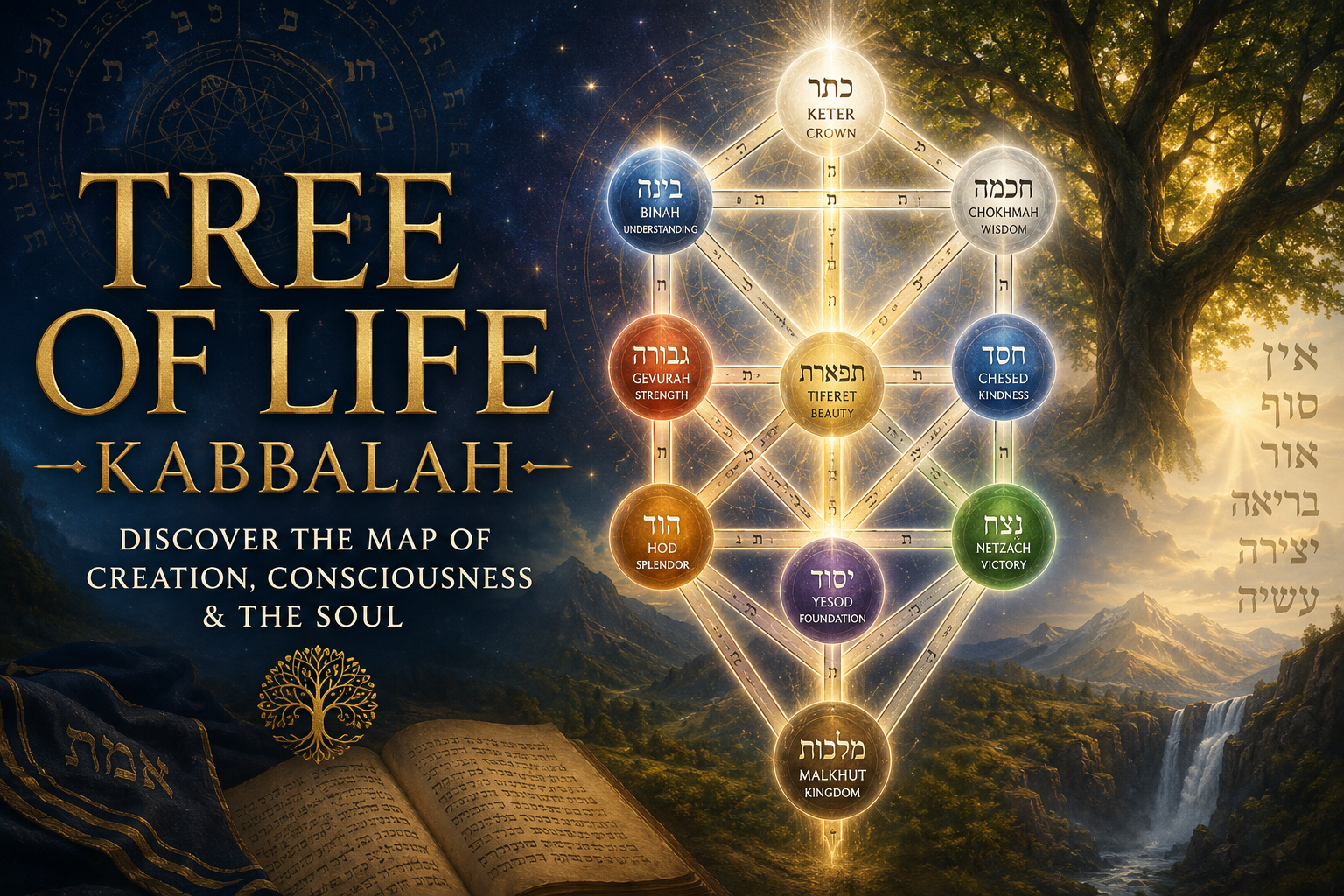
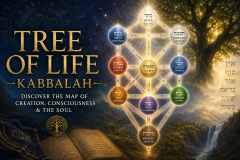
The Tree of Life serves as the central diagram of Kabbalah.
Rather than depicting a literal tree, it functions as a symbolic map showing:
- the unfolding of creation
- the attributes of God
- the structure of the human soul
- stages of spiritual growth
- relationships between heaven and earth
It has become one of the most recognizable symbols in Western mysticism.
If you’d like a deeper exploration, see our complete guide to the Tree of Life here on Rose and Rune.
The Ten Sephirot
The Tree consists of ten spheres known as the Sephirot.
Each represents one aspect of divine manifestation.
Keter — Crown
Pure divine unity.
Chokmah — Wisdom
Creative inspiration.
Binah — Understanding
Structure, discernment, and form.
Chesed — Lovingkindness
Mercy, generosity, expansion.
Gevurah — Strength
Justice, discipline, boundaries.
Tiferet — Beauty
Harmony, compassion, balance.
Netzach — Victory
Desire, endurance, creativity.
Hod — Splendor
Reason, language, communication.
Yesod — Foundation
Dreams, imagination, subconscious patterns.
Malkuth — Kingdom
The physical world.
Human experience.
Daily life.
The Four Worlds
Many Kabbalistic systems organize reality into four symbolic worlds.
Atziluth
The world of Divine Emanation.
Beriah
The world of Creation.
Yetzirah
The world of Formation.
Assiah
The world of Action and material existence.
These worlds help explain how spiritual reality gradually manifests into physical experience.
Kabbalah and Symbolism
Kabbalah has profoundly shaped the symbolic language used throughout Western esotericism.
Its influence appears in:
- sacred geometry
- numerology
- biblical interpretation
- dream symbolism
- mythology
- alchemy
- astrology
- ritual symbolism
Understanding these connections often makes symbolic systems feel less random and more interconnected.
If symbolism interests you, you may also enjoy our articles and courses on:
Kabbalah and Tarot
Many people first encounter Kabbalah through tarot.
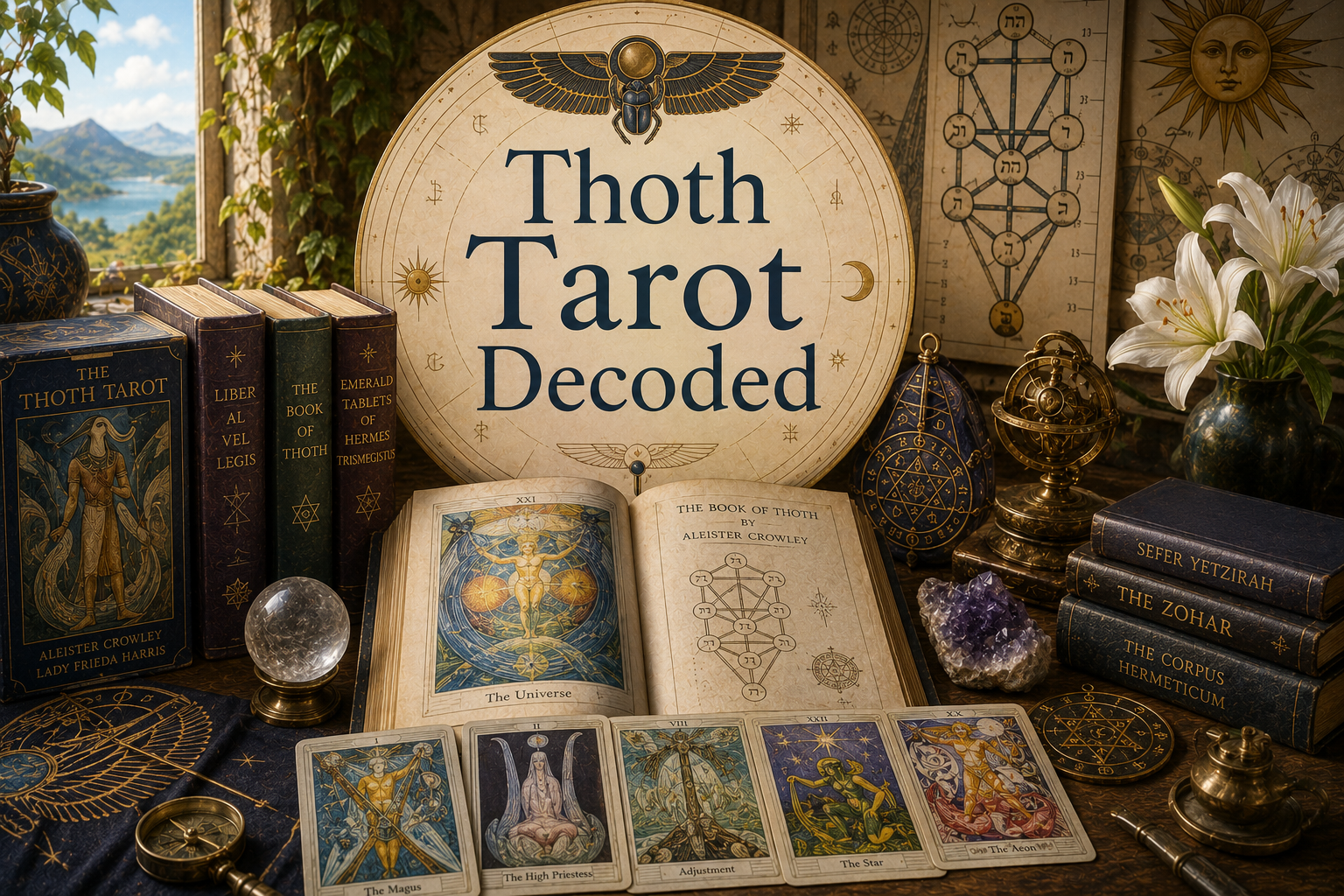
Beginning with nineteenth-century Hermetic traditions, practitioners associated:
- the twenty-two Hebrew letters
- the twenty-two Major Arcana
- the twenty-two paths of the Tree of Life
While these correspondences do not belong to traditional Jewish Kabbalah, they became enormously influential in Hermetic Qabalah and continue to shape many modern tarot systems.
If you’re new to tarot symbolism, our Tarot articles and courses provide a practical place to begin.
Kabbalah and Christian Hermeticism
One of the most fascinating developments in Western history occurred when Renaissance scholars integrated Kabbalah into Christian philosophy.
Rather than abandoning Christianity, they believed Kabbalistic symbolism illuminated biblical theology.
This fusion helped inspire:
- Renaissance magic
- alchemy
- Rosicrucianism
- Western occult philosophy
- ceremonial magic
Today, many students interested in Christian Hermeticism eventually discover that Kabbalah provides much of its symbolic architecture.
Common Misconceptions About Kabbalah
“Kabbalah is magic.”
Not originally.
Traditional Jewish Kabbalah centers on contemplation, Scripture, prayer, ethics, and mystical theology.
Although later occult traditions incorporated magical practices, they represent only one historical development.
“Anyone can master Kabbalah quickly.”
Kabbalah rewards slow study.
Many concepts reveal deeper meanings only after repeated reflection.
“The Tree of Life is only about tarot.”
Tarot represents one relatively recent application.
The Tree existed centuries before modern tarot correspondences developed.
“Kabbalah belongs only to one religion.”
Historically, Kabbalah emerged within Judaism.
Over time, Christian and Hermetic traditions adopted and reinterpreted many of its symbolic ideas.
Understanding these distinctions helps avoid confusion.
How Beginners Should Study Kabbalah
The sheer amount of symbolism can feel intimidating.
Fortunately, beginners do not need to memorize every correspondence immediately.
Instead, begin with:
- the history of Kabbalah
- the Tree of Life
- the ten Sephirot
- basic Hebrew alphabet concepts
- biblical symbolism
- contemplative reading
Once these foundations become familiar, the connections between tarot, alchemy, astrology, mythology, and psychology become much easier to recognize.
Kabbalah rewards patience more than speed.
It unfolds gradually, much like learning a new symbolic language.
Recommended Books
Essential Beginner Books
Daniel C. Matt
The Essential Kabbalah
One of the clearest introductions to classic Jewish mystical texts.
Joseph Dan
Kabbalah: A Very Short Introduction
A concise, scholarly overview from one of the world’s leading historians of Jewish mysticism.
Gershom Scholem
Major Trends in Jewish Mysticism
A classic work that transformed modern academic study of Kabbalah.
Christian and Hermetic Perspectives
Dion Fortune
The Mystical Qabalah
A foundational introduction to Hermetic Qabalah that explains the Tree of Life through Western esoteric symbolism.
William G. Gray
The Ladder of Lights
An approachable guide to the practical symbolism of the Tree of Life.
Advanced Reading
Moshe Idel
Kabbalah: New Perspectives
A more advanced academic work exploring the diversity of Kabbalistic traditions.
Frequently Asked Questions
Is Kabbalah a religion?
No.
Kabbalah is a mystical tradition that developed within Judaism. Many people study its symbolism historically, academically, or philosophically without becoming practitioners.
Is Kabbalah the same as Hermetic Qabalah?
No.
Hermetic Qabalah grew out of Renaissance and nineteenth-century Western esoteric traditions and incorporates tarot, astrology, alchemy, and ceremonial magic alongside Kabbalistic concepts.
Do I need to know Hebrew?
No.
Learning the Hebrew alphabet eventually enriches your understanding, but many beginners start with English-language introductions before studying Hebrew.
Is the Tree of Life biblical?
The Tree of Life appears in Genesis, but the familiar diagram of the ten Sephirot developed much later within medieval Kabbalah.
Is Kabbalah compatible with Christianity?
Different Christian traditions answer this question differently.
Historically, many Renaissance Christian scholars embraced forms of Christian Kabbalah, while many churches remain cautious about later esoteric interpretations. Understanding the historical distinctions between Jewish Kabbalah, Christian Kabbalah, and Hermetic Qabalah helps readers evaluate each tradition on its own terms.
Where should I begin after reading this guide?
Start with the Tree of Life and the ten Sephirot. From there, explore related topics such as Christian Hermeticism, alchemy, tarot symbolism, and the Hebrew alphabet. Each offers another perspective on the symbolic framework that Kabbalah helped shape.
Final Thoughts
Kabbalah invites us to see the world as layered with meaning. Rather than separating the spiritual from the ordinary, it teaches that creation itself reflects divine wisdom through symbols, relationships, and patterns. Whether you approach it as a historian, a student of religion, a tarot reader, a psychologist, or simply a curious seeker, Kabbalah offers a profound framework for understanding how the visible and invisible worlds relate.
At Rose and Rune, we’ll continue exploring this symbolic tradition through in-depth guides on the Tree of Life, the Sephirot, Hebrew symbolism, Christian Hermeticism, tarot, alchemy, dreams, and mythology. Each article builds on the last, helping you develop a richer understanding of one of the Western world’s most enduring symbolic systems.