If you are curious about tarot but feel overwhelmed by all the cards, symbols, and conflicting advice online, this beginner tarot guide will help you take your first steps with confidence.
Many people encounter tarot through movies, social media, or stories about fortune tellers. Others discover it while exploring spirituality, symbolism, personal growth, or creativity. No matter how you arrived here, tarot can feel mysterious at first.
The good news is that you do not need special abilities, psychic gifts, or years of study to begin learning tarot. Like any symbolic language, tarot becomes easier to understand when you learn its basic structure and approach it with curiosity.
This beginner tarot guide introduces the foundations of tarot, explains what a tarot deck contains, and offers practical advice for starting your journey.
In This beginner tarot guide
- What tarot is
- A brief history of tarot
- What a tarot deck contains
- Common misconceptions about tarot
- Choosing your first deck
- How beginners can start learning
- Mistakes new readers often make
- Where to go next
What Is Tarot?
Tarot is a system of 78 illustrated cards that people use for reflection, self-exploration, creative inspiration, and divination.
Each card contains symbols, images, and themes that can spark insight into a situation, question, or life experience. Some people use tarot as a spiritual practice. Others approach it as a psychological tool, a storytelling system, or a way to explore patterns in their lives.
A tarot reading involves drawing one or more cards and interpreting the symbols and themes they present.
At its heart, tarot is a symbolic language.
Just as a dream uses images to communicate meaning, tarot uses pictures, archetypes, and stories.
A Brief History of Tarot
The earliest tarot cards appeared in Europe during the fifteenth century. Originally, they were used for card games rather than divination.
Over time, people began assigning symbolic and spiritual meanings to the cards. During the eighteenth and nineteenth centuries, various writers connected tarot to mystical traditions, esoteric philosophy, and symbolic systems.
The most influential tarot deck today is the Rider-Waite-Smith deck, first published in 1909. Created by Arthur Edward Waite and illustrated by Pamela Colman Smith, this deck helped shape the way modern readers understand tarot.
Many contemporary decks build upon the structure established by the Rider-Waite-Smith tradition.
What Does a Tarot Deck Contain?
A standard tarot deck contains 78 cards divided into two main groups.
The Major Arcana
The Major Arcana consists of 22 cards.
These cards represent significant themes, life lessons, archetypes, and transformative experiences.
Some well-known Major Arcana cards include:
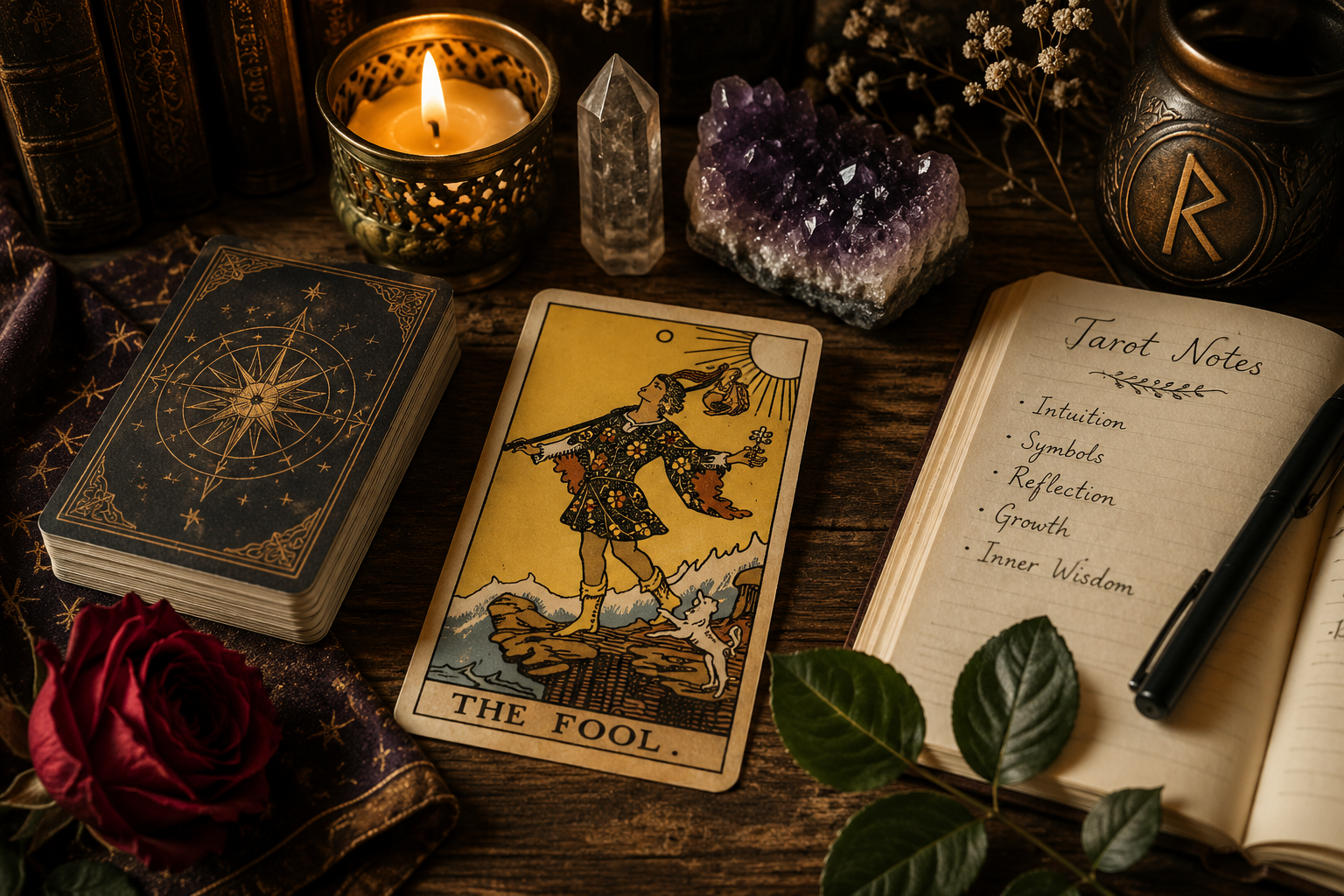
- The Fool
- The Magician
- The High Priestess
- The Hermit
- Death
- The Star
- The World
The Major Arcana often attracts the most attention because the imagery tends to be dramatic and memorable.
The Minor Arcana
The Minor Arcana contains 56 cards.
These cards focus more on everyday experiences, relationships, challenges, opportunities, emotions, and actions.
The Minor Arcana is divided into four suits:
- Wands
- Cups
- Swords
- Pentacles
Each suit contains numbered cards and court cards.
Together, the Major and Minor Arcana create a symbolic map of human experience.
In future articles, we will explore each of these sections in much greater detail.
Do You Need Psychic Abilities to Read Tarot?
No.
This is one of the biggest misconceptions surrounding tarot.
Some readers believe psychic intuition plays a role in their practice. Others view tarot primarily as a symbolic system. Many combine both approaches.
Regardless of your perspective, beginners can learn tarot without claiming psychic abilities.
The most important skills are:
- Observation
- Curiosity
- Reflection
- Pattern recognition
- Familiarity with the cards
As you spend time with the cards, you naturally become more comfortable interpreting their imagery and themes.
Is Tarot About Predicting the Future?
People answer this question in different ways.
Some readers use tarot to explore possible future outcomes.
Others see tarot as a reflective tool that highlights current patterns, choices, opportunities, and challenges.
At Rose and Rune, tarot is approached primarily as a symbolic language that encourages reflection and self-understanding. Rather than offering certainty about the future, tarot invites meaningful questions and fresh perspectives.
Many readers discover that the greatest value of tarot lies not in prediction but in insight.
Why Are the Images So Important?
The artwork is one of the most powerful aspects of tarot.
Every card contains symbols that can communicate ideas and emotions beyond ordinary language.
A lantern may suggest guidance.
A mountain may suggest challenge.
A river may suggest emotion or change.
A crown may suggest authority or responsibility.
As you learn tarot, you will begin noticing recurring symbols and themes throughout the deck.
This symbolic richness is one reason tarot remains fascinating after hundreds of years.
Choosing Your First Tarot Deck
One of the most common questions beginners ask is:
“What deck should I buy?”
The simplest answer is to start with a Rider-Waite-Smith style deck.
Because so many books, websites, and teachers use this system, it provides the easiest learning path.
When selecting your first deck, look for artwork that you enjoy and can clearly understand.
Avoid choosing a deck solely because it looks mysterious or beautiful. If the images confuse you, learning becomes more difficult.
A clear, accessible deck often makes the best teacher.
Do You Need to Cleanse Your Deck?
You may encounter advice about cleansing, charging, blessing, or consecrating tarot cards.
Some readers perform these rituals regularly.
Others never do.
There is no universal rule.
If rituals help you feel focused and intentional, they may enrich your practice.
If they do not resonate with you, you can simply begin using your cards.
The most important thing is building a meaningful relationship with the deck through regular use.
How Beginners Can Start Learning Tarot
New readers often believe they must memorize all 78 cards immediately.
This usually leads to frustration.
A better approach is to learn gradually.
Start by spending time with a single card.
Notice:
- The imagery
- The emotions it evokes
- The symbols you recognize
- The story suggested by the artwork
Keep a notebook nearby and record your observations.
Over time, patterns begin to emerge naturally.
Tarot rewards patience more than speed.
A Simple Daily Practice
One of the best ways to learn tarot is through a daily card draw.
Each morning, shuffle your deck and draw one card.
Ask yourself:
- What stands out in the image?
- What emotions does this card evoke?
- How might this theme appear today?
- What lesson might this card offer?
At the end of the day, revisit your notes and reflect on whether the card connected with any experiences or observations.
This simple habit can teach you a great deal about the cards.
Common Mistakes Beginners Make
Trying to Memorize Everything
Tarot is not a school exam.
Learning develops through experience.
Focus on understanding rather than memorization.
Buying Too Many Decks
One deck is enough to begin.
Many newcomers collect multiple decks before learning the basics.
Spend time with a single deck first.
Seeking Perfect Interpretations
There is rarely one correct interpretation.
Tarot invites exploration.
Different readers may see different aspects of the same card.
Becoming Dependent on Readings
Tarot works best when it supports reflection rather than replacing personal responsibility.
The cards can offer perspective, but you remain responsible for your choices.
What Makes Tarot Endure?
Tarot has survived for centuries because it speaks to universal human experiences.
Love.
Loss.
Growth.
Fear.
Hope.
Change.
Purpose.
The cards continue to resonate because the challenges they explore remain part of the human journey.
Whether you approach tarot as a spiritual practice, a symbolic language, a creative tool, or a source of reflection, it offers a unique way to engage with life’s questions.
Tarot has fascinated people for centuries because it combines rich symbolism with personal reflection. Whether you approach the cards as a spiritual practice, a creative tool, or a way to explore archetypal themes, learning the foundations can deepen your understanding of the images and stories within the deck. For readers interested in the historical development of tarot and its symbolism, the resources of the The Tarot Association of the British Isles provide valuable background and educational materials.
Where Should You Go Next?
Once you understand the basic structure of tarot, the next step is learning how the cards function together.
Future articles in this series will explore:
- How tarot works as a reflective practice
- Understanding the Major Arcana
- Understanding the Minor Arcana
- The four suits and their symbolism
- Court cards and personality patterns
- How to read tarot symbolically
- Simple tarot spreads for beginners
- Building a tarot journaling practice
Each topic builds upon the foundation established in this beginner tarot guide.
Frequently Asked Questions
Is tarot difficult to learn?
Not at all. Like any symbolic system, it becomes easier with practice. Most beginners can start reading simple cards within a few days.
Do I need intuition to read tarot?
Everyone possesses intuition to some degree. However, observation and familiarity with the cards are often more important for beginners.
Can I read tarot for myself?
Yes. Many people use tarot primarily for personal reflection and self-exploration.
How often should I practice?
Even five minutes a day can make a significant difference. Consistency matters more than lengthy study sessions.
What is the best first tarot deck?
Most beginners benefit from a Rider-Waite-Smith style deck because it forms the basis of many modern tarot resources.
Is tarot connected to a specific religion?
No. People from many different spiritual, religious, and philosophical backgrounds use tarot. Some approach it spiritually, while others view it as a symbolic or psychological tool.
Final Thoughts
Learning tarot does not require perfection, special gifts, or extensive knowledge. It begins with curiosity and a willingness to engage with symbols.
As you spend time with the cards, you may discover that tarot is less about finding answers and more about asking better questions.
That journey starts with a single card, a little patience, and an open mind.
If this beginner tarot guide has helped you take your first steps, continue with the next article in the series, where we explore how tarot works as a reflective practice and why so many people use it for insight, creativity, and self-discovery.